If I were to choose the songs from 2010-2019 that make me feel the most free, in a sense that is entirely liberating and nearly indescribable, “Eyes To The Wind” could easily top that list. Adam Granduciel allegedly wrote this song in only four minutes, in his kitchen, and the song flows with a kind of freedom that could only come from such a spontaneous, organic conception. Although he reworked it over the course of thirty takes and five months – curating it to perfection – the gentle, breezy sway that serves as the track’s driving force remains intact, uninhibited by studio effects or overproduction.
“Eyes To The Wind” is simply a gorgeous piece of Americana, riding wave after wave of acoustic strums which are carefully underscored by elegant piano notes while Granduciel wistfully sings about returning home; his lines not all that symbolic on paper, but incredibly poignant amid the backdrop of lush folk: “There’s a cold wind blowing down my old road, down the back streets where the pines grow, as the river splits the undertows.” It’s not a happy homecoming necessarily, as you can feel a forlorn/dejected weight upon his shoulders, a burden illuminated within the last few lines of the song: “As you set your eyes to the wind, and you see me pull away again / Haven’t lost it on a friend, I’m just bit run down here at the moment / Yeah, I’m all…
Here’s a list of major new releases for the week of May 31, 2019. Please feel free to request reviews for any of the following albums from staff and/or contributors.
– List of Releases: June 7, 2019 –
As Cities Burn: Scream Through the Walls
Genre: Post-Hardcore/Indie-Rock/Progressive Rock
Label: Equal Vision
Aurora: A Different Kind Of Human (Step II)
Genre: Indie-Pop/Electronic
Label: Glassnote
Carlie Hanson: Junk
Genre: Pop
Label: Warner Bros
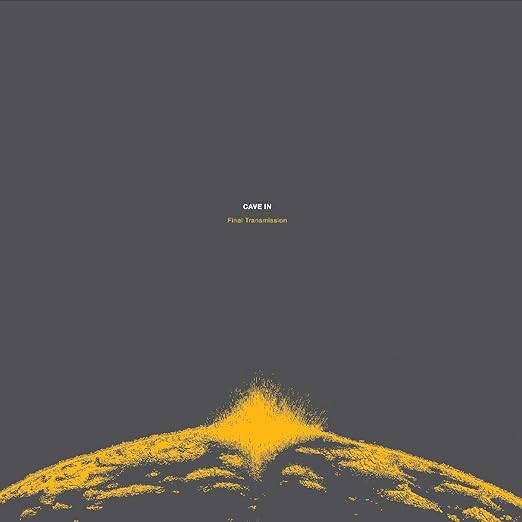
Cave In: Final Transmission
Genre: Metalcore/Progressive Rock/Alternative Rock
Label: Hydra Head
Chon: Chon
Genre: Progressive/Math Rock
Label: Sumerian
Combichrist: One Fire
Genre: Industrial/Nu-Metal/Electronic
Label: Out of Line
Our next stop on our tour of Bandcamp’s undiscovered artists takes us to Melbourne, Australia – the land down under. Specifically takes us to one Jesse Glass, a folk singer-songwriter whose music is extremely serine, dreamy, and picture-esque. With only one single out at the time of writing this, Jesse doesn’t have a large repertoire of work to pull from, but the Shouldered Friend single, featuring the title track and the “I Envy You” b-side, is an extremely powerful piece of work. Like a refreshing splash of cool water, this single runs gracefully, bringing chills to one’s nerves. The acoustic melodies are harrowing and melancholic, but not in an overbearing way at all. In fact, Shouldered Friend is a very light listen, but one that leaves me wanting more.
You could say I’m hooked…
Anyway, I had an opportunity to ask Jesse a few questions about pet peeves, influences, and what’s to come in the future.
——————————————————————————————————————————–
Sean: First off, I gotta ask, you have more stuff coming, right? I’m gonna be sad if this is a one time single…
Jesse: Thanks so much for the compliment! Well, I definitely plan to record and release a lot more in the near future. This was my first time recording something that is solely mine, having had all my previous experience recording in other bands. I really enjoyed the recording process – It is something I definitely plan to keep doing. I have at least an album’s…
We all have those bands that we look back on and wonder how in the world they didn’t take off. I have quite a lengthy list of talented artists that I believe should be more popular than they are, but Gates has to be somewhere near the top of that list. The band’s 2014 debut Bloom and Breathe was a hit on this site and within a few similar circles, but they really lacked exposure outside of those closed communities. Their 2016 sophomore effort Parallel Lives was another excellent record, but still, Gates has evaded discovery by many. It’s a shame considering that they sound like the best traits of Thrice and Maybeshewill fused together.
“Persist in Delusion” is an especially strong track from the band, thriving on its shimmering guitars and the vocalist’s passionate, Kensrue-like delivery of that cathartic chorus: “don’t cry when everything that you love falls apart.” The slight moment of pause before he launches into those words builds anticipation exceptionally well; a seasoned move from the at-that-time fresh faces. The song builds gradually like something out of a post-rock playbook, eventually reaching a crescendo of intensely clashing drums, guitars, and emotional shouts of “all we had is a lie, come to find out.” It’s a breathtaking soundscape that blends alternative rock, post-hardcore vocals, emo lyrics/delivery, and a post-rock progression/atmosphere.
When we look back on a decade full of some brilliant and innovative alternative rock (Thrice, O’Brother, Thursday), it’s easy to…
One of the very first things I remember loving was blink-182’s “The Rock Show”. Yeah, I was like five at the time, young as shit blah blah blah, but that put me right in the targets of blink’s music. I was the archetype of the demographic that found “The Rock Show” a refreshing change of pace from MTV’s usual fare, which at the turn of the millennium was Coldplay’s “Yellow”, Coldplay’s “Trouble”, a few spins of U2’s “Beautiful Day” and then “Yellow” again. “The Rock Show” was nothing if not a gear shift: it was short, brash and stupid, it demanded to get stuck in your head, Tom spat on the camera in the video. To me it was cool as all fuck.
I lead with this partly because “The Rock Show” is blink’s best single – one of the best singles of the 2000s, really – and partly because there’s no other way to broach the topic of Enema of the State than via what it means to the listener personally, subjectively. From the outside, it’s not hard to see why this is disposable, trashy music to some: pop-punk in general is the most maligned genre, outside of those that actually deserve it like fucking nu-metal. Pop-punk wants to get inside your head and stay there at any cost – the best pop-punk bands understood that it was a multi-approach task, pulling together not just the best hooks but the best production, the best instrumentals, and every now…
In terms of underrated pop artists this decade, few are as talented as the duo of Rosa Walton and Jenny Hollingworth – also known as Let’s Eat Grandma. Perhaps that’s because they’re only 18 (17 at the time of this release) and their 2016 debut I, Gemini went largely unnoticed. 2018’s I’m All Ears started to change that just a little bit, as the band expanded its sonic palette from understated indie to more fully fleshed out art-pop. The album is loaded with fun electro-pop jams, but there’s three towering epics that define the group’s artistic evolution: the 6 minute “Snakes & Ladders”, the 9 minute “Cool & Collected”, and the 11 minute curtain call “Donnie Darko.” Of these main pillars, it’s “Donnie Darko” that stands out most as the duo’s claim to decade immortality.
“Donnie Darko” is a towering, absolutely magnificent collage of experimentation. It transitions through several stages, beginning with a gradual keyboard-underscored guitar intro that builds in intensity until the notes become more vibrant and are joined by handclaps. The song isn’t afraid to leave large swaths vocal-less, finding itself content to sink effortlessly into the lush pool of electronically-washed guitars and keyboards, which mesh brilliantly. By the middle of the song, the vocals re-appear – a confident yet nearly stuttered delivery. Synths glide in around the 6-minute mark, and suddenly we’re in dream-pop territory. Eventually, all the instruments begin to clash together in a grand cacophony, and the song…
Country music wouldn’t get such a bad rap if there were more Sturgill Simpsons in the world. Simpson is everything that’s right with country music, and “Breakers Roar” is easily one of the most gorgeous songs that I’ve ever heard. The strings here swell and ache in gorgeous entanglement, and their tropical sway makes you feel lost at sea – an atmosphere that plays a large role in helping to define A Sailor’s Guide to Earth‘s overarching aesthetic. It’s a simple song for sure – there’s no unexpected twists – but the song immediately absorbs your imagination and transports you. It possesses such a sublime aura, and when I listen to it I find myself drifting off…my muscles relaxing and my mind gently winding down. Simpson’s smooth serenade weaves in and out of the music like light beaming through the depths of the ocean; I’d say it’s enough to put you to sleep but it’s not boring at all, it’s just mesmerizingly beautiful. The lyrics for the entire album are inspired, as the “Guide to Earth” is Simpson’s way of teaching his newborn son life lessons through music. Here, they’re at their most poignant: “Shatter illusions that hold your spirit down / Open up your heart and you’ll find love all around.”
“Breakers Roar” is the song that helped me turn the corner from barely appreciating country-pop to fully realizing the beauty that real country has to offer. A Sailor’s Guide to Earth is an…
For the longest time, I never understood the fascination surrounding Carly Rae Jepsen. She writes cute, catchy 80’s influenced pop songs…and it’s not like she’s the first or even the best to do so. Like any self-assured heterosexual man should, I jammed out to “Call Me Maybe” every time it came on the radio – of course – but her music was little more than a guilty pleasure. The intuitive statement that comes next should be a short anecdote about how Emotion changed my perceptions, and how really she grew as an artist and expanded her boundaries…but I still just don’t see it, at least not the way others do. She’s merely a saccharine, surface-level pop artist who can craft a mean hook, but my conclusion here is basically this: so what?
“Run Away With Me” is probably the catchiest pop song in the last 10 years, and if it’s not the catchiest then it’s certainly one of the most compelling. This track is the queen of summer bangers, a song whose upbeat dynamics and seductive lyrics make it irresistible aesthetically and intellectually. From the moment the synths glide in to the gradual soft-loud progression that spans the first minute of thumping beats, it’s a song that immerses your senses in this neon youth; a glowing representation of what it means to be young and in love – to be the life of the party – to own the night. Jepsen’s lyrics…
The 20/20 Experience changed the way I view pop. That may be a bit of a naive take, but it’s true based on my late introduction to modern music (I was that kid in high school who was obsessed with 70’s rock) and the fact that the album – especially Part 1 – is genuinely one of the best collection of songs to come out within the last 10 years, if not longer. I never viewed pop as a style that would have an album overflowing with 6-9 minute tracks; 20/20 does. I never expected pop to experiment at a high artistic level, nor for it to be half as catchy as the entirety of 20/20 is. It took my tiny, cliched definition of what I thought pop should be and blew the doors off of it.
“Mirrors” may not be the most elaborate song that JT composed for this two-part opus, but it’s probably the most meaningful. From its gorgeous introduction to lyrics dripping with romantic intent, “Mirrors” postures itself as the best love song – best breakup song – best wedding song – best forlornly-looking-through-old-photographs-of-an-ex – best anything relationship song. It’s 8 minutes in length but doesn’t feel anywhere close to that, gliding smoothly across its runtime while seamlessly transitioning from rhythmic verses to its soaring chorus; then to a string-laden midsection into what I feel is one of the more underrated portions of the whole experience: that prolonged “you are the love…
Here’s a list of major new releases for the week of May 31, 2019. Please feel free to request reviews for any of the following albums from staff and/or contributors.
– List of Releases: May 31, 2019 –
Apex Manor: Heartbreak City
Genre: Alternative Rock
Label: Merge
Arlo Day: Bad Timing
Genre: Alternative Rock
Label: Domino
Christelle Bofale: Swim Team
Genre: Alternative Rock
Label: Father/Daughter
Daniel Wohl: État
Genre: Experimental/Electronic
Label: New Amsterdam/Nonesuch
Darkthrone: Old Star
Genre: Black Metal/Punk/Death Metal
Label: Peaceville
Death Angel: Humanicide
Genre: Thrash Metal
Label: Nuclear Blast
Denzel Curry: ZUU
Genre: Hip-Hop/Psychedelic
Label: Loma Vista
I have a special relationship with The Roots that I don’t have with very many artists, much less of the hip-hop variety. They were the first “rap” that I ever listened to on my own. Purchasing Game Theory from F.Y.E. when I was in high school is still fresh in my memory; I can remember how excited I was to get my hands on it with my friends who were more interested in the new Seether, or something else pretty terrible. I jammed out to The Roots in a way that I’d never done before with this particular genre – they were essentially my gateway. It also helps that they’re from my hometown, and I’ve not only seen them perform live, but also just walking around the streets of Philadelphia. They’ve always been super down-to-earth; one with the neighborhood and people.
College would come and go, and I eventually found myself swept with the overwhelmingly positive message of How I Got Over, an album that helped me relate to – and in some small senses, help – teens in a juvenile correction facility while I taught there. The band followed me from the classroom to the professional workplace, so their work was always a cause for excitement. They’re as much a part of my life as Brand New, mewithoutYou, Manchester Orchestra, and all my other favorite “indie-rock” bands.
So when The Roots turned around only one year after How I Got Over with undun…
Coheed and Cambria – “Key Entity Extraction I: Domino The Destitute”
When I fell in love with Coheed and Cambria, it was a swoon over their heavier side: Claudio Sanchez’s bitter lyrics in “Welcome Home”, the epic waves of electric riffs, and the complex solo spanning the latter portion of the song. That isn’t to say I don’t enjoy me some lighthearted bops, because Coheed has a wide selection of those as well, but sometimes first impressions mean everything. Coheed, to me, was f’n badass.
That’s why No World for Tomorrow and Year of the Black Rainbow registered as minor disappointments – and I stress minor because they’re both still solid outings. But strong singles like the former’s title track and the latter’s “Here We Are Juggernaut” aside, they lacked that oomph, that extra push of raw grittiness that made me a fan from the time I first laid ears on “Welcome Home.” That’s where 2012’s The Afterman: Ascension comes in, and the for-all-intents-and-purposes lead track “Domino The Destitute.” Just as my interest in the band was beginning to wane, they burst out of a melodic haze of mediocrity with this 8-minute, guitar-thrashing epic showdown, where everything that I first loved about the band snapped back into focus.
“Domino” is an absolute beast of a song; it rides in on elongated riffs and pummeling drums, and Sanchez’s vocals are packed with emotion right from the start. The chorus is one of their most infectious ever, and it feels like…
Quarter-Year Crisis: My Top Records of 2019 (so far)
By: Brandon Nurick
If you had asked me in early January whether I thought 2019 could compete with 2018 in terms of releasing an equal (or greater) quantity of obscenely killer music, I probably would’ve upturned my nose, scoffed, and replied with some kind of snarky comment deriding the idea – y’know, typical music nerd shit. I do my best to try and not get snobby, but (for me) 2018 felt like a pinnacle for music. From the depths of the metal underground with gutter-slinking acts like Hissing and Akitsa to Ariana Grande’s return to the summit of the Billboard 200, last year exuded an undefinable yet unmistakably palpable aura that seemingly elevated every piece of music that was released in its duration. At the time, to think we could surpass or at the very least match this exceedingly high standard, felt nigh impossible.
If you ask me today, I would have to admit that somehow, someway, 2019 was also graced with that elusive and amorphous blessing; four months into the year and I couldn’t really even give you a ballpark to how many albums I’ve drooled and dribbled over. Similar to last year, there is no one bastion of great music – no singular artist or dominating genre – but a widespread renaissance, from jazz to emo, emo to black metal, and black metal to infinity. In no small part due to…
Singing loud enough to wake the dead, not enough now that you’ve left
There’s a lot of factors that go into making great music, and too often I believe we focus on the wrong things. Intricacy and technical prowess can only get you so far; the best bands in the world aren’t the ones that shred the fastest, create the most complex drum fills, or experiment the farthest with electronics. They’re the ones that can tap into our human side and appeal to our vulnerability, to serve as a reminder that we’re not alone in our experiences – whatever they may be. Only a few bands have “it”, and There Will Be Fireworks are one of them.
For proof I’m going to look no further than “River”, the second track on the group’s surprisingly underground The Dark, The Bright – an album that deserved all of the acclaim in the world and for some reason got ignored. “River” is not a track you can easily shake after hearing it once: it comes rushing in on the heels of “And Our Hearts Did Beat”, and you can immediately tell that the song can’t wait to explode. And it doesn’t take very long to indulge, either – just after the 1 minute mark, singer Nicky McManus belts out, “We used to talk, you used to have me round…I used to sing for you” and you can feel the desperation dripping from every word. From that…
Sometimes I’m convinced that Florence Welch doesn’t get enough credit. Commercially, sure, she receives due monetary cash flow for superb singles like “Dog Days Are Over” and this very song – but as a real, true artist, I’m not sure that many people are bringing up Florence. She’s one of the most recognizable voices in all of music, booming with authority and quivering with uncertainty all at the same time. The music accompanying her iconic voice has only gotten better with time, with her most recent album High As Hope sounding like it could have been a sister album to Radiohead’s A Moon Shaped Pool. Albeit, you know, slightly poppier.
Regardless, I’d presume that few users on this site would think to include Welch on a decade list, and that’s slightly disappointing (I hope I’m wrong). Ceremonials was an absolutely breathtaking album back in 2011, and it remains one now. As more time goes by, it inches towards become a classic of the modern indie pop canon. Although the entire album unfurls with dark beauty, “Shake It Out” is a clear standout, serving as both an inspirational hymn of sorts as well as a radio staple. The song has its fingerprints all over this decade, and it’s impossible to imagine a major music publication that wouldn’t at least recognize the song as one of the most wildly popular “alternative” tracks of the last 10 years.




![Junk [Explicit]](https://m.media-amazon.com/images/I/71bsYmn7WjL._SS500_.jpg)
![One Fire [Explicit]](https://m.media-amazon.com/images/I/A1rBbQWxkhL._SS500_.jpg)

![Celebrity Mansions [Explicit]](https://m.media-amazon.com/images/I/A1L7KgkqmmL._SS500_.jpg)


![Abominate [Explicit]](https://m.media-amazon.com/images/I/81wC33yszzL._SS500_.jpg)

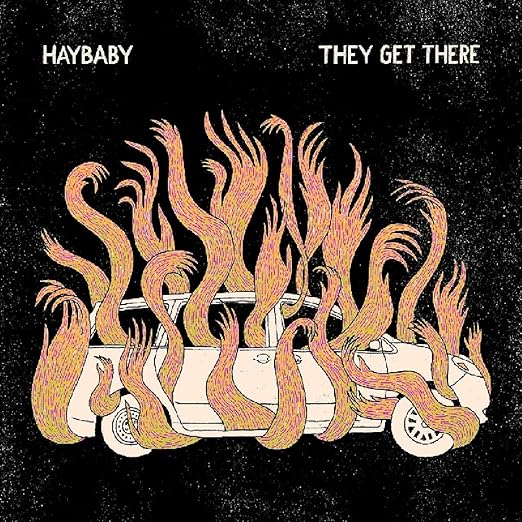




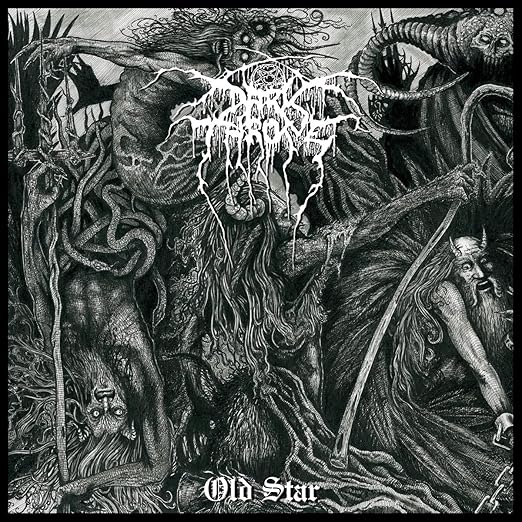
![Humanicide [Explicit]](https://m.media-amazon.com/images/I/A1ULSozvPmL._SS500_.jpg)
![ZUU [Explicit]](https://m.media-amazon.com/images/I/81ko39R+WrL._SS500_.jpg)
![Barriers [Explicit]](https://m.media-amazon.com/images/I/81S5qE3mxlL._SS500_.jpg)