On paper, detractors that remained in the metalcore scene had plenty of ammunition in 2016. After years of providing the most chaotic brand of the genre to hit a mainstream audience, The Dillinger Escape Plan announced that they were terminating the band, concluding an enviable career with their swan song Dissociation. Their counterparts in Converge, though not absent from the scene, had not released new material since 2012, creating a subtle sense of doubt over whether or not there would be more to come. In the prog-core circle, proceedings apparently reached a grinding halt once key groups began to falter late in their career, in part due to personnel alterations. Erra presented Drift, which was caught in the shadow of Augment — a tall task to defeat such an influential record, in fairness — while Northlane began a steady decline in quality. Younger acts that took up the mantle were similarly faltering; Invent, Animate disappeared following Stillworld and lost a critical component when vocalist Ben English decided to depart from the band. For those that desired another surge in the creativity of the underground or the progress metal crossover realm, the classification seemed to have launched headfirst into a brick wall and shattered, with little…
What exactly causes a genre of music to ‘die’? The concept is used commonly, yet the specific definition shifts depending on who utters it. For some observers, a category experiencing a demise means that it has lost any and all creativity. Others contend it occurs when, as far as mainstream coverage is concerned, the genre appears to lose whatever relevance it had. In an extreme case, there may be so few named players in a scene that it might as well be declared obsolete. If anything, I find that the latter explanation seems most appropriate. First, the concept often supplied of ‘lacking imagination’ is less of a “genre is dead” scenario and more of a case of stagnation. Groups still exist in the classification — perhaps even in high amounts — but none of them are diverging from the classics that led to their emergence. Secondly, the mainstream is a poor judge of measuring viability, since the underground will never receive the same press coverage. Thus, a scene where the big-league bands are struggling can give a false illustration, because what happens under their domineering popularity might be compelling. The nadirs of metalcore may not have been at the productivity witnessed years prior, but it was…
Do you ever listen to music and feel like it was made for you, when it clearly wasn’t? Sometimes even when you know an artist absolutely has not had the same experiences, something about their music feels personalized, as if they were watching your life and wrote it with you in mind. I can’t speak for the entire transgender population, obviously, but I have a theory that trans people face this more than other people. We don’t have the privilege of being surrounded by art that was created by people like us, for people like us. As much as trans music has achieved more mainstream acceptance in the past decade (looking at you, Arca, SOPHIE, and 100 Gecs), there’s still very little out there, especially for people who like music that isn’t pop-adjacent experimental electronic. I think there is a lot of discussion to be had about what makes some music so relatable to certain trans people (read: me, a trans woman). So that’s what this is about – music that isn’t specifically for or by trans people that feels like it is.
First on my list is “Morning Train (Nine to Five)” by Sheena Easton. This song is very traditional in its portrayal of gender roles, glorifying a man who works hard to find his (narrating) wife waiting for him when he gets back home, fucks her that night, and then continues the cycle the next day. It’s understandable that from an outside perspective, this…
The blueprints for post-metalcore had been amassed over the course of the 1990s. Once the genre began near the early 2000s and stepped into a new century, the efforts of groups past started to coalesce into products that combined their influences into the primary works of the post-metalcore catalogue. The overarching category as a whole was readying to embark upon a renaissance period that would result in an explosion of new acts. A changing of the guard was occurring as the hardcore acts of yesteryear passed the torch on to nascent crews. Those that survived the shifting of years, like The Dillinger Escape Plan, Converge, and Zao continued to accrue relevance, with the former two bands hitting their stride in the initial half of the new decade — Miss Machine would arrive in 2004, while the iconic Jane Doe would storm the metal world in 2001, forever changing the category it was attached to. It was in this period that an affinity for melody was championed, which found a home in the spacey soundscapes of Hopesfall and the addicting passages of Misery Signals. Norma Jean was starting to wreak havoc. Underoath was slowly starting…
What Rolo Tomassi managed to accomplish in 2018 deserves to be remembered for decades to come. The year 2018 as a whole was a landmark for the metalcore genre in the modern era of its existence, but Time Will Die and Love Will Bury It attained mainstream attention that wasn’t matched by peers who performed a similar style. Across metal music platforms, the British collective dominated front pages and earned acclaim for a sound that wasn’t often brought to the forefront of the scene. Perhaps most surprisingly was the crossover appeal that the group cultivated; individuals that had not a care for metalcore or even metal overall discovered that the band scratched a very particular itch few other acts could offer. However, I’d argue that this phenomenon was inevitable, not shocking. It’s imperative to note that Rolo Tomassi were not an unknown entity, as their impressive body of work in the underground demonstrated a gradual progression to a magnum opus — Grievances was enough of a hint that a masterwork was imminent. Other than that fact, the precise presentation the group engaged in was a methodology that had been quietly developed in the background for years. It took a tremendous year for metalcore to expose…
Here’s a small list of some new releases for the week of July 24th, 2020. Please feel free to request reviews for any of the following albums from staff and/or contributors, and by all means, feel free to leave a comment as to what’s missing. How Sowing does this every week is beyond me.
– List of Releases: July 24th, 2020 –
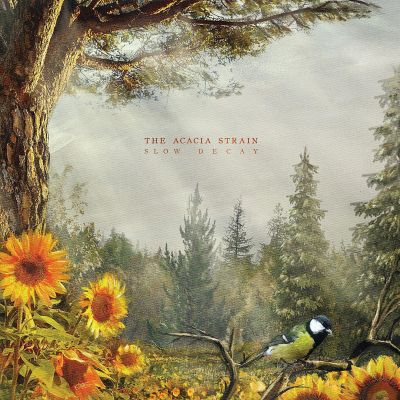
The Acacia Strain – Slow Decay
Genre: Deathcore
Label: Rise Records
Bombay Bicycle Club – Two Lives (EP)
Genre: Indie Pop
Label: Mmm… Records
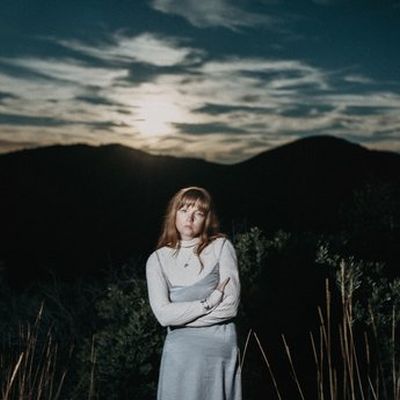
Courtney Marie Andrews – Old Flowers
Genre: Singer/Songwriter, Americana
Label: Fat Possum
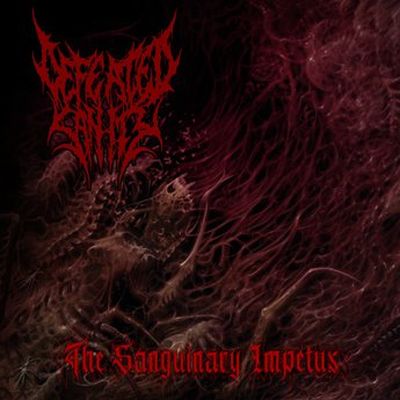
Defeated Sanity – The Sanguinary Impetus
Genre: Death Metal
Label: Willowtip
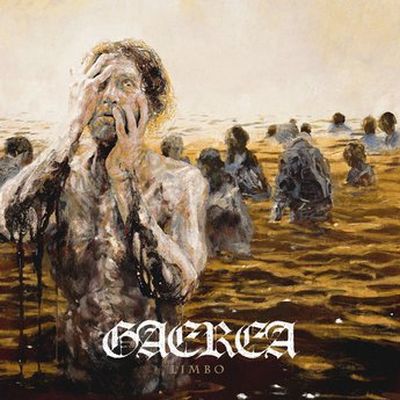
Gaerea – Limbo
Genre: Black Metal
Label: Season of Mist
Haken – Virus
Genre: Progressive Metal
Label: InsideOutMusic
The Irrepressibles – Superheroes
Genre: Art Pop
Label: OND Recordings
Jessy Lanza – All the Time
Genre: UK Bass, Synthpop
Label: Hyperdub
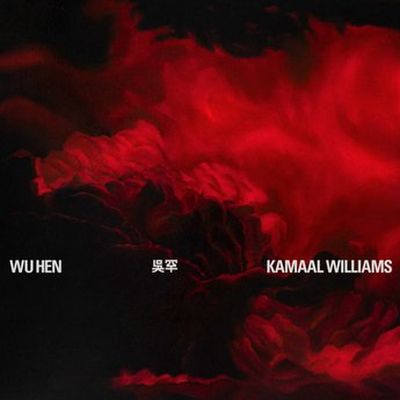
Kamaal Williams – Wu Hen
Genre: Jazz/Funk
Label: Black Focus
Katie Dey – mydata
Genre: Art Pop
Label: Run for Cover
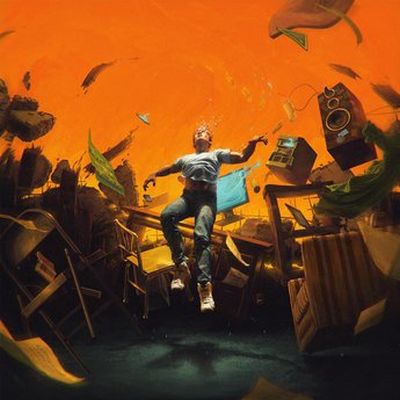
Logic – No Pressure
Genre: Hip-Hop
Label: Def Jam/Visionary Music
First and foremost, it’s very unlikely that you’ll have heard of Eric Solomon. The Canadian artist briefly surfaced sometime between the late 2000s and early 2010s, most notably with the release of electro-pop single “A.L.L.” in 2010; I remember hearing that on constant rotation, here in Vancouver. At one point it even reached top 20 in the Billboard chart, in no small part thanks to an MTV appearance by Eric on defunct docu-drama The Youth Electric. Perhaps it would be a disservice to Eric Solomon’s musical abilities to focus on the trajectory of his (no longer) public image, but when you have a copy of his EP that no longer seems to exist on the Internet, you can’t help but wonder how someone who achieved a decent amount of radio play and publicity has, quite simply, disappeared from the Internet.
(In fact, “A.L.L.” wasn’t even the only song of Eric to have received radio play; I recall that “I Found Love” and “Lottery”, which both fall into the same stylistic vein, were both on air at some point. Strangely enough, the latter can now only be found in remixed versions.)
Search results reveal no social media presence, as well as few download or streaming links to his material — YouTube comes up with autofill results for song titles that lead to no actual video, and anything that does pop up on video sites…
It’s back! By popular demand, some of us contributors (current, former, and new) sat down to introduce ourselves to genres that people in general and we in particular tend to avoid, as recommended by you, the users. Here’s what we thought…
HARDCORE PUNK
Recommended by cvlts
Assigned to neekafat
Before listening to your two songs, what’s your opinion of hardcore punk?
I mean, all that I really know about the genre is from the classic days of the Misfits and Minor Threat. I’m admittedly not super into those bands (I know, heresy), which is probably why I haven’t looked too deep into the modern equivalents. There’s something so simple about the musicianship to those bands that never quite got me interested (if I want aggression I’d probably just listen to thrash or something), but I’ve always respected the genre and try to keep an open mind.
Nails — “Endless Resistance”
Okay so I won’t lie, I know this band from my decade cram list last year (I jammed Unsilent Death), and I thought these guys were technically grind? This song is definitely not dissuading me from the fact that this is more metal than anything, but I’m kinda into this. The vocals have a weird nu-metal vibe to them and the pace is a bit more sluggish than I’m used to from hardcore. The guitars…
10. Manchester Orchestra – A Black Mile to the Surface
Genre: Indie Rock // Released: 2017
I remember things that I have business remembering. I remember things that are strangely specific and serve no purpose other than adding another aspect to a memory. It might be that it helps me connect to it easier, yet the last thing I desire is for it to remain in my head, its lingering ghost consistently roving about whenever a single thought drifts towards it. The crux of the occurrence is unchanged; I still ran out of a crowded room, I still ended up on a street corner in the cold winter of the Appalachian outskirts, I still got picked up by a patrolling police car, I was still at in a room where I heard the same comments as I’ve always heard, and I still ended up in my dorm—no escort or assistance other than a throwaway recommendation. But what constantly reappears during this recollection is that while curled up in a fetal position, rocking back and forth in a torn sweatshirt that hardly protected against the lowering temperature, I repeated to myself the same phrase: “It’s no cold.” I kept count and reached 121 utterances of this hollow mantra before the officers came by, doubtlessly believing I was yet another drunk college student out of control. Though the former was false,…
Death sucks. That goes without saying, especially now, yet we never seem to grow tired of those artists who explore the topic, at least where broached with due care and respect. Those aren’t words I would typically associate with Mark Kozelek, were I to fixate on the brash manner in which he tends to conduct himself in the public sphere, but that’s exactly what Benji is: intensely contemplative and deeply respectful. The arbitrary injustice of that senseless equaliser is addressed via anecdote, through tales whose underlying meaning (or lack thereof) is seldom unpacked. The tragedy of Jim Wise is recounted without passing judgement, favourable or otherwise. Purpose isn’t grafted onto Carissa’s passing, although Mark searches. Micheline and Brett are mourned, with no overarching narrative plastered over their loss. There’s no silver lining to be coloured in; no higher meaning to be gleaned or uncovered. It is what it is. Yet this acceptance of meaninglessness is meaningful, in and of itself, and with it Benji becomes more than just another folk record about death. Unadorned and matter-of-fact, absent vague platitudes and superficial conjecture: it’s the real deal. And it’s terrifying. – Asleep
I’d bet Michael Gira still cracks a good chuckle every now and then when recalling that time he tried to sell his soul to the Devil in exchange for eternal inspiration and unbridled creativity, and the Lord of Flies laughed at his face arguing he had no use for a soul like his. Post-reunion Swans’ unholy run of three albums, namely The Seer, To Be Kind and The Glowing Man, certified that Gira and co. had reached a musical ecstasy desired by many and achieved only by a few, and that a spirit binding contract was, thus, unnecessary.
Sandwiched between two of their most acclaimed releases, To Be Kind seems to have been driven by one of the most devastating existential crisis experienced by Gira. Going in you’ll be welcomed by an asphyxiating apathy which slowly evolves into hypnotic instrumental lunacy. Gira’s singing suffers a transfiguration throughout the album. It’s the sound of a man forlorn into his self-imposed quest for meaning, which mid-album ejaculates the overwhelming grandiosity of the infamous 34 minute epic combo baptized as “Bring The Sun/Toussaint L’Ouverture”. And the band tails the deranged frontman toe-to-toe, stretching from the unsettling calm of songs like “Some Things We Do” to the infuriated euphoria of enrapturing jams like “She Loves Us” or “Nathalie Neal”. Even if To…
There’s a case for any Hop Along album to be placed here, but Bark Your Head Off, Dog stands out as their most accessible and most innovative work. It saw them shift from releasing superior versions of the records every other indie band was churning out to making the record those bands *wished* they could. Bark… is equal parts coffee shop and arthouse, full of adventurous songwriting that sees the band eager to expand their sonic palette. It packs punchy hooks, but for every “Somewhere a Judge” there’s a “Look of Love.” Frances Quinlan is unafraid to meander here, yet she’s a mature enough writer that these parts are considerable assets. The best cuts combine both: “The Fox In Motion” and “Prior Things” are indie wet dreams, sophisticated arrangements supporting freeform vocal tour-de-forces. In a few years we may look at this as the album that ruined Hop Along; if that’s the case, they’ll have taken a sizable chunk of the hipsterverse with them. – Johnny
74. Casualties Of Cool – Casualties of Cool
Genre: Ambient/Blues/Country// Released: 2014
While Devin Townsend temporarily abandoned gonzo theatrical progressive metal for the sparse and spacious Casualties of Cool, his attention to sonic detail and willingness to fearlessly experiment made it a…
The version of Thrice that made Major/Minor was an enviously well-oiled machine, a savvy group of veterans effortlessly creating some of the best rock music of the decade. A natural conclusion to the band’s sonic transformation, in some alternate universe where the hiatus is a permanent break-up, Major/Minor is viewed as the perfect swan song. Thrice’s return five years later, however, does not make Anthology any less anthemic, nor negate Yellow Belly as the best opener in the band’s catalog, nor does it diminish the irresistible groove the Breckenridge Bros lock into on some songs. Teppei found many of his best textures and tones here (see Treading Paper and the underrated Blinded), and Dustin’s vocal performance (aside from some rehashed lyrical themes) is refined to the ideal mix of soul and grit. Everything fits together perfectly, making Major/Minor one of the best albums from one of the 21st century’s most reliably great bands. – BroFro
99. Cult Of Luna – Vertikal
Genre: Post Metal// Released: 2013
At once claustrophobic and expansive, Vertikal’s oppressive, dismal industrial atmosphere builds titanic walls around you that slowly but surely close in, crushing all in their path. Opener The One explores decaying brutalist synth tones punctuated by distorted kicks; the totalitarian mood further probed for I: The…
Outside of the incredible musical content, the fleeting existence of No Note as a band was captivating to me; their work seemingly arrived and departed without any explanation. Here was a collection of tracks with titles taken from the Red Hot Chili Peppers, a despairingly brief band biography, little to no information on contributing members, and so on. Questions heavily outweighed any answers. Perhaps leaving the book closed as-is would have kept the album in a sort of open ending where the conclusion was left to the listener However, on a whim, drummer Robert Murray reached out after having read my review for if this is the future then I’m in the dark. One impromptu, casual conversation-turned-interview later, and the story surrounding the mysterious record began to crystallize. Here’s the result of my time with Rob, who graciously gave his time to discuss how No Note came to be, what made it work, what made it come apart, and how to cope when negativity surrounds you.
Mars/Mitch: I know this is rather an open question, but this it’s probably one of the more burning ones I’ve got: what exactly was No Note? The bio was like an obituary and there seems to be so little information on you guys. Was it a band or was it more of a one-off?
Rob: It was a normal band. wasn’t just a project intended to be a one off. Dave, Nate and myself all played…
This is part of a hopefully ongoing series in which I dissect the previous decade using media as a lens. As a first installment this is old, written about a year ago, and was published elsewhere on a website now defunct. I hereby resurrect it here, warts and all. Next installment: how The National Fucked Us Over. Cheers. Shaka.
Those of a conspiratorially-minded constitution will probably already be aware of this, but a particularly bizarre one – as with all the good ones, it doesn’t have so much of an urtext but is rendered in variations the lucidity of which depends on your interlocuters sobriety or lack thereof, or how frequently they starting gumming themselves – involves the C.I.A. using what we now term “identity politics” to stifle proliferating socialist movements in 1970’s America. As with all good conspiracy theories, there’s more than a kernel of truth to it. Declassified documents reveal a sinister level of adroit manoeuvring by intelligence agencies on this front: when Black rights, Queer rights and Women’s rights movements throughout America were reaching peak agitation levels, Intelligence agencies didn’t stoke the fire exactly – but they did see a way it could be weaponised against the most unholy of Evils, Communism. It wasn’t as simple as sending a conventionally beautiful woman with a mission of collapsing socialist rhetoric to a women’s rally, although there was that. They augmented this predictable approach by bringing out the agent provocateurs. To those galvanised by the prospect of much-needed equality…