Written by Matthew French and Daniel Heater
Sigh just released Goh-Ka through Peaceville on September 4, 2026, more than three decades removed from Scorn Defeat. Instead of mellowing into comfortable elder-statesman metal like so many of their contemporaries, Sigh prepared a record about Buddhist depictions of a human corpse progressing through the nine stages of decomposition. The title itself plays on three different Japanese terms: infernal fire, the apocalyptic fire said to consume the world at the end of time, and karma. Goh-Ka continues the increasingly personal confrontation with mortality that fueled Shiki.
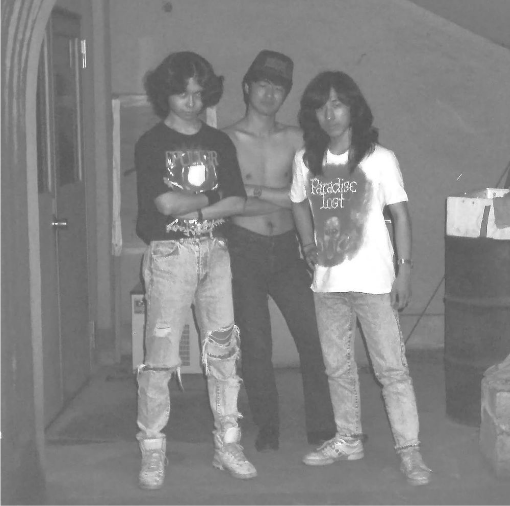 Sigh 1990 (official Instagram)
[S] – Seeds of Sigh
To understand how Sigh arrived at an album like Goh-Ka, though, we have to rewind more than three decades, back to a version of the band that (at least from a glance) looked considerably easier to pin down. But even the comparatively conventional version of Sigh wasn’t particularly conventional.
You can hear in the 1990 Desolation demo and the 1992 Requiem for Fools EP (both of which have songs from the 1993 debut) that Sigh mastermind Mirai Kawashima’s classical and horror soundtrack influences were the crux of his writing. We have ocarina, lo-fi choir synths, and piano all before it became trendy, and certainly before he could have heard what Emperor was cooking.
Sigh and Emperor were paving the symphonic way completely independent of one another. However, in Japan and Asia in general, the metal following is miniscule compared to other genres, and that remains true today. While…