
Written by Matthew French and Daniel Heater
Sigh just released Goh-Ka through Peaceville on September 4, 2026, more than three decades removed from Scorn Defeat. Instead of mellowing into comfortable elder-statesman metal like so many of their contemporaries, Sigh prepared a record about Buddhist depictions of a human corpse progressing through the nine stages of decomposition. The title itself plays on three different Japanese terms: infernal fire, the apocalyptic fire said to consume the world at the end of time, and karma. Goh-Ka continues the increasingly personal confrontation with mortality that fueled Shiki.
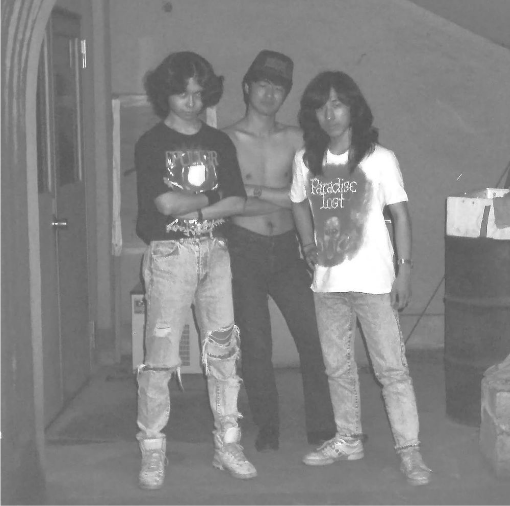 Sigh 1990 (official Instagram)
[S] – Seeds of Sigh
To understand how Sigh arrived at an album like Goh-Ka, though, we have to rewind more than three decades, back to a version of the band that (at least from a glance) looked considerably easier to pin down. But even the comparatively conventional version of Sigh wasn’t particularly conventional.
You can hear in the 1990 Desolation demo and the 1992 Requiem for Fools EP (both of which have songs from the 1993 debut) that Sigh mastermind Mirai Kawashima’s classical and horror soundtrack influences were the crux of his writing. We have ocarina, lo-fi choir synths, and piano all before it became trendy, and certainly before he could have heard what Emperor was cooking.
Sigh and Emperor were paving the symphonic way completely independent of one another. However, in Japan and Asia in general, the metal following is miniscule compared to other genres, and that remains true today. While that tiny following was craving the brand new death metal/grindcore outbreak, Sigh was saying “no” and played Venom covers while composing their classical/horror OST-tinged records. And when I say they played Venom covers, I mean they were covering them more than playing their own material. For years. Until today’s lineup, Sigh had been cursed with members who couldn’t reproduce live what they barely managed to record. It is the reality of having the mastermind but having to get by with your limited choices of people. Knowing the players’ limits also limits what you write for their instruments.
“Here in Japan, our most popular album is obviously Hangman’s Hymn, so when we play here, we play more songs off this album. In Europe and the US, I believe they want to hear earlier, more black metal stuff, so when we play abroad, we play a lot from Scorn Defeat.“
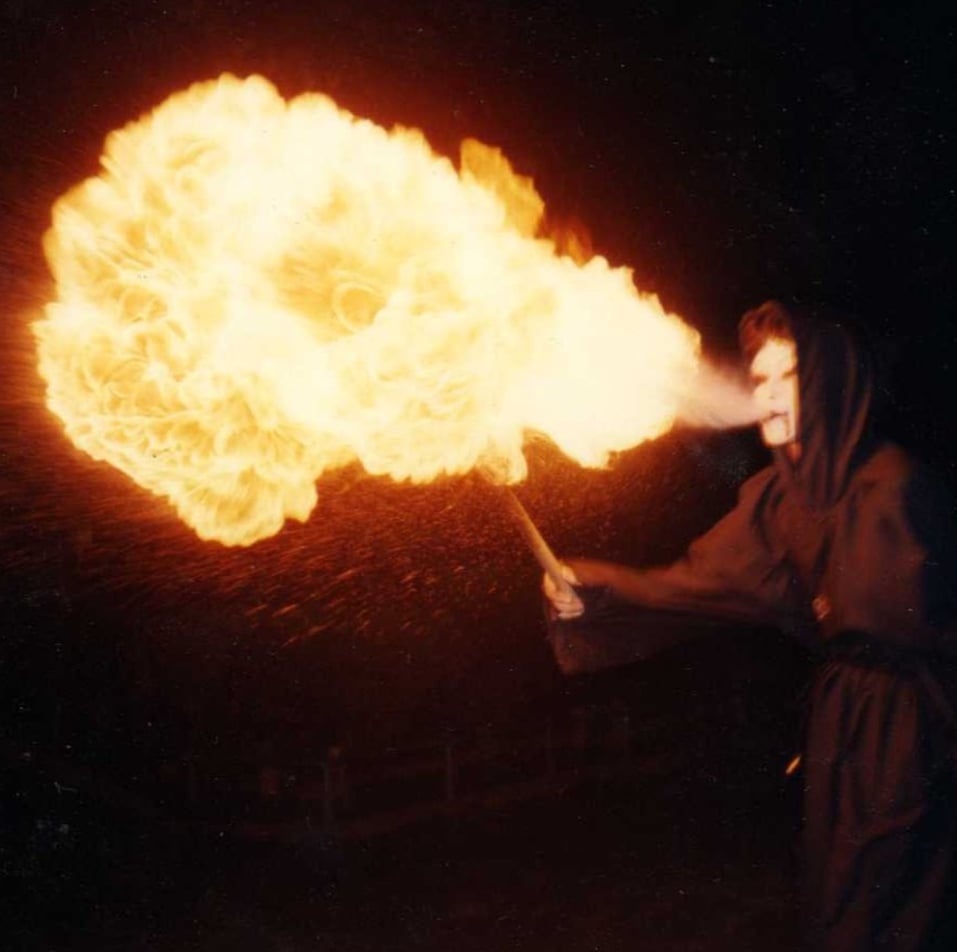 Successful fire-breathing | Infidel Art era (official Instagram)
1994-1997 saw the band more focused on recording and tape-trading than playing live, which may have influenced the decidedly moody and soundtrack-like approach to Infidel Art and Ghastly Funeral Theater. Of the two releases, only “Shingontachikawa” from the latter is played live, while “The Zombie Terror” from the former was only added to the set in 2026.
You might expect more of the same from the Ghastly Funeral Theater EP, but it’s quite a diversion and an absolute must-hear. Mixing Japanese occultism with their eclectic influences produces one of their hardest-to-explain sounds, now joined with flutes, horns, folk, shuffle, operatic tinges, and their first instance of psychedelia, which shows you where they were heading.
[I] – Into the Dream: The Great Mutation
Ghastly Funeral Theater had already pushed Sigh well outside the black metal framework, but Hail Horror Hail is where describing them that way starts to become genuinely difficult. Mirai wasn’t consciously trying to create an avant-garde or progressive metal record; he was aiming to recreate the feeling of a horror soundtrack. And that interest led him toward 20th-century composers like Bartók, Penderecki, Ives, and Messiaen, and from there into experimental rock and free jazz. Outside of Goblin, he’s said progressive rock itself wasn’t a major influence on the album.
It’s an album that rarely moves in a straight line. Ideas disappear mid-song, unrelated passages take over, and then the original thread can return sometimes moments later. The album was framed as a “movie without pictures,” which is a more apt description of it than pinning it down with genre labels. Classical, psychedelia, samples, thrash, doom, and soundtrack ambience all flow through the record without much concern for clean transitions or neat resolutions, yet the horror atmosphere is felt throughout. Even its strangest detours tend to reinforce the same sickly, theatrical mood.
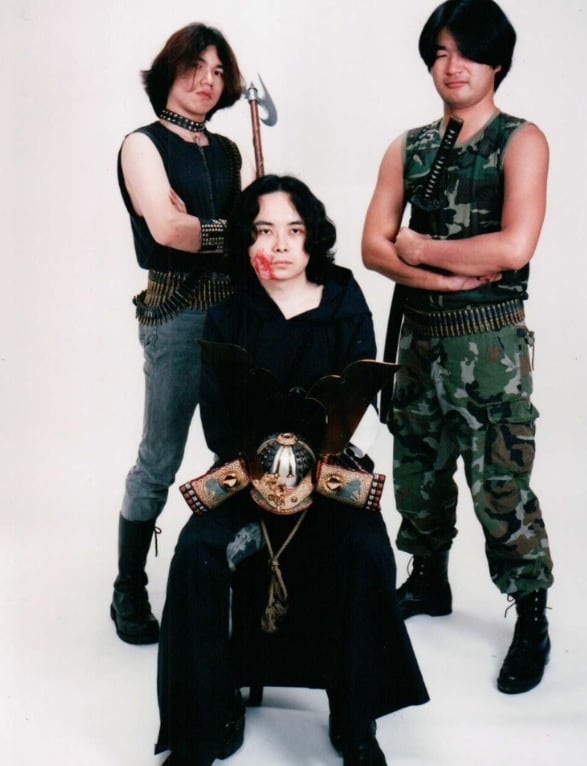 Hail Horror Hail (official Instagram)
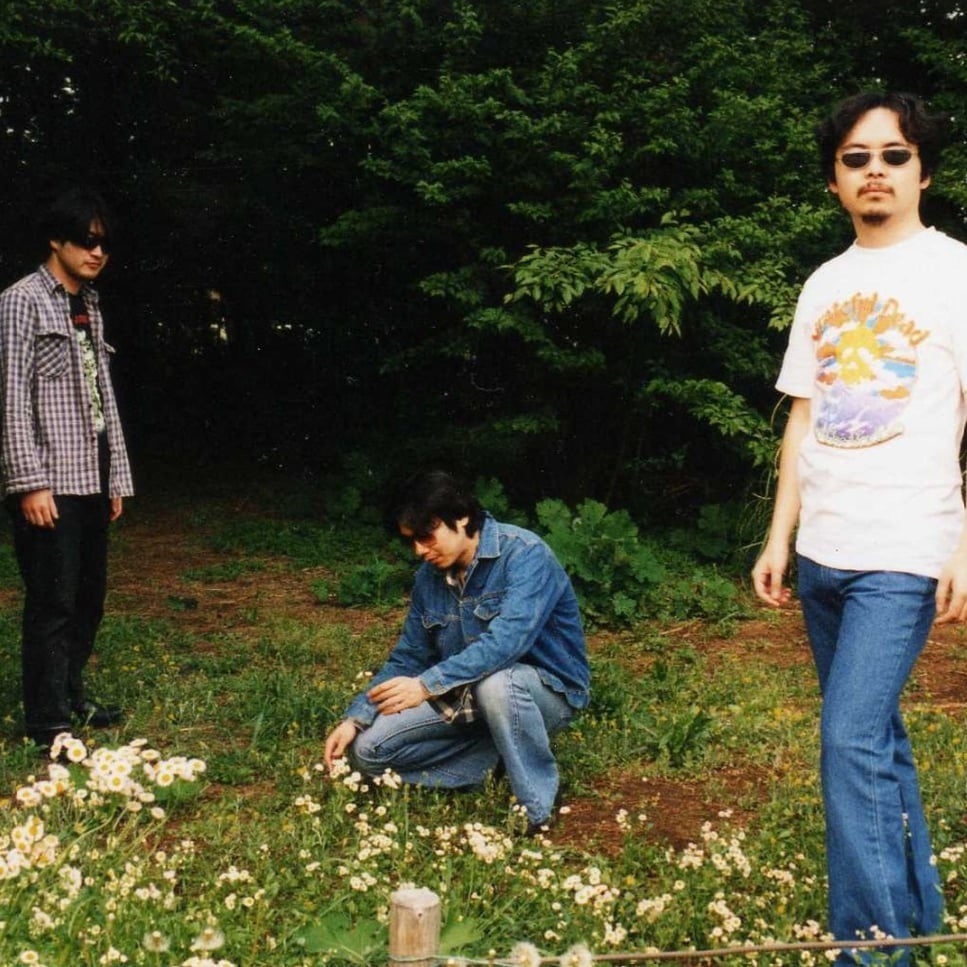 Scenario IV (official Instagram)
The circumstances around the album weren’t ideal, though. Sigh wanted out of Cacophonous after Hail Horror Hail, and Century Media had shown interest, but the band still found themselves stuck. They also ran into budget limitations while in the studio. Mirai has been blunt about the finished album over the years: “I don’t like the sound of the last album Scenario IV. I think it has a quite clear sound, but it was not heavy enough and the orchestration parts didn’t turn out to be as I wanted.“
Given all that, I think Mirai’s dissatisfaction with Dread Dreams feels harsher than the album deserves. The production may not have matched what he had in mind, but its murkier sound and eerie, dreamlike atmosphere give it a sort of character that neither Hail Horror Hail nor Imaginary Sonicscape quite shares.
Mirai has used dreams before as a way of describing Sigh’s music. “You know, anything can happen in dreams. Something that contradicts what can happen in the real world can easily happen in a dream.” That makes Hail Horror Hail, Dread Dreams, and Imaginary Sonicscape feel almost like this sort of loose dream trilogy, despite Sigh never officially treating them as such. Hail Horror Hail applies this through abrupt horror-film-like cuts; Dread Dreams sinks further into atmosphere and expands their palette; and Imaginary Sonicscape enters into full psychedelic “anything-goes” territory.
And truly, “anything goes” is an accurate description. Metal, jazz, classical, psychedelia, electronic textures, pop melodies, and even old progressive rock are all over this album. It’s a smorgasbord of styles and ideas, but somehow it never feels like Sigh are arbitrarily throwing everything at the wall to see what sticks. “Corpsecry – Angelfall” might just be the easiest entry point for newcomers to Sigh: catchy enough to latch onto immediately but surrounded by enough keyboards and strange turns to make the band’s broader identity obvious. Elsewhere, “Scarlet Dream” somehow finds its way into dub-reggae, “Nietzschean Conspiracy” wanders into lounge territory, and “Requiem – Nostalgia” pulls several of Mirai’s musical backgrounds together at once
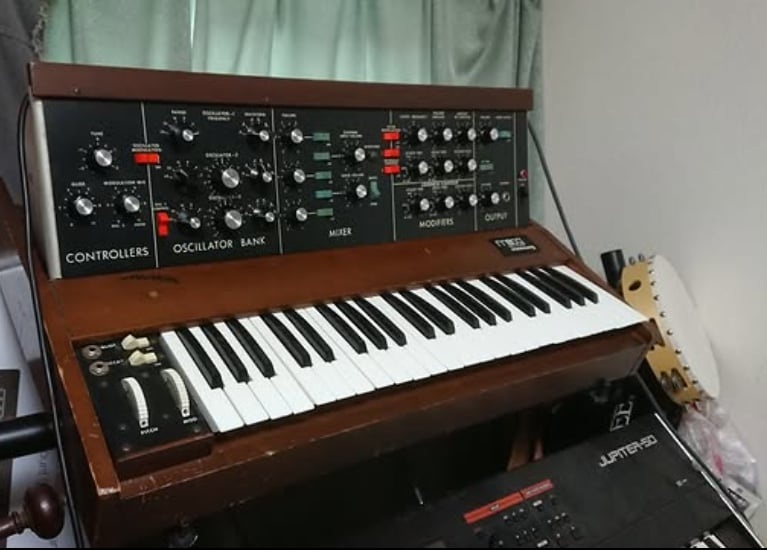
By this point, all of these genre collisions stopped feeling like gimmicks. Sigh had spent years gradually expanding what could fit inside their songs, and Imaginary Sonicscape is the album where it all starts sounding “normal” by their standards. I think that level of cohesion probably has a lot to do with how personal Sigh has always been to Mirai. He’s never seemed particularly interested in exploiting one marketable sound or style. It often feels like an outlet for whatever happens to fascinate him at a given moment, whether that’s horror scores, classical composition, traditional Japanese music, etc. He has said that he has always decided Sigh’s direction himself, and that genuine sense of passion and curiosity is a large part of why their wild combinations work rather than sounding contrived.
However, that reputation took a while to settle in for them. Mirai remembers a large portion of the Imaginary Sonicscape reviews being negative when it came out, but today it’s one of the records most associated with the band. It’s a wild experience and the one many fans swear by as their peak. They could’ve spent years refining that sound, but as always, Sigh were never content to idle too long in one mode, and their next album would be one of the most radical departures of their career.
[G] – Grandeur in the Grotesque: Sigh Reaches New Heights
As was the case for many a band at the turn of the millennium, record labels didn’t know how to handle bands that didn’t fit in a box. Century Media had signed the band, undoubtedly hoping for a black metal album, but getting Imaginary Sonicscape instead. From a business P.O.V., it’s no surprise that Mirai’s intent to do a jazz/ethnic album next didn’t sit well with them. Already having dealt with the terrible management of “Craphonous” (Mirai’s name for Cacophonous Records), the band left the label preemptively.
So, what did we get as a result? Gallows Gallery. Neither jazz nor ethnic, but there are remnants of that vision to be sure: the intro of opener “Pale Monument,” the melodies and sitar of “The Enlightenment Day,” multiple guest saxophone solos, and the horror-lounge of “The Tranquilizer Song” and “Gavotte Grim.” Mixing with their NWOBHM influences in particular, the record is a cohesive, all-killer-no-filler set of 100% clean singing, their most straightforward compositions thus far, and flat-out fun. Both authors accidentally listened 10 times in a row.
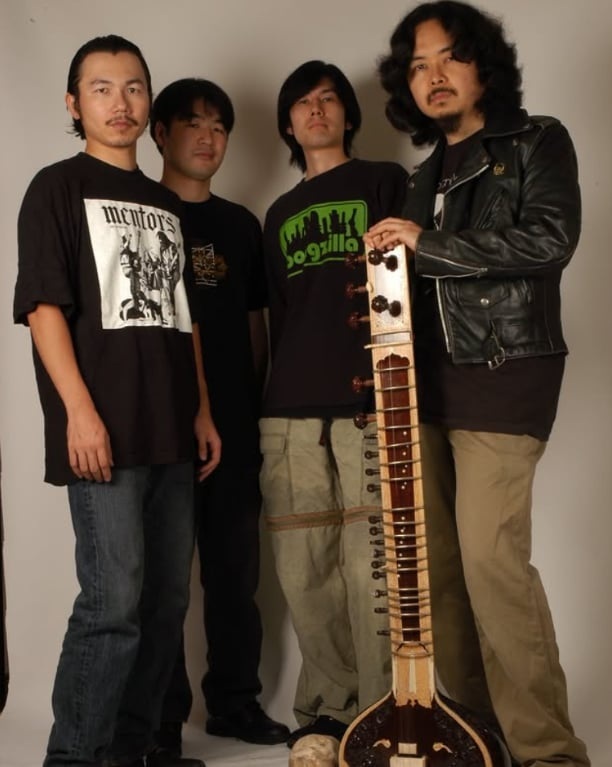 Gallows Gallery (official Instagram)
Still, Mirai never being satisfied with himself, several songs were shelved from the album in the tumultuous year-long recording. One of them was “Amnesia,” which would be given new life on In Somniphobia. Mirai also says he was unaware the original sound quality wasn’t all that great; you might say growing up on Venom and Bathory bootlegs gave the man an extremely high tolerance for “alternative” production.
To follow it up, Mirai wanted to get back to his roots: German classical music and 80s thrash. No more kitchen sinks. Just cranking those two elements to 11. That must have made him satisfied. Right?
“I always thought that Hangman’s Hymn was one of my best compositions, but it does not necessarily mean that it is my favorite album by Sigh simply because it’s got flaws. The drumming is excessively monotonous, and the guitar playing is sloppy. The production is far from the best, and my orchestration isn’t great.”
Regardless, the album was their breakthrough. They toured North America for the first time, experienced widespread acclaim for the first time, and they added Dr. Mikannibal to their ranks as a touring vocalist (for now). To this day, this album’s songs are the most featured live due to fan appreciation.
Unlike the vast majority of “background synths” + “chugga-chugga, sweeps, chugga” symphonic metal, Hangman’s Hymn applies actual classical and orchestral sensibilities while weaving the guitar and bass arrangements into it. There are leitmotifs that you can pick out at various spots in the album, and they take on different meanings depending on which instrument is playing them. Mirai was really implementing his 20 years of classical training, yet he never let the album get too serious. Despite the misanthropic lyrical content, there are enough moments of pure musical joy carrying over from Imaginary and Gallows.
All in all, Scenes from Hell is where Hangman’s preparation really paid off. Hangman’s Hymn had used a few real trumpet parts, but this time Sigh filled the album from beginning to end with real orchestral instruments. Mirai drew heavily from Franz Liszt and Richard Strauss – particularly their symphonic poems. Strauss was said to have claimed that an orchestra could basically describe anything, so naturally Sigh set themselves the modest task of describing hell. Paintings like Böcklin’s “The Plague” and Bruegel’s “The Triumph of Death” helped inform the imagery. Even drawings of victims of atomic bombings and air raids were used as inspiration. Mirai wanted listeners to picture tanks, explosions, fire, etc., without any explicit religious or anti-war messaging attached. He wasn’t so much interested in making some larger ideological point as he was in rendering those images as vividly as possible through sound.
And the execution is huge. It’s violent. It’s theatrical. Everything sounds like it’s happening all at once: frantic horns, martial rhythms, battle-worn guitars, saxophone, and all the little melodic turns Sigh had spent years honing. Somehow all that chaos came across sounding tightly composed, even when the arrangements grew hectic. One of those rare maximalist records where the excess is very much the point.
But getting it to sound that way was another matter entirely. As Mirai put it, “The brass section sounds very powerful by itself. Guitar, bass and drums sound powerful enough by themselves. However, once all are mixed, they could often kill each other’s powerfulness!” In order to get it to hit with the force he wanted, it took a lot of trial and error. Maor Appelbaum originally mastered the record, and Mirai praised the result prior to release, but it was the standard version that ultimately came out with James Murphy credited for mastering instead. Seemingly unable to settle on just one mix, Sigh eventually included both versions in a later edition.
But that complication was small potatoes compared to what lay ahead. The next decade would see the band bouncing between big renewed creative highs and disastrous creative lows (including one particular album Mirai would come to openly despise), lineup upheaval, and troubled recording circumstances.
[H] – Hell Is Other People: Sigh’s Midlife Crisis
Being a metal band in Japan isn’t enough to put bread on the table. What about Babymetal, you ask? “I DESPISE crap like BABYMETAL. I DESPISE crappy people who are shameless enough to pay for such crap…” What about Visual Kei, you ask?
Dr. Mikannibal: This genre is all about appearance and entertainment, but it is not exactly metal…
Mirai: It’s not music!
Being a trve metal band in Japan isn’t enough to put bread on the table. This gives Sigh more freedom to make the music they want to make, and after three comparatively normal records, Mirai was itching for more adventure. He said he had no label or budget pressures anymore, which let him work on the next album until he was 100% satisfied. He was happy with the results for once, calling In Somniphonia “perfect, at least for us.”
While you could say it combines the horror and eclecticism of their “Dream Trilogy,” this is the fever dream — darker, smarter, more mature. However, it must be said it is far less aggressive or immediate than the last three “normal” records. You could blast those speeding down the freeway, but this is more of a sit-down experience. And why wouldn’t you want to sit down with that gorgeously twisted artwork and madman scrawling in the booklet?!
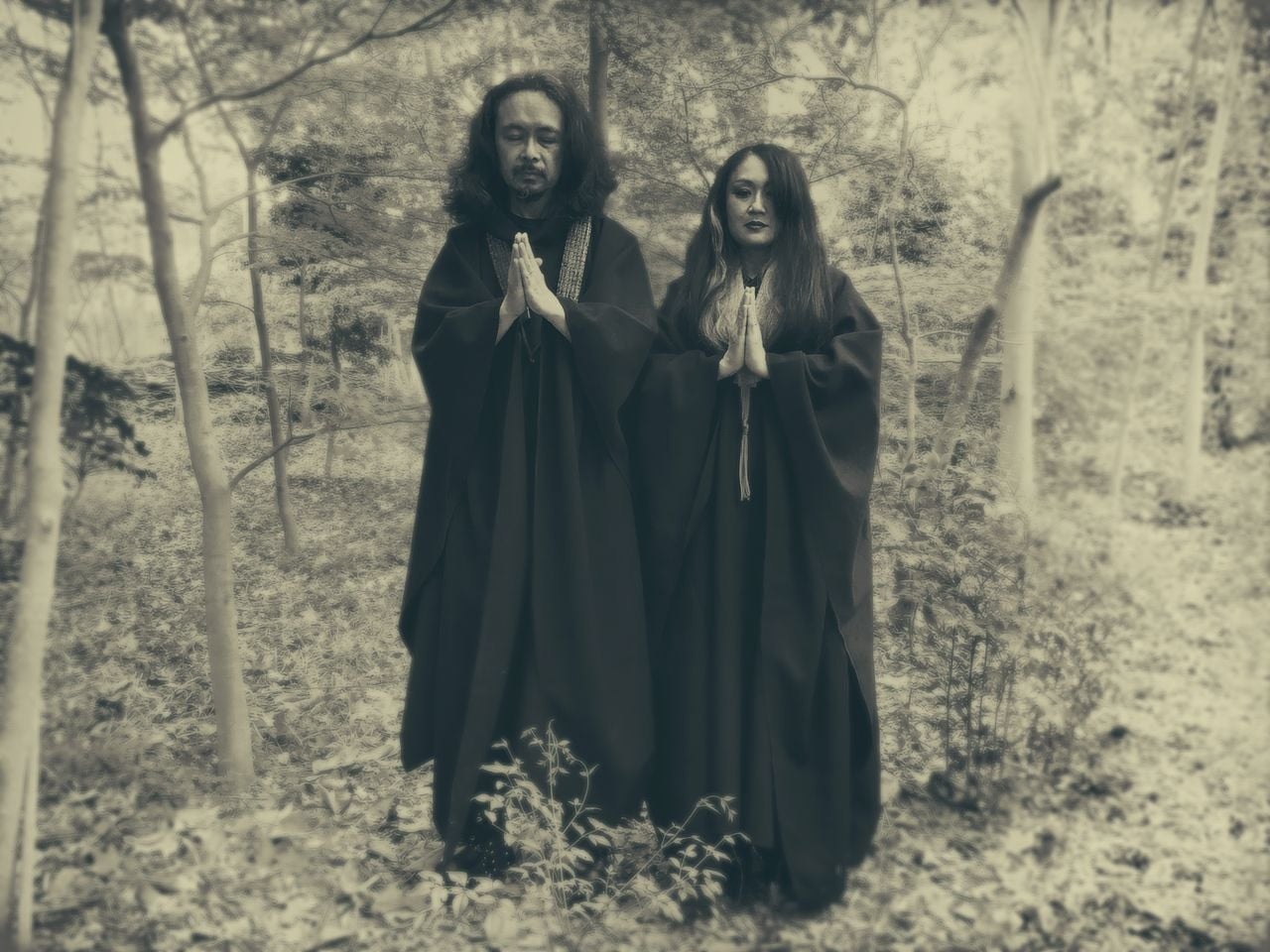 (Peaceville Media, credit: Sigh)
Taking the dream theme to heart, it starts off fairly normal, until falling down the rabbithole, where genres slip through your fingers like sand. It might help to consider tracks 3-9 a single symphonic poem, while the bookends are the gentler segues into and out of the (fever) dream. Mirai’s experience gained with orchestrating and his day job in media (the myriad effects and samples were handmade) makes this a more mature affair than older Sigh records, yet no less imaginative. The band’s spread of influences has never been this wide, yet you could argue they handle the bizarre and surreal with much greater finesse, because while the longer songs have returned here, I don’t get the impression a second was wasted.
Unfortunately, the self-satisfaction would be short-lived. The next album was to be Sigh’s 10th, and Mirai craved yet another change in direction, hoping to write a psychedelic prog metal album, but guitarist Shinichi Ishikawa, who had been there since Scorn Defeat and performed the band’s most complex guitar work on In Somniphonia, sent Mirai sloppy, out-of-tune recordings of the new album’s guitar parts. In tandem with frustrations over the guitarist’s commitment to the band, Sigh as a group was in jeopardy. Mirai wasn’t sure the album would ever see the light of day.
On a whim, he emailed You Oshima, who was behind the solo project Kadenzza, but hadn’t been active in music since 2005. It turned out the reason for that was cancer and living near Fukushima. Luckily, both worries were remedied by the time Mirai reached out, and Oshima was happy to hop aboard and record most of the guitar parts for album #10, Graveward. It also features as many guests as a hip-hop record. So how’d it turn out?
By Mirai’s own admission, he got “too much into” the symphonic arrangements for the album during the dragged-out, desperate search for a new guitarist. He was so desperate, in fact, that he entrusted You Oshima with the engineering and mixing for the album, as well as the mastering for the Japanese release. The result is a LOT of guitar-ing, a LOT of brass and strings, and a LOT of theatrics. Given the response from fans and critics alike, people seem to either love it or hate it. As for Mirai, he has since sworn off playing any songs from the album:
“I simply hate Graveward… I hate the arrangement. I hate the guitars. I hate the mixing. I hate everything except the great artwork.“
And to continue on from it, he resolved to carry his original vision of a psychedelic prog metal album through to the end. Mirai stripped away all the symphonics and left all the solos to Oshima, and he also ended up writing half of a song called “In Memories Delusional,” which makes Heir to Despair the first Sigh album where Mirai shares writing credits. It also marks the first album where, due to child rearing, Dr. Mikannibal isn’t present aside from a couple of her archived saxophone recordings. Perhaps still reeling from his regrets about Graveward, Mirai did the opposite of what metal bands do for promotion: he said fans are gonna hate it.
”It’s not a part of [a] promotion plan or anything. I just mean it. This is 100% my personal album. This album is not meant to please anybody including the band members.”
To be sure, if there were any album I’d have trouble picking out as a Sigh album from a blind listen, it’d be this one. Psychedelic prog really is the descriptor to use for a lot of it, but the middle “Heresy” suite is an excursion into trip-hop and sound collage, and “In Memories Delusional” absolutely has Oshima’s extreme Kadenzza DNA in it. The title track in particular features arguably the most delicate performances in the band’s career on a taishōgoto, shamisen, and what sounds like a softly purring saxophone.
After a potentially career-ending clash with the original guitarist, Sigh was marching on, and to Mirai’s surprise, the reaction to Heir to Despair was mostly positive. Oshima is to receive more writing credits on two songs of the upcoming album, and Mirai describes the situation as him saving Sigh and Sigh saving him. Things seemed to be looking up, but slowly, Oshima became hard to reach, would barely respond, and when he did send recordings for demos, they were (deja-vu) sloppy and out of tune. He had been a big contributing member, and then one day, he wasn’t.
Sigh had spent almost three decades now exercising their musical muscles, but not all the members were making the same gains. If Heir to Despair wasn’t meant to please even the band members, one might wonder if this introspection might have been the impetus for what happened next. Well, that, and lots and lots of death.
[S] – Second Wind: Shiki
Up until this point in their career, Sigh wrote about death from a distance. When Miria wrote “At My Funeral” for Scorn Defeat in his twenties, death was still horror movie material. It was theatrical and imaginary – a concept that was exciting to examine at a safe remove. By the time he began Shiki, however, he was in his fifties. Friends were dying around him, and his father would also pass away shortly before the album’s release. Death had stopped being this cool, abstract thing to write songs about and became, in Mirai’s own words, “a harsh reality.”
The album title nicely illustrates this shift too. Shiki can mean different things depending on the kanji, but Mirai centered the record around two meanings: “time to die” and “four seasons.” At 52, Mirai saw himself as being in the late autumn of his life, with winter getting closer. The changing of seasons became a way of measuring how much life he had left.
The artwork mirrors this concept. It draws on a centuries-old Japanese poem about an elderly man watching cherry blossoms scatter in the wind and recognizing himself in the falling petals. Cherry blossoms’ notoriously brief bloom maps neatly onto “mono no aware,” the Japanese sensitivity towards impermanence: beauty made all the more affecting by the knowledge that it’s fleeting and will eventually disappear. Mirai was struck by the fact that someone hundreds of years ago could look at those falling blossoms and arrive at essentially the same fear regarding mortality.
That emphasis on Japan wasn’t limited to the album’s themes and imagery either. Mirai has called Shiki the first Sigh album he consciously tried to make sound Japanese. Heir to Despair had already used Japanese lyrics and traditional instruments, but he doesn’t consider the album itself particularly Japanese. On Shiki, those elements became much more fundamental: all of the lyrics are in Japanese, and traditional Japanese instruments are worked throughout the album. After decades of pulling ideas from basically every direction, Sigh found another new direction by drawing more directly from their own culture.
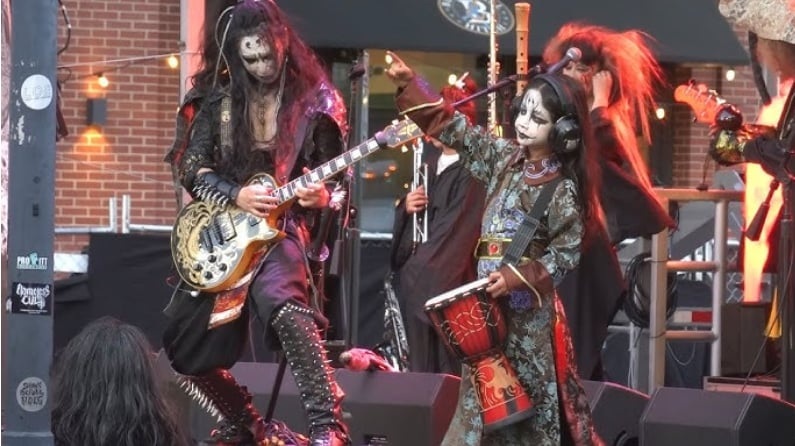 (Maryland Death Fest 2025 – agentpatience YouTube)
Behind the scenes, things were changing for the better too. Sigh signed with Peaceville, while the pandemic led to Mirai ruling out recording together conventionally. Mirai ended up bringing in former Fear Factory drummer Mike Heller and Kreator guitarist Frédéric Leclercq, who also handled nearly all of the bass. After so many years of frustration with musicians who couldn’t always play what he wrote, suddenly that problem was gone. “Mike and Fred can play anything. They played even much better than my expectations.” For once, Mirai finished a Sigh album without immediately compiling a list of everything wrong with it. At the same time that Shiki found him becoming increasingly preoccupied with the idea of getting older, Sigh itself seemed to have found a second wind.
[I] – I’ll Do It Again!
Sigh’s new home under Peaceville put more wind in their sales (pun intended). Before they even gave the label a new album, Peaceville remastered Scorn Defeat and issued the demos/rarities compilation Eastern Darkness. After Shiki, Peaceville nabbed the rights to the Cacophonous-era albums, remastering everything up to Scenario IV, including the Ghastly EP.
Nozomu Wakai, known in Japan for Destinia (classic metal/speed metal) and as a general guitar whiz, came aboard as well, but he also started adding to their visual design on stage. He’s credited with the live backdrop and props, potentially even costumes. He also performs Sigh’s 30-year-span repertoire, including songs never played live, with just the right feel. Not an easy feat when hopping from one subgenre to the other. It’s no wonder Mirai said he’s “the best guy we’ve ever had in our band.”
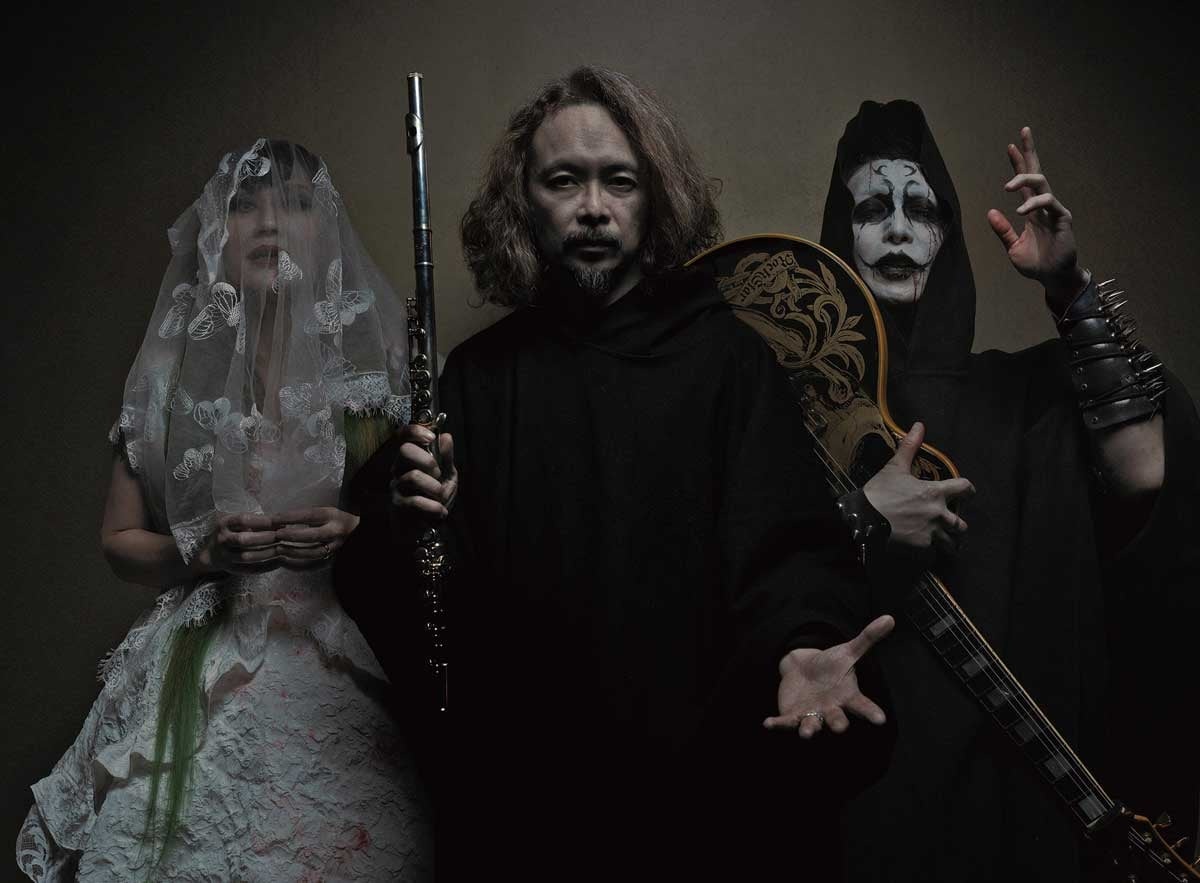 Hangman’s Hymn MMXXV (Peaceville)
With Heller as a session drummer and Wakai a full-time member, Mirai could finally go ballistic in ways that weren’t possible with previous members. He had already regularly shown regret with Sigh releases, and in 2010 the Curse of Izanagi EP featured a complete rewrite of the penultimate track from Hail that cut it down to half the length, as well as an atmospheric venture of “War” and Coltrane cover “Spiritual.” But now he had the experience, maturity, and personnel to do more than just a single song.
He claims redoing Hangman’s Hymn was unfinished business, and upon hearing the results, it’s evident what he meant. On the metal side of things, the skank beat fest has been replaced with what sounds like composed drum parts, the bass is actually present, and the guitars… Woo. Way more technique and rhythmic complexity plus additional layers for more harmonic complexity and rewritten solos—in tandem with the new drums and bass—make it wildly aggressive in ways the original couldn’t be.
Dr. Mikannibal also gives more clean/harsh harmony and vocal trade-offs, but the reorchestration is where a great deal of the subtle changes may go unnoticed. A lot of the original’s bombast is stripped away. Where there was once a barrage of strings and choir, there may now be a sole violin and softer brass section. Where there were clean vocals doubling a brass section, there may now be a thinner brass part with a harmony. Pizzicato stabs may now be gone entirely. It’s as if he were whittling the album down to its core, which certainly provided more room in the mix for every instrument to be heard.
The band was on fire. The hunger for live music post-pandemic was waiting, and Sigh gained the best touring musicians they’ve ever had, including metal pro Tomotaka Ishikawa on drums and pop bassist Yukiko Shibutani in full corpse paint. It had taken Sigh their first 30 years to play 74 shows. They played another 55 in just the last four.
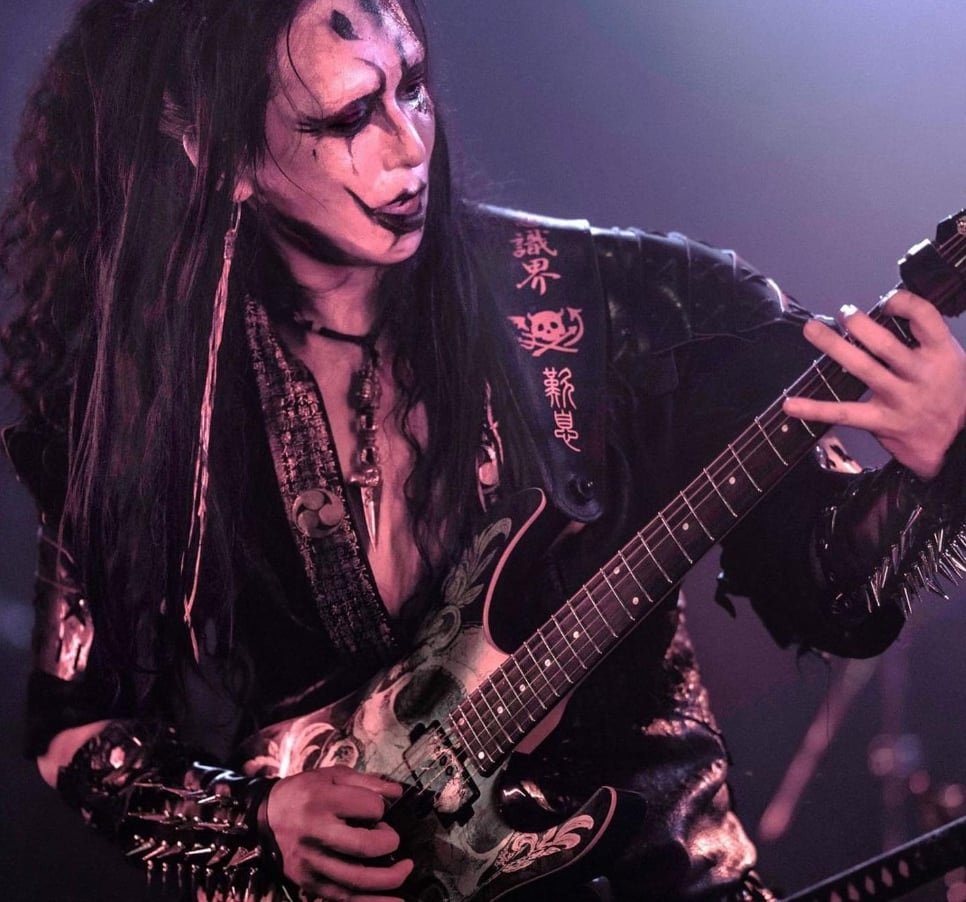 (Official Instagram, reposted from @nozomu_wakai_destinia)
[G] – Goh-Ka
And that brings us up to speed with the recent release of Goh-Ka. Mirai describes Sigh’s 14th album as a musical and lyrical continuation of Shiki, albeit the imagery of the album art is a little less subtle this time. The album’s central thesis revolves around two things. First, Jigoku-Zoshi, a series of paintings popularly known as the Buddhist Hell Scrolls. Intentionally horrid, they were meant to dissuade monks from sinning. Second, kuso-zu/kuso-shi, Buddhist paintings/poems of a female corpse progressing through nine stages of decomposition, a reminder that nothing lasts forever in life and that attachment is futile.
Mirai says the album contains basically everything he’s loved over the past 40 years. “This is something I wanted to create. This is something I wanted to listen to, myself.” And the good news is he knew from the outset that Mike Heller and Frédéric Leclercq would be handling drums and bass, meaning he wouldn’t have to write around another musician’s technical limitations. The rework of Hangman’s Hymn also brought Mirai back to orchestration after years of avoiding it following the release of Graveward.
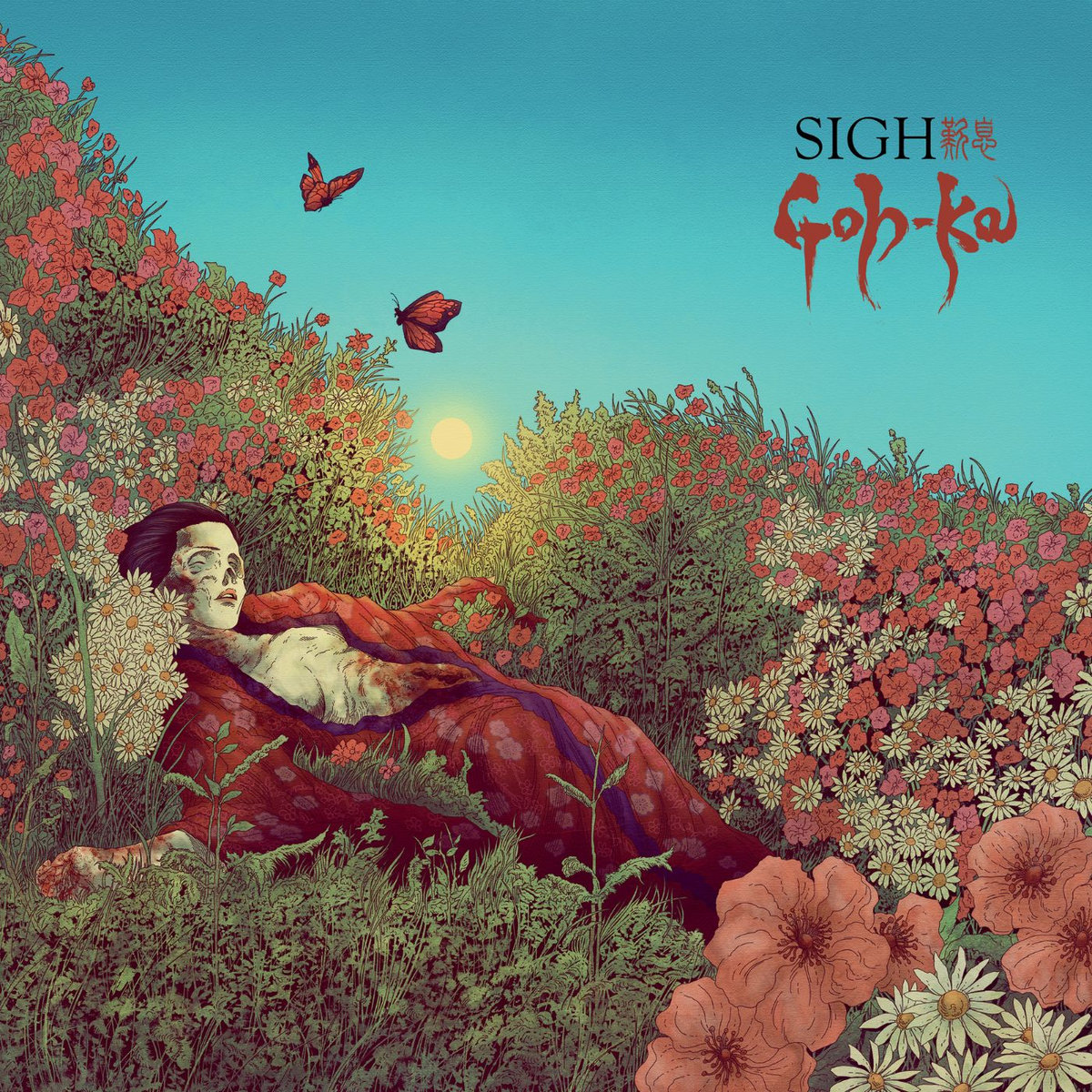 Goh-Ka album art (Peaceville)
However, much like the rework of Hangman’s, the orchestration side of things seems to be largely restrained, while the traditional Japanese instrumentation has even more territory than on Shiki. Sigh’s doom elements are also back in the Kuso-shi tracks, the almost tech-thrash features in the Jigoku tracks, and the prog/journey feel in all the others. Nozomu Wakai and Yukiko Shibutani’s histories would never have led me to guess they could perform all these styles in such a way that fit Sigh so well, yet they do. It is one of the few hour-long records that makes the most of its time, even in its interludes, and I’d rather scrape my tongue than use the phrase “most mature album to date,” but gosh darnit, it took a 50-something-year-old Mirai to churn out this beefcake. Tony Iommi could count with his remaining fingers the number of bands releasing career-defining albums this late in their career.
Mirai has spent 35 years pursuing everything from horror soundtracks to lounge jazz, occasionally loving the results and just as often deciding years later he screwed them up. But now he finally has a lineup capable of keeping up with his ambitions, a label he seems happy with and one that actually cares about preserving Sigh’s legacy, and a new album built from the same refusal to settle into one version of Sigh for too long. And if a new interview is anything to go off, Goh-Ka’s follow-up “H” record may be the band’s swansong, so try to catch the band on what may well be their last few international tours before this spark, too, fades away.
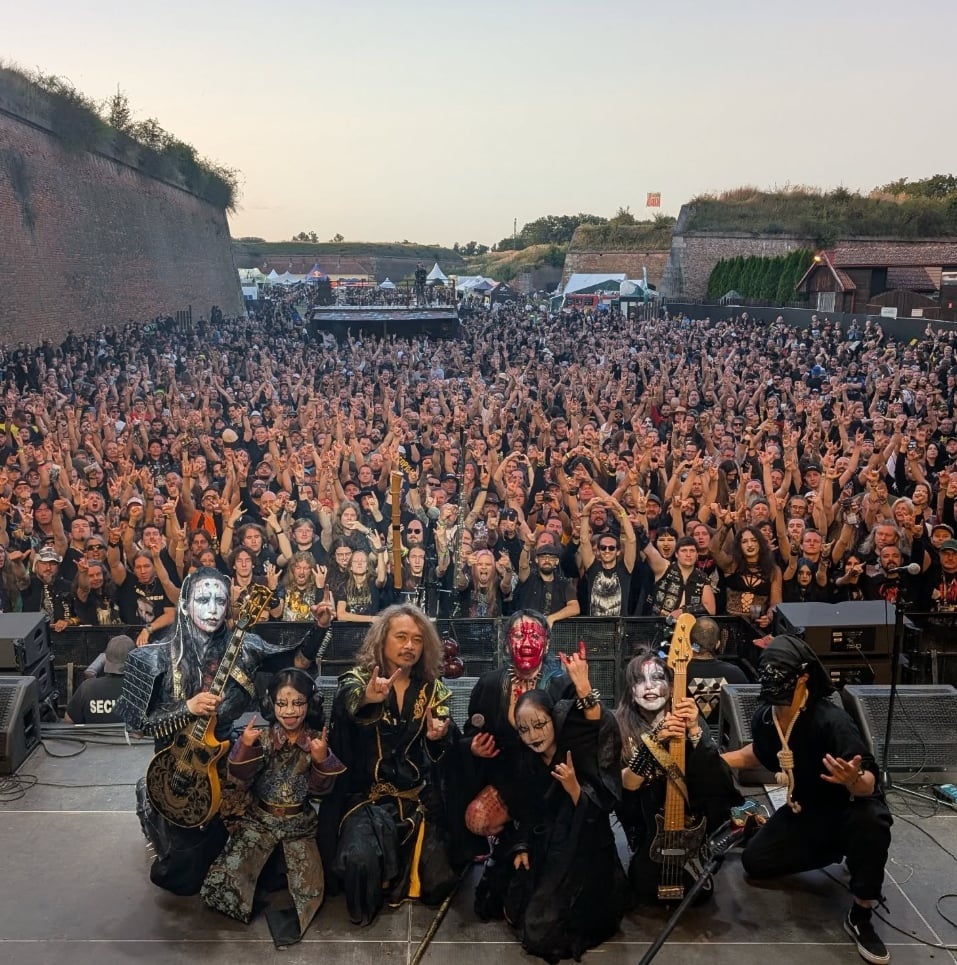 Brutal Assault 2025 (official Instagram)
[H] – Here Is Our Curated Playlist



09.10.26
09.10.26
09.10.26
09.10.26
09.10.26
09.10.26
09.10.26
09.10.26
09.10.26
09.11.26
09.11.26
09.11.26
gonna give this a read later. seriously awesome stuff!
09.11.26
09.13.26