
I’ve got with us today, musical prodigy, Raphael Weinroth-Brown, here to talk about his new album, Lifeblood, which comes out on the 3rd of October. It’s been a few years since we last spoke, so give us a bit of an up-to-date on what you’ve been doing the last few years.
Sure. I guess the last time we spoke was after the release of Inheritance, Musk Ox’s last record, so that would have been 2021. I released my live album Worlds Within Live and Inheritance within a week of each other in summer 2021.
A good year.
Yeah, it was a good year for releases, for sure. In 2022, I resumed touring with Leprous and got back on the road in the US and Canada in early 2022, then immediately after that I got involved in a contemporary dance project with Ottawa Dance Directive here in my hometown of Ottawa; that was a very immersive project which involved me performing my entire Worlds Within album. Following that, I started to play live quite a lot as a solo artist throughout 2022, so I was very active as a live performer, playing both material from Worlds Within as well as a plethora of new pieces that I was composing throughout the year, some of which ended up on Lifeblood. I did a very long tour with Leprous in the fall 2022-2023 with Apocalyptica; we did a European headline tour, 40 shows in 7 weeks, it was very long, so I was on the road for a long time. Then I went straight into touring, again with Ottowa Dance Directive, performing my album with them, and in the summer, I composed more solo music. I was informed that I wouldn’t be able to join the next European tour with Leprous in Spring 2024, because of their budget and it was a short tour, so during that time I thought it was a good time to record some of this new material I’d been working on. I had been playing live a lot and building a new audience at home and online, so I decided that I should really commit and just make an album.
I’d been holding off for a while, because I really wanted to make it as good as I possibly could, and I didn’t want to compromise in any way. Being a bit of a perfectionist, it’s easy to get scared by the prospect of creating something that you really care about; you care so much about the music that you almost don’t want to concretise it and finalise it, so you sort of have to live with that version you’ve created. It’s almost easier for it to stay an idea in your head forever, so that you don’t have to commit to anything, but I realised that now was the time: I’m not going to be on tour, so let’s book the studio and get it done. Initially, I booked 10 days in the studio to track everything and then I could deal with the mixing later, but it ended up being a much longer process that stretched out through 2024. It was the most expensive, challenging, and gruelling album I’ve ever made, by a long shot. It involved a lot of trips to Toronto, and a lot of really long days; I would go there and book an Airbnb so that I had nothing to come back to except an empty room. I worked 8 hours during the day in the studio, recorded until I was blue in the face and then retired to the room really tired. I went to sleep early and I repeated the process. I worked very closely with the engineer, Darren McGill, on pre-mixing the album, because I had such a specific idea of how I wanted everything to be. So, he was very involved in actually shaping the sound of the album too, and we worked all the way until the end of October 2024, where it was sent off to be mixed.
Then in early 2025 I went on another tour with a dance company from the UK called James Wilton Dance. Last summer, I composed a new work, basically an album’s worth of music for them which they commissioned me to write it, and we did a show together called Bach Reimagined which I toured throughout the UK and Germany. That tour lasted about 7 weeks. Concurrently with that, I was also doing all the production stuff for Lifeblood, getting the masters and artwork finalised, as well as organising music video shoots. Since then, I’ve been back home preparing for the album release. Making records takes time and it’s better not to rush it if you can, but you also don’t want to miss the boat and never do it. You have to commit and bite the bullet, and it’s going to be hard a lot of the time, because you have to face things that feel uncomfortable – like your performance not feeling good to you, or not being satisfied with the songs and being okay with certain details, and just having to live with them. Ultimately, I think if you really dive deep into the details, and you just keep reworking things and doing it again and again, eventually, you get to a point where you’ve done it to the best of your ability, and then you can rest easy knowing that you’ve done the best job you possibly can. And that’s how I feel about this record, I feel like it’s the best thing I’ve ever done.
We’ll get into Lifeblood later, but I will say it is phenomenal. Worlds Within is a great record but you just seem to improve the formula on every metric here, so all that work’s definitely paid off, in my opinion, anyway.
Thanks a lot.
Music in Canada at the minute is insane; the level of quality coming from there is a cut above everything else, but it’s funny, because any time I talk to you or Nathaniel, I feel almost sycophantic, because I’ve never got any criticisms for anything you both do – it’s always absolutely immense and it really resonates with me. As a musician myself and a bit of an outside thinker, when I started learning the bass guitar I used to look at people like Justin Chancellor and Ryan Martini, people who really pushed the instrument, and for you as a cello player, I think you do that as well – you push things into these unconventional spheres. You were classically trained, which I find fascinating, because you were moulded to follow this rigid status quo, but at the same time, you have this outside thinking to your music. How did that come about? Pushing the cello as far as it can go, is that an objective of yours as a player?
Totally, yeah. Innovation is a high priority for me, and going against the grain. I wouldn’t even say that it’s a conscious choice as much as it is instinctive. It’s funny you mentioned this – the classical training, and the the status quo and so on – I really feel that learning classical music and being in any educational structure and having to deal with authority and dealing with rules is so hard for me. Absorbing instructions and doing things exactly as you’re told has always been difficult for me. I think I’ve always retained, as you say, a sort of independent idea of what I want to create, and this outside thinking. It’s always existed – there was no way it could be beaten out of me, really. So, I learned the technique and the chops and I absorbed music theory, and all of that was really interesting to me and I always wanted to be good at it, but I had a really hard time absorbing and assimilating to the classical music aesthetic and playing style when I was learning the repertoire. It was really difficult for me to approach it and understand that intuitively for a long time, and I think especially as a young person, you grow up listening to metal and your whole mental framework around music is kind of based around rock and that paradigm. So for me, I was always importing that understanding of music into my cello playing and into my conception of music as a whole, regardless of whether it was chamber music or actual rock instruments.
I always had that concept in my head and now, more and more, things like audio engineering, frequencies and sound, tone shaping, I look at things more from an audio engineer’s perspective when I play cello so that I can find sounds organically, with the bow for instance. In the same way that you might do a frequency sweep on an EQ band, or, you know, you throw a plug-in on something – I’m trying to figure out how to do that acoustically and then maybe augment that with pedals. I really think on those terms, trying to integrate all of my musical experiences and preferences, and bringing in perspectives to so-called classical string instruments that are not really native to it, or aren’t traditionally used. So my approach to it is so idiosyncratic, and it’s become that way more and more over time, because of the music I listened to growing up, which was very diverse and wide-ranging, and because of the experiences I’ve had playing with all kinds of musicians from different backgrounds and different countries, has allowed me to create a very distinctive voice from that range of experiences and preferences.
It’s like the chicken and egg. What came first: were you exposed to classical music first or was it from, I don’t know, being in school or whatever, where listening to rock music came first?
It was concurrent. I always heard rock music on the radio from a very young age. I had a little radio in my bedroom as a kid; I would wake up early in the morning before my parents were up and I would turn on the radio and listen to whatever was playing in the mid-90s. I was exposed to that, and I started playing cello when I was 8 or 9, so I was exposed to classical music because of the records we had at home. So, in general, my parents had a big record collection which spanned a variety of genres. I remember hearing the Bach Cello Suites and I was just aware of the instrument, and I thought it was cool and different. I always wanted to do something that wasn’t the norm, that wasn’t the thing everyone else was doing. That always felt right to me in a way, to occupy a less crowded space, where there was more room to do something new and to be unique, which I’ve learned has become very useful in the arts nowadays. I think it always was, but maybe now more than ever, with the saturation of content that’s out there and the number of artists that are making music and the amount of virtual artists that are making music, you really need to stand out. But I knew about cello and I thought it was cool, and I wanted to play it, but I didn’t really know why exactly, it just felt good; I had this instinctive pull towards it. I was listening to rock music and I remember hearing Metallica on the radio and thinking that was cool, and always being attracted to the heavier-sounding rock music, the more distorted guitar tones and the more aggressive music. It always appealed to me, even as a young kid. I think everything sort of evolved out of that, and, you know, as one does, you go deeper and deeper down the rabbit hole and into more and more obscure and heavier territories.
Humour me with this, but if you were to pick two classical composers and two contemporary rock bands of the time, which would you say had the biggest impact on you as an adolescent?
On the classical side, Johann Sebastian Bach and Estonian composer Arvo Pärt. In terms of metal music in particular, I think Tool was a huge influence, and still is, the other would be Opeth or Meshuggah – one of those bands. Both have been hugely influential.
Definitely leaning on the prog side then.
They all have incredible discographies that, if you were on a desert island, you could find so much from those bands. You could construct a great setlist or playlist where you hand-picked one track from each album and it would be an incredible journey, and a real showcase of their progression. And I think in the case of many bands, definitely Tool, Meshuggah and Gojira, for instance, all those bands have done something really interesting in their careers where they essentially refined one idea. It’s like they found something really special that only they could do and it sounded exactly like them, and then with every album they somehow create a more refined iteration of that, so they could get closer and closer to the source of what it is that makes them who they are. And I think that’s a very powerful lesson for any artist. In terms of their evolution, in terms of finding a sound and honing it. And even though we recognise and go, “oh yeah, lots of people have imitated that,” it still sounds very authentic and it’s delivered with such unflinching authority. They’re not ashamed to just be who they are and I think that’s super cool. Even if it’s like a simple riff, it’s like, yeah, but listen to the way it’s delivered with confidence. There’s nothing more powerful.
It’s funny, with Tool, because it took God knows how many years for them to release Fear Inoculum, I had this really obsessive period with them back in 2009 or 10, like, absolutely obsessed, and then as the years went on, I’d listened to those albums so many times I kind of lost all my anticipation for it. Then when it did finally drop, it was absolutely incredible; it brought me straight back to that place where I loved them back in the day, and it just shows you how incredible they are as musicians.
Yeah, and there’s something very powerful about familiarity, too. When something’s familiar and new, when it reminds you of something that you hold very close to you, because of all the experiences you’ve had, but yet it’s also a new thing. And so, you’re exploring it for the first time, but it reminds you of all the things you love about that artist. The power of nostalgia is not to be underestimated.
Let’s get into the reason why we’re here, to talk about Lifeblood. As I said, this is an absolutely amazing album. You said you wanted to deliver something for fans and felt obligated to do it, but what was the driving force for making it, and why are you releasing it now?
Great question. Well, it’s a collection of pieces that I really enjoy, and that I hold very close to me. Some of these pieces are quite old. For instance, the tracks “Labyrinthine”, “Nethereal” and “Winterlight” all predate Worlds Within. I wrote “Labyrinthine” 9 years ago, “Nethereal” around 2018, and “Winterlight” around 2015. So, there’s some super old stuff that I was dying to record and get out there, and some newer stuff that I felt was more representative of where I’ve been for the last 3 years – my solo cello composition style and what my live shows are like, I wanted to refine that and make an extroverted statement in contrast to Worlds Within, which was more atmospheric and little less in your face. With Lifeblood I wanted to make a bit more of a bold statement, and it’s actually kind of the record I wanted to introduce myself with as a solo artist. When I did Worlds Within, it just felt more manageable from a technical standpoint. It wasn’t as difficult to execute from a cello perspective; it was still a challenging record to make, but this one was infinitely more. I think that the material on Lifeblood required a lot of virtuosity and a lot of precision – you can’t really hide anywhere, it’s just in the forefront, so I really had to commit to that and be very performance-focused. I spent a lot of time on each section, trying to get the best takes: I would run something for an hour, give fifty takes of something and then finally get the take I wanted. It was gruelling. It’s super intense to be in the studio with me, because I’m just like again, again, again, again, again, again until I know I can’t get it any better than that. I wanted to render it in such pristine quality, so that all the ideas I cared about would translate, and so for a similar reason I went to a bigger studio with a really nice live room and we took our time, and we recorded with lots of nice mics and got a very full and complete sound.
So that’s what the recording process looks like. In terms of the album’s impetus, it was to make music I cared about and wanted to release. I wanted to create more momentum in my solo career and I knew that having a new album would allow me to do that. There was a demand for a record, but I would say it was definitely for me first, rather than for the fans. Sorry fans, I hope you guys dig it anyway (laughs). But yeah, I think any piece of art, you have to make it for yourself, and you have to satisfy yourself, otherwise people will feel that. They’ll feel that you’re not doing it for genuine reasons, that it’s not coming from an authentic place. So, it was absolutely an intense passion project that I poured myself into, 110%. I’ve basically been working on this for nearly 2 years. I’ve released 3 singles from Lifeblood – the first 3 tracks on the album, “Lifeblood”, “Possession”, and “Ophidian”. All of those pieces are fairly recent, “Possession” and “Ophidian” were both written in 2024 and they’re really the result of me playing in this Middle Eastern influenced style, which accidentally blew up on social media. At the end of 2023, I was just posting some rehearsal clips of me playing “Lifeblood”, preparing for a show, and I recorded myself playing the whole song. I uploaded some clips to social media and they went viral, which led to a huge demand for more music like this. I was in a place where I wanted to write more music in that particular style anyway, because it had been something I wanted to express for a long time – a combination of metal and Middle Eastern influences on cello with this live-looping medium that I have been using now for a number of years for my shows. I took a few different ideas, a few different seeds, and I developed them. I was leaning into what I already knew worked; I had done the market research, I had made a bunch of posts that had done really well and people were asking for an album, they wanted to hear fully realised tracks. I guess the reasoning for creating this tracklist and releasing this particular album was predicated around the knowledge that those 3 pieces would go down well, because I already knew the super rough versions were extremely well received online, and so I committed to that.
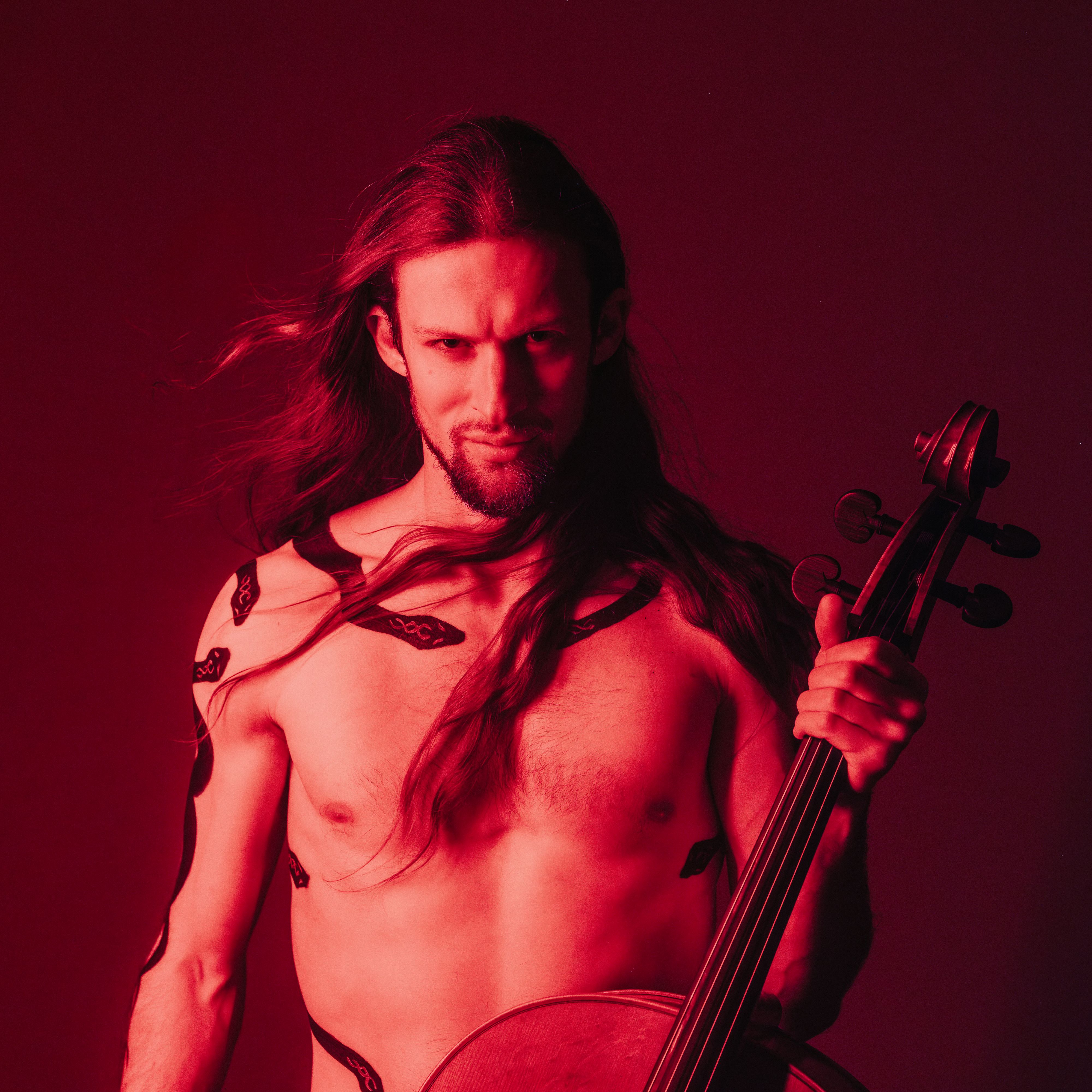
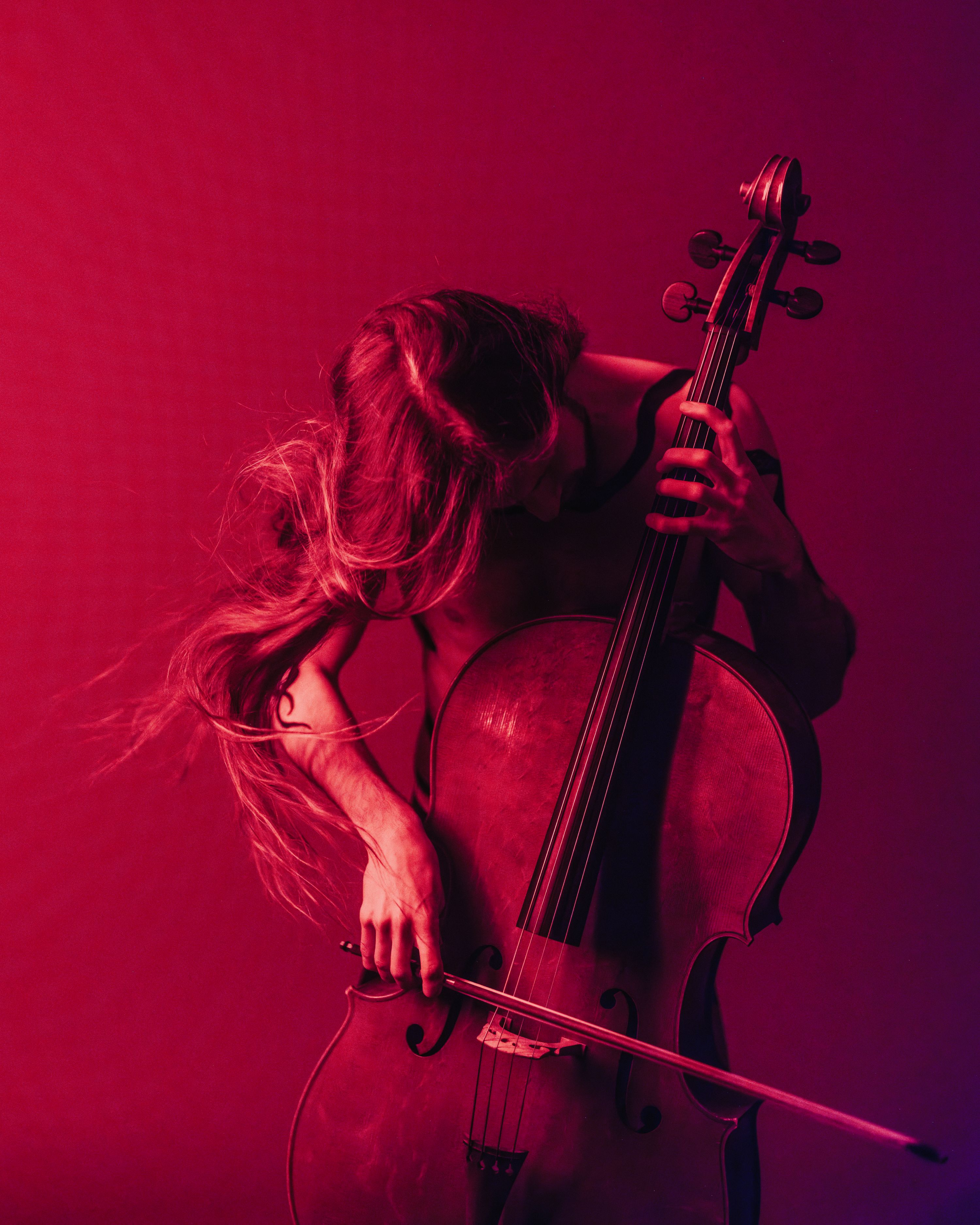
It’s worth mentioning that Lifeblood is a very autobiographical record about myself and about my musical journey, and I’m putting myself more at the centre of the branding in terms of the visuals and everything, where there’s this kind of narrative throughout. I’m making myself the protagonist. The “Lifeblood” music video is this idea of music being my life force, and it’s the thing that gets me up in the morning. It’s very much about the energy around music and what I’ve given to it; I feel like I’m a servant to the art and that’s what I really live for, you know? I want to make the best record possible. I want to make a record I’ve never heard before, and to be able to sit back and enjoy it at the end of the day, and hopefully other people will too. So, this type of devotion, there’s almost like a spirituality around music, this feeling that music is the source of a lot of the adventures and circumstances in my life, and was really central to the concept of the record. The music video visualises this comatose figure lying on the ground atop roots and branches, and then there’s this dream vision of me playing in this beautiful refectory. I awaken and explore this abandoned castle where I find this cello, and the cello’s this old friend or a lover from a past life, and I’m reconnecting with it and remember who I am.
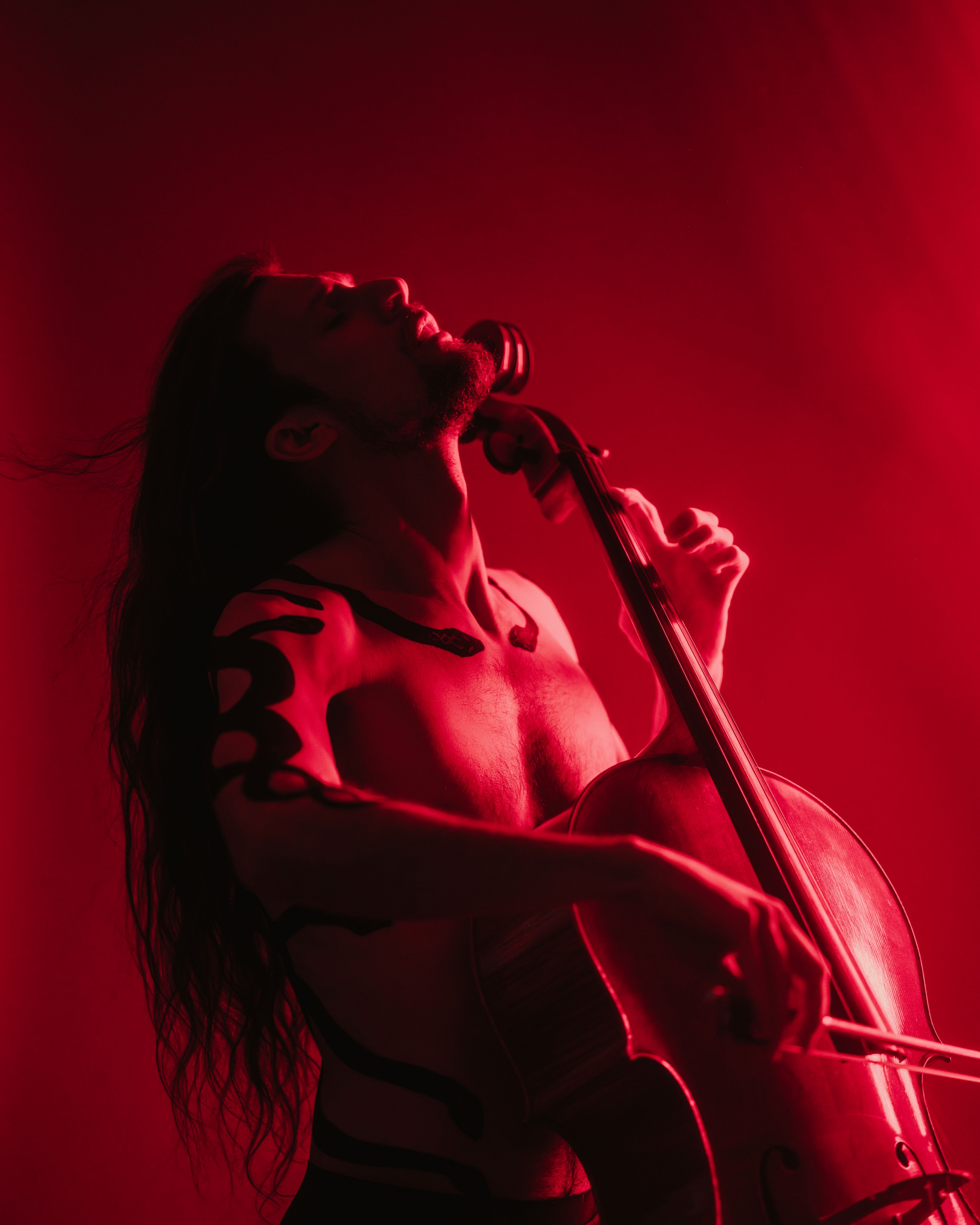
“Possession” is an illustration of the challenges I have with performance anxiety and feeling judged by audiences, that sort of inner struggle which most people don’t really know about. You go and you watch a performer and you think, wow, they’re so confident and in control, when really they’re just a basket case. A bundle of nerves. I wanted to illustrate that through a music video where I’m performing for this audience and they’re all wearing masks, so I can’t read their expressions. I don’t know how they feel about the music, which is often how I feel when I’m performing. I don’t know what they’re thinking – maybe they don’t like it, maybe they know what I could be doing better – and having all these anxieties around it, but then realising that, actually, I’m just projecting my fears onto them. There’s this scene at the end where you see me in the audience and I have a mask on, and I take off the mask and it’s just my face, and you realize that actually it’s just me looking back at myself from the audience giving me these cold stares, and this idea that I’m just projecting my own thoughts and fears onto these people and realising it’s not them, it’s me and my own inner battle. And then I’m left alone in the theatre to confront that inner darkness, which is illustrated with that corpse paint.
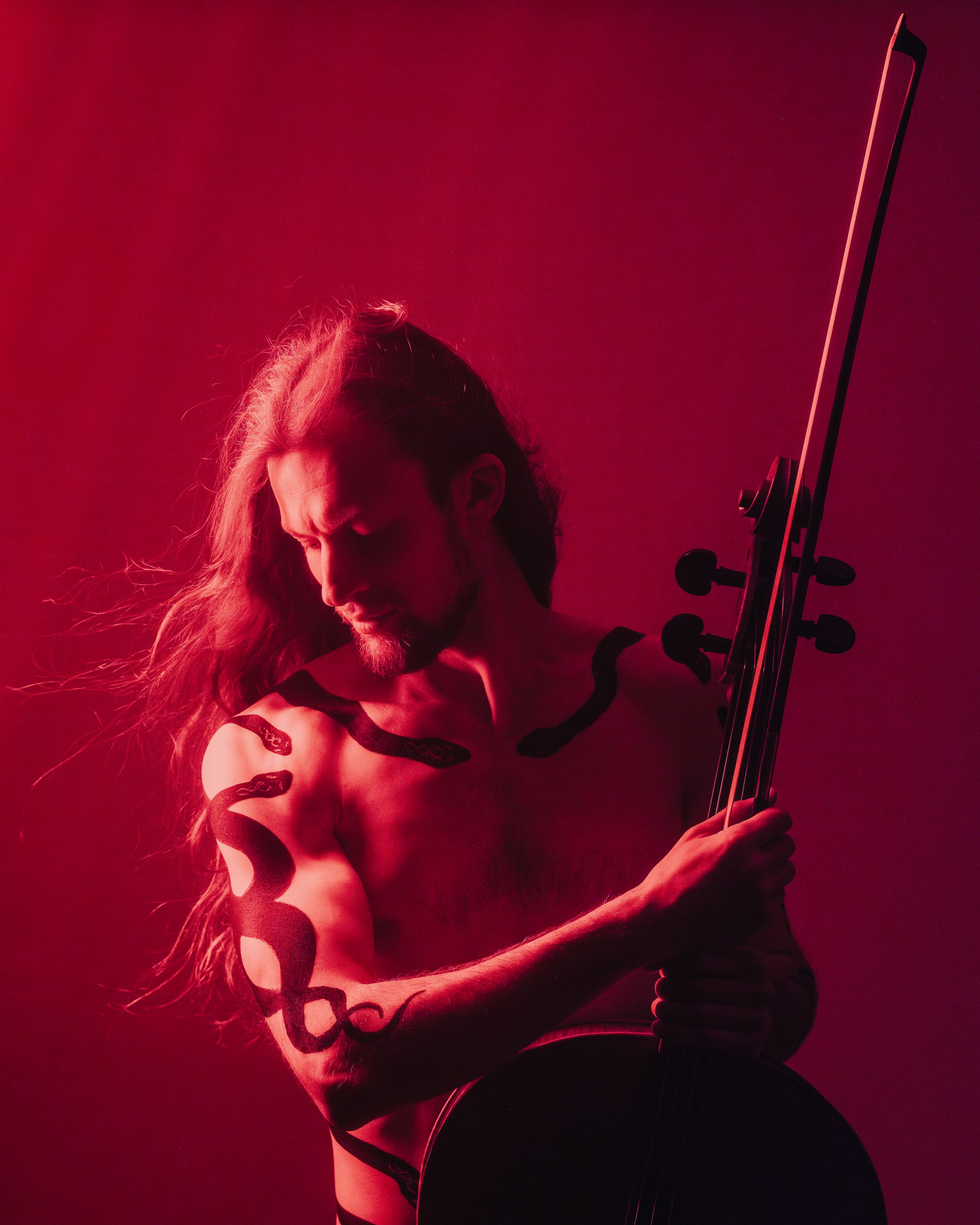
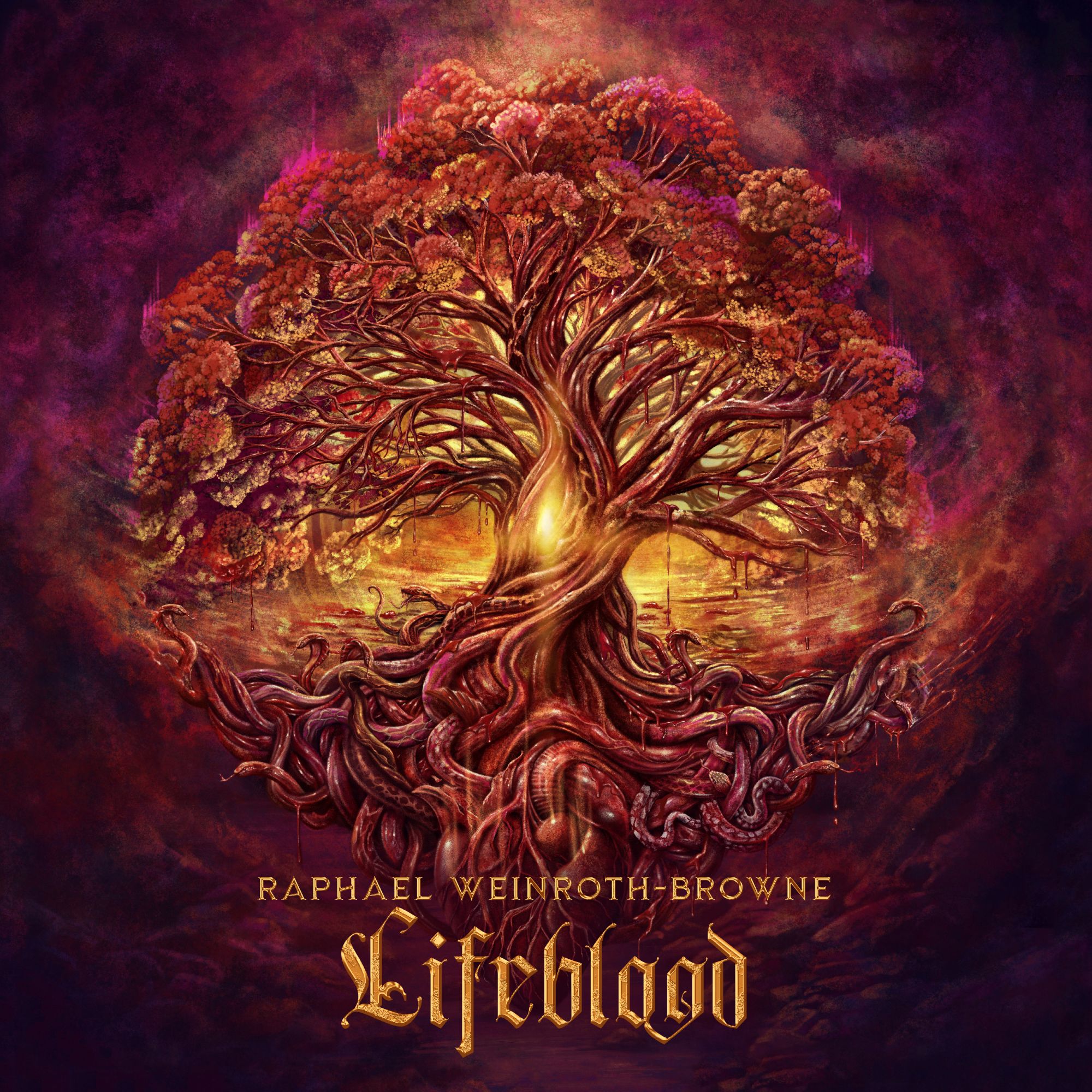
With “Ophidian” I wanted to create a duel playing against myself, and it’s a representation of these inner and outer voices – this idea that as you’re growing up and finding your path as a person, you’ll encounter a lot of voices telling you to do something that’s more traditional or more acceptable; don’t rock the boat or do something too risky; that you should be responsible and organized. Then there’s this other part of you that’s naturally chaotic and just wants to do what it wants to do, not giving a shit about any of that. So essentially, it’s a battle between those two things: embracing your inner chaos and embracing your authenticity, even if people don’t always understand it, and understanding that you need that part of yourself to feel ok and happy. Basically, by abdicating that part of you you’re losing your sense of personal identity, especially as an artist. And so, at the end of the video, that character of chaos wins the duel, essentially, embracing the inner darkness. That’s sort of what this album cover is about, too, where we have this beautiful tree that’s blossoming and flourishing, but it has this heart at its roots and these snakes forming the roots of the tree. And so, there’s this kind of as above, so-below imagery going on where you realise that all of the beauty that you see is a product of all the darkness that you don’t necessarily see. And that one can’t necessarily exist without the other, you almost need that balance. It’s a way of transmuting that dark energy into something beautiful, something that people can appreciate and be inspired by. So that’s very much a part of it.

You describing a lot of the backstory behind Lifeblood – I’ve been listening to the album the last couple of days, pretty solid, and one thing I took away from it was that the narrative is very much there, and one of the key things was the first three songs being Middle Eastern-inspired but then you get to “Pyre” and it feels like this liminal period that’s slowly transitioning into something we’re more familiar with. You saying that they’re older songs kind of makes sense. The Middle Eastern scale, how did that even come into your writing? It’s quite an unusual scale, it’s not something you really hear a lot in popular music, so when you first dropped “Lifebood” I thought it was really different, because it’s not stuff you hear a lot in the West.
Definitely. I think in Western music it’s very unusual, especially more popular Western music. It’s really unusual to hear a Phrygian mode, you know what I mean? In metal we hear it in guitar solos and riffs and that’s sort of where the bleed-over happens, but I was just exposed to it growing up. I grew up in a household where we had CDs of artists from the Arab world, and from Iran, and what’s called the Swana region, right? The Middle East and North Africa. So, I heard a lot of this music from a very early age and I was really enchanted by it. I listened to it on CDs and the radio. Here in Ottawa, they played a lot of that music. I remember specifically on Sundays, there was a program that played at lunchtime, so, you know, you’re having lunch and the radio would be on and there’d be all this amazing music from different parts of the world playing. So I just heard that stuff like it was normal. It just felt very normal for me to hear those scales and those rhythms and that approach to music making. The sounds and whatnot. Then as a teenager, I had the chance to see some really amazing ensembles performing here and in Montreal. I went to see a group called Bastin Ensemble, which is a Persian classical music group, and they performed a couple times here in my hometown, and I went to Montreal and saw Le Trio du Brant, which is a Palestinian oud trio, and some other concerts like that, so I was very moved and fascinated with both the music and the instruments, because they’re all these cool instruments that were very rare here, and you couldn’t really find them at a music store unless it was a specific and specialised music store. So, I always loved instruments that were non-standard and exotic, for lack of a better word. I was just interested in all kinds of instruments, and I was really fascinated with the idea of playing lots of cool instruments, not just the guitar, piano and drums and things like this, but the oud and the saz, and these instruments that you would see in Turkey, let’s say. Just being able to play them and being able to experiment with them on a record. I had a few chances to try some of these instruments out, and it was really like a kid in the candy store moment for me, you know?
So that music was always there, and I think in the same way that I had a really hard time integrating classical music, I felt that this music somehow spoke to my soul more directly. It always felt easier to express, to play in those scales and to improvise in that sort of modality. I think it also played into my desire to not be a normal Canadian kid. It wasn’t a conscious desire; I realised this as an adult. I didn’t identify with traditional and common preferences. In fact, anytime I see something that’s common, you know, everyone has this, or everyone watches this, or everyone listens to this, then I’m always a little bit reticent about getting into that. I don’t want to be a conformist. It’s always been in me, you know, very instinctively. It’s not just to be a contrarian, necessarily, but I’ve always felt that instinctively, so I think I always wanted to make music that didn’t feel specifically Canadian or Western. When I started playing cello, I was already trying to improvise in those scales a little bit, and then I heard metal music that used some aspects of those scales and I thought, I think there’s some compatibility here. Even before I heard bands like Niall that use the sort of Egyptian mythology as their basis, I thought I could do something that mixes Middle Eastern and metal in a cool way. Yeah, that’s kind of maybe at the root of why I’ve always been fascinated with that music, and why it’s such a deep and integral part of my style.
Not to put you into a corner, but with Worlds Within, where do you think the weaknesses were and how did you address those shortcomings for Lifeblood?
When I finished Worlds Within, I felt really happy with it. I thought, okay, this is about 99% of what I wanted to achieve. That album was much less developed before I went into the studio, it was really just a bunch of voice memos on my phone. I had improvised a number of sections but I was able to reach the point where I had basically created the general shape of each part, and I had placed them in a sequence, so I knew what I was going to do. But I went into the studio without having a fully formed arrangement; I had all the parts, and I thought, okay, I’m gonna record the bed tracks, because it’s a loop-based album. You can kind of do that, right? You can essentially record a certain amount of a given part and then that forms the basis of the track, and you can extend or trim as needed, because they’re loops, they’re these building blocks. So I would do that, and then I would record improvised solos. I think if I could name one specific thing that could be better about the album, it would be the production. I never thought that album could be done live when I made it, then I forced myself to learn how to do it live so I could do release shows. Then it became this thing that I played live a lot, and I felt like I had really gotten a good handle on it. I really enjoyed immersing myself in that when I performed it. The tones on the record sound like it’s the right sound for what it is, but I think that if it had been recorded in a nice, big live room and we had captured with a close mic sound, that would probably make it a little bit more 3D sounding. The way the record sounds is very much like a watercolour painting, or even the resin paintings that are on the cover art, which is part of why they’re so compatible. But we relied a lot on the sound of amplifiers; I love running cello through amps. Don’t get me wrong, I did it on Lifeblood, too, everything goes through an amp, but it’s about the blend. The thing that makes Lifeblood feel so much more in your face, and so much more vivid and intense, is that it relies more on the sound of the close mics – the acoustic sound of the cello – and there’s a lot of harmonic saturation to bring out all of those frequencies that make the lead lines pop; they make the chugs feel really beefy and powerful, and there’s a lot of definition. But that was achieved by relying less on amp tone and more on acoustic sound.
The sound of the room plays a big role too. When you’re recording an acoustic instrument, you can’t underestimate that, because if you compare an instrument – the same instrument being played in two different rooms – you can really tell the difference. So it’s really helpful to record in the best room possible, and record with good strings, that’s also very much underrated. I think with Worlds Within, we got good takes, but we didn’t get as good takes. And I think that with Lifeblood, I spent more time and money and we were more scrupulous with the process, basically. So, those are the main reasons why I think Lifeblood is a bigger-sounding record that feels more vivid. If there’s anything I would change in Worlds Within, it might be that production aspect, in terms of how the sounds were captured. Not so much how they were mixed, but the sound sources. But, you know, here’s the funny thing just to kind of cap this all off: would it still be Worlds Within if it had a different sound? If it didn’t sound oceanic, if it didn’t sound like everything was sort of blending together like this washy painting. It’s like asking, oh, is it still …And Justice for All if the bass is louder? That’s how the record sounds. It has a very clear tonal palette to it and you get used to that. It becomes the record. So, I’ve asked myself that a few times recently. If I had done that in the same studio, with the same setup and the same strings and whatnot, would it still be Worlds Within? Would it be right for that record? Maybe not, you know? Only time will tell, I guess. Maybe I’ll revisit it and try some things, but I’ve already done a live album where I went the other way and made it more raw sounding
Lifeblood makes the recorded version of Worlds Within sound very roomy, almost austere and stripped down in comparison to what’s going on in Lifeblood because there’s a lot of stuff going on in there, but the live version of Worlds Within I actually prefer, because, like you said there, you translated it to play live, and then – correct me if I’m wrong – it seems like you got more of a feel for the songs, and maybe that’s why you did the live version? To me, it feels like you’re taking these songs to the next level, and even the sound is a lot richer.
Yeah, for sure. We used a better close mic. That’s a big part of it, and we recorded in a nicer room. A more generous sized room with wood panelling and a higher ceiling. And I knew the songs better, so I had more of an ability to convey emotionally what I wanted. So that’s part of why I revisited it, so that I could transmit everything that I had learned in this interim period from the time that I released Worlds Within to the point where I thought, okay, I want to make a live version that feels like a show. And even since then, because I’ve performed it so much more since I did that live album, I would say I would do it infinitely better. There’s something to be said for understanding not just the general arrangements of a record, but the emotional vibe that you want to get as well, and to be in a position where you can deliver the lines, so to speak. It’s like, you want to be able to convey that intention in your playing, with full conviction and control and mastery of that particular part. With Lifeblood, everything was pretty well prepared; I knew what parts should sound like before I’d even recorded them and I was ready to commit to them. Things tend to translate better when you’ve played them live a bunch, which I had in this case. I had composed these pieces to be played live, and then I went and recorded them, and I think that benefited the process a lot, because I already had this muscle memory and experience for how it feels to perform these parts.
Would you consider doing a live version of Lifeblood?
Down the line… I don’t know. The thing about Lifeblood is it’s more a collection of pieces rather than one continuous piece, which is what Worlds Within was. So, I mean, if it was a particular venue or setting where I felt it really benefited it, or maybe if there’s a video then I might take advantage of that possibility. I think that with Lifeblood I would play every track on the record live, except for “Winterlight”, which is more of an interlude, but they’re all in different tunings, so the challenge would probably be doing a show where I could transition between these tunings effectively. I wouldn’t rule it out, but it would probably be more like a mixed setlist if I did a live album. It would probably be the hits from Lifeblood, plus the hits from the next album, let’s say, and maybe some stuff from Worlds Within. Who knows? I tend to not mix those tracks. There’s another body of work that I’m releasing which includes the “Speed of Light”, which came out in May, and I feel like those tracks and the Lifeblood tracks are more compatible, because they were composed more around the same time, so it’s easier to integrate them into a cohesive setlist.
Normally I don’t listen to live albums, but you’re the first person to have me prefer the live recording to the studio version, just because you put a good twist on it. If you did do a Lifeblood Live, it’d be interesting to see how the songs differ from the studio recordings. Now that you’re able to step back from Lifeblood and enjoy the promotion for the album, what do you feel you learnt about yourself as a person?
Oh, wow, so many things. I learned the value of tenacity and just sticking with it. Planning efficiently is important when you make a record. Not rushing things. Giving yourself enough time and committing to your vision. If something doesn’t satisfy you, even a small thing, just change it. Just make it what it needs to be. No one knows how much time you spent; no one knows how much money you spent. I mean, you can tell them, but they don’t really care most of the time. What they want is the product they’re going to receive. They just want to be able to enjoy it at the end of the day. They don’t care about your excuses. So don’t give yourself any excuses; make something that you really feel good about and take your time, and do it right, you know? Redact your initial ideas if you need to; I’ve done that in the past. With Worlds Within, I went back and re-recorded sections that I thought weren’t quite up to snuff. And on Lifeblood I definitely did that. I had recorded with a set of strings that weren’t really translating in the way I wanted, but I didn’t really know how to articulate it. Then I used a different set, just to try it out – This was when we recorded Labyrinthine. I recorded 4 other tracks and I hadn’t done Labyrinthine yet, and thought, okay, this is gonna be a really tough track. It’s the longest on the record, and it’s very complicated, and has to be done very precisely. But the recording sounded so good, because of these strings that I used for that track, I ended up going back and redoing a lot of stuff with these new strings. I redid all the leads on “Lifeblood”, and I redid almost all of “The Glimmering”, which is crazy, because I basically recorded that song twice. It was worth it, because it sounds better now.
Also, a valuable lesson, which is specific to this album, is to hire the best people. If you’re serious about something, hire the best people, you will not regret it. Even though you will spend more money, maybe. In the short term, if you make something where you’re trying to save money, and you don’t hire the right people you think are the best for it, you’re gonna either spend the next 5 years apologizing for it until you make another thing you think is better, or you try to go back and improve that thing again; but it’ll be too late, because you either didn’t record the sounds well enough, or you didn’t have it mixed well enough. Maybe you made a music video that you don’t like and isn’t releasable, so you have to go back and do it again. Nothing is more frustrating than having to cut it twice, you know? Measure twice, cut once, which is very much my strategy. On Lifeblood I demoed everything, I basically recorded everything at home before I recorded anything in the studio. I was much more organized this time around, compared to Worlds Within. I had a logic session with each track, and I had recorded and edited and named all the tracks. So, I had this game plan I could give to the engineer; worked at a great studio; worked with a great engineer at the top of his game in terms of chops and organization, and speed; hired the best mixing engineer I could, Adam Noble, who did the last few Leprous albums; I worked with Group of 13, who have done music videos for Leprous and Behemoth – just an amazing crew whom I know deliver quality. I worked with Mahi, who did the visual art for a couple of Kamancello albums I had released in the past, but we really upped the ante on this one, and he really committed and did amazing work. I could name lots of other people, but I just hired the best people, essentially, every step of the way and I got really good results. The thing is, when you hire really professional people, when they say they’re gonna do something and they do it, and give you the quality you’re expecting in a timely manner, you’re not having to worry about planning a release around inefficiencies. It also reminds me of when I do hired work. How important it is to show the people I’m working for that I’m working on your thing and it’s gonna get done at this time and it’s gonna be done. So, the key is to hire really great people, and respect them as much as possible; give them super clear instructions so they can do their job. Give them a great experience of working for you by paying them on time. Make yourself their favourite client. That’s always my goal if I’m hiring someone. I want them to always want to work with me and then that way, I can have an ongoing working relationship with them, because otherwise they’re less enthusiastic about working on my project because of last time. So, those are things that I learned from this record: I didn’t regret spending more money and working with the best people, because I clearly got superior results. And I see it from the audience response, too; they can see I made something very professional. That was the goal. Legitimacy, you know?
This encompasses the entire interview, really. I mean, you say that normies don’t really give a shit about expense and all that kind of stuff, but all of that – being true to yourself and delivering the product to the best of your abilities, both in musicianship and sound quality – comes through, and it definitely comes through on this record. Like you said, you’ve been very true to yourself, and that 100% comes through on this album.
Yeah, exactly. You feel it from the overall product and the energy with which it’s delivered. Another lesson, I guess, was managing bigger budgets, and doing it without a label and realizing that it’s quite advantageous, if you’re able to save enough money to invest in something big. If you don’t have a label then that’s great, because you’re not paying off their advance and you have no debt, so you can immediately recoup the profits. I recommend this to artists, if you’re not already on a label: maybe focus on quality output. If you’re able to generate the capital necessary to create it, and we don’t always talk about this, because money talk in the arts is always this weird taboo, everyone’s very uncomfortable around it. I mean, just treat art as a business. If you want a business, you have to invest in it; you have to figure out what the upfront costs are and then what revenue you can generate from it. But you can’t have the business if you don’t invest in it. Someone’s got to do it, you know? I realised that I was doing so much work out of the country, I was hiring so many people from the UK and Poland that it didn’t really work for me to get government grants, because they’re generally supporting things that are being done in Canada. And it’s great that we have them, but I just thought, I’m never gonna have enough funding from them anyway, and I want to do things at my own pace, I don’t want to answer to anyone. I’m just like, I’m gonna do this when I want to do it, on my timeline, and I don’t want to be beholden to anyone – like, oh, thank you so much for the funding. It’s just like, no, I made it, here it is. Enjoy.
Where do you go from here, then?
Another album pretty soon, actually. Like, surprisingly soon. There will be new music in 2026. And expect very regular single drops. Lots of singles, hopefully lots of videos. Again, if money and schedule permits. But yeah, lots of new music, for sure. And more touring, primarily in the UK and Europe. The goal is once I’ve released this music, I can focus more on playing lots of shows to support it. Lots of new merch; lots of nice vinyl additions and hopefully more shirts and stuff. So that sort of thing really. Just try and keep the momentum going. I have a lot of music for a new project that’s written and that still needs to be recorded, so I think there will be a pretty steady stream of new output for the coming years, actually. So that much I can guarantee.
Lifeblood review
Lifeblood is out now on all streaming platforms. You can support the album directly on Bandcamp.



10.10.25
10.11.25
10.11.25
10.11.25