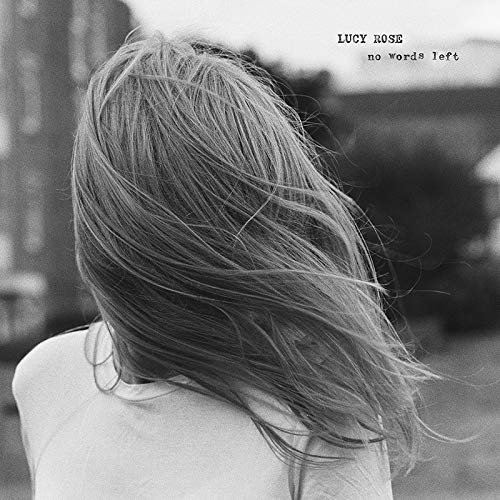
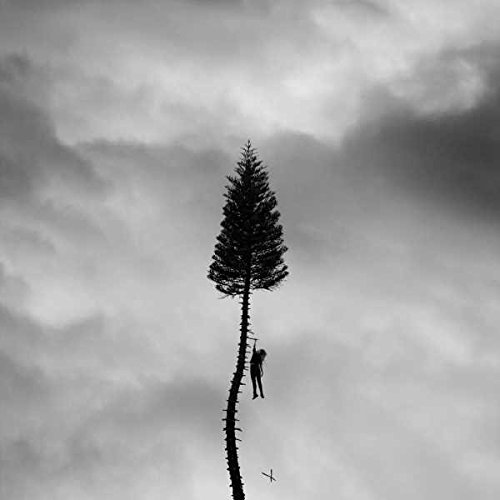
Every time I think I’ve heard the best that Manchester Orchestra has to offer, they surprise me. In 2006, I’m Like a Virgin Losing a Child floored me – the earnest vulnerability of “Colly Strings” sticking with me through many relationships. In 2009 it was the raw simplicity of Mean Everything to Nothing, where the tragic storytelling of “I Can Feel a Hot One” practically reduced me to tears. In 2011, it was the sweeping magnificence of Simple Math, its title track probing questions of faith and existence that I’d never pondered before. I never thought they’d top a moment of such profundity, but lo and behold, 2017’s A Black Mile to the Surface did exactly that. Trying to select a song by Manchester Orchestra to represent this decade was probably the toughest decision I’ve had to make yet, but when all the smoke finally settled, it was “The Silence” that was left standing.
At a towering seven minutes, “The Silence” brings closure to the emotional wreckage entailed by A Black Mile. The album has several themes coursing through its veins – some obvious (such as Hull’s tales of abuse growing up) and some more subtle (allusions to miscarriage). Through all of the recounted tragedy, it’s easy to lose sight of the fact that Andy wrote the song for his daughter – as both an apology and a promise. “Little girl, you are cursed by my ancestry / There is nothing but darkness and agony”,…
“Burial Society” teeters on the brink of life and death. The narrator ponders both physical and metaphysical existence, graphically detailing his own suicide (“cut my wrists, slit my throat, take this body and string it up”), while also watching his death from the spiritual plane (“project myself into the air, and float in a weightless night”). Set to a sinister beat, the echoed verses and distant/muted shouting makes it feel like it’s being recorded in a tomb, and there’s an obvious emotional intensity that simply can’t be feigned as he screams, “and I’ll never know what you said, because I’ll be fucking dead by then.” It’s honestly one of the most frightening and fucked up things I’ve heard. Have a Nice Life use this song to project a relentlessly haunting aura; this dark chasm of the human mind that’s been opened. It’s not a song I revisit often because it’s genuinely disturbing – but every time I do, there’s no denying its place as one of the best tracks of the decade. It’s as amazingly conceived and performed as it is unnerving – a glimpse into the thoughts of a suicidal man. It isn’t real, but it feels real…
Read more from this decade at my homepage for Sowing’s Songs of the Decade.
This series is a new effort to highlight artists on Bandcamp by talking with them, discussing their music, and why I find it rad.
Mental Fatal, a three piece out of New Zealand, are the definition of a garage punk group. Rough around the edges in all the right ways, the group is the kind of project made for the internet age of music distribution – DIY punk with enough energy to take down a fortress (one most likely made of capitalism). Using that raw aesthetic that hundreds of bands try to either shed or embrace to their advantage, songs like “Jeffree,” “Reckless Times,” and “Burning People” all bring that snotty groove and power pioneered by the likes of the Circle Jerks and the Dead Kennedys and the burning intensity of Choking Victim.
Because I so earnestly believe in the quality of their product and admire the fruits of their labor, I wanted to shine a spotlight on these garage-destroyers from Christchurch and their lovable jams – below you will find a condensed showcase of the brand of throw-a-chair-through-window punk titled The Virus. It’s a lively little bugger, short enough for you to listen to on a lunch break or between chores (or whatever you may be doing with your time), but long enough for the band to make their presence known to the listener.
I had even had an opportunity to ask the group some questions:
Here’s a list of major new releases for the week of March 29, 2019. Please feel free to request reviews for any of the following albums from staff and/or contributors.
– List of Releases: March 29, 2019 –
Amirtha Kidambi & Elder Ones: From Untruth
Genre: Folk/Jazz
Label: Northern Spy Records
Ben Platt: Sing To Me Instead
Genre: Pop
Label: Atlantic
Billie Eilish: WHEN WE ALL FALL ASLEEP, WHERE DO WE GO?
Genre: Pop/Indie
Label: Darkroom/Interscope
Blue House: Gobstopper
Genre: Alternative/Rock
Label: Faith and Industry
C Duncan: Health
Genre: Indie-Pop/Folk
Label: FatCat
I will always remember “Stand and Deliver” as the moment The Jezabels went from being a good band to a downright phenomenal one. I’ve always loved Hayley Mary’s booming voice, whether it came in the form of Prisoner‘s rock or The Brink‘s 80’s synth-dance vibes, but untapped potential remained…her voice has the depth and range to unleash something otherworldly – something bombastic and unexpected. As the introduction to 2016’s Synthia, that’s precisely what “Stand and Deliver” accomplished.
At seven and a half minutes in length, the song covers a lot of ground. Riding in on glistening electronic keystrokes, it gradually increases in tempo while building towards Hayley Mary’s gorgeous, spoken-word introduction. The more the song unravels, the more her biting sarcasm begins to reveal itself, as Hayley beckons “come and give a bitch a kiss” during a precursor to a choral, almost operatic chant. One of my favorite moments is when all the noise cuts out, and Hayley – sounding alone on the stage – sings “what’s a girl to do, standing in the spotlight?” The answer is clearly to make the most epic song of her career, on a lengthy album opener that reaches almost Queen-levels of ambition. The back portion then ascends into a cloud of percussive ferocity, overshadowing the electric guitar splashes that one can lightly make out in the background. Finally, it all comes crashing back down to earth on a pillow of softly sung verses. The range in…
Normally I’d be wary of adding a 2019 track to such prestigious and long-standing company. However, few songs in my life have had as immediate and profound of an impact as “Colorless.” From the moment I first laid ears upon it, I knew it would be the epicenter of Blushing – a dreamy, romantic, and existential tour de force of an album. “Colorless” is melancholic but powerful, as it mourns lost love with the unrivaled potency of passages such as “these days I’m terrified of silence, my thoughts unbearable in the quiet”, “now I can’t see you…were we colorless anyway?”, and “I’m never falling out of love, I fear.” Even though pretty much all of Blushing serves as Aaron Marsh’s lyrical masterpiece, the aura of this track is especially poignant – it’s capable of reducing anyone enduring a breakup, death, or other form of loss to tears.
The track slowly builds to a cathartic release of energy, this relatively brief but downright explosive guitar solo that feels like a personal breaking point. Its impact is only magnified by Marsh’s prelude of “when a colorless world goes dark”, which in context feels like an admission of total despair – it’s basically akin to saying that without the mysterious woman around whom Blushing‘s themes revolve, that everything’s gone dark. Finally, the mayhem sticks a soft landing on this cloud of swelling strings and brass, as Aaron laments, “Ohh-ohh, I can’t save myself.” The entire song is a marvel to behold,…
Of all the brilliant progressions that so many mid-2000s alternative rock bands seemed to enjoy, Thursday might be one of the least talked about. No Devolucion was a vast milestone on par with Thrice’s Vheissu. It was the culmination of gradual evolution, a display of profound maturity that left listeners wanting Thursday now more than ever. And then, just like that, they hung up the mic…thus creating an immense swan song that accomplished something rather rare – a band fashioning its best work as its very last; going out on top.
“No Answers” feels like the heart and soul of this magnum opus. It’s powerful and poignant; an account of total isolation and hopelessness. You can hear the despair in every word that escapes Geoff Rickly’s lips; even when the lyrics don’t read as overtly depressing, the way everything is so forlornly wailed makes it so. Lines like “I can hear the ocean when I say your name” and the increasingly defeated repetitions of “No answers when you’re not around” make it the ultimate expression of loss and heartbreak. It’s the equivalent of sitting alone in a dark room, jostling with your thoughts and finally deciding to just give up. It’s nearly impossible to listen to the song and not feel deeply saddened by its message, an emotive feat that you don’t necessarily want to relate to as a listener…but when you need to, it will never let you down.
While I consider Thrice to be mostly a band of the 00’s (not the 10’s), they still had plenty of quality material spill over into this decade. Prior to their hiatus, 2011’s Major/Minor saw them release one of their heaviest and most pessimistic albums. Kensrue spews hopeless-sounding laments across the course of the experience, such as “We are cowards and thieves, will we never turn to grieve the damage done”, “Our hearts are – they’re so deceitful, sick and filled with lies that lead to death”, or “Never see, never quake with rage at what we have become.” It was a pretty jarring disruption to the Thrice we knew – the one that always kept an eye to the sky for that silver lining.
“Anthology” is one of the few glimpses of light that manages to shine through Major/Minor‘s gray, overtly bleak depiction of humanity. It’s actually important that the album itself is so grim, because without that “Anthology” simply wouldn’t pack the same punch. The guitars, which elsewhere are murky and dense, shift towards towering and resplendent; each deceptively complex riff injected with melody. Kensrue sounds enlightened and clear-minded, as if his journey through Major/Minor saw him come out the other side with – if not answers – then a resolute sense of hope, and the reassurance that everything will indeed turn out okay in the end: “If we hold to our hope, then I know we can weather the storm.” There may not be…
This project is a collection of the very best individual tracks from the decade spanning 2010-2019. All tracks have been linked to this homepage for ease of navigation. If you’re less in the mood to read, and would rather just jam the entire playlist, a spotify link has been embedded below for your convenience. The homepage will be updated as additional songs are chosen, so you can always navigate to this page to find the latest updates. Enjoy!
Click a thumbnail to hear a selected song of the decade and read more about it.
When I hear this absolute scorcher from O’Brother, a lot of thoughts race through my mind. I feel the urgency of those opening electric riffs; all gnarly, distorted, and ugly. I bask in the shadow of mystery cast by the more gently plucked strings, and Merrit’s vocals – wispy yet somehow completely in charge. Then, I feel the explosiveness of the chorus – acute, compelling…not explicitly angry, although that clearly boils just beneath what’s audible. It’s restrained. The whole song feels like a city of people trying to brace their walls before they come pummeling inward, from some unidentified but clearly menacing external force of nature. “Complicated End Times” might just be the most ominous alt-rock track I’ve ever heard.
Lyrically, it’s vague and untelling. Merrit sings in abstract phrases, like “But you don’t know a thing about me, you want to snuff the fire out…” and “You’ll see I’ll be the paradigm.” It could just as easily be a cryptic breakup song as one about the end of the world as we know it; there’s such a wide spectrum of interpretations. The imprecise nature of the words are a perfect marriage for what O’Brother has constructed – a world, either personal or literal, that is falling apart. The way the band perfected the soft-to-loud formula recalls Fire-era Thrice, although nothing there comes even remotely close to the intensity that this whole song emits – at a fever pitch – through every crack…
Here’s a list of major new releases for the week of March 22, 2019. Please feel free to request reviews for any of the following albums from staff and/or contributors.
– List of Releases: March 22, 2019 –
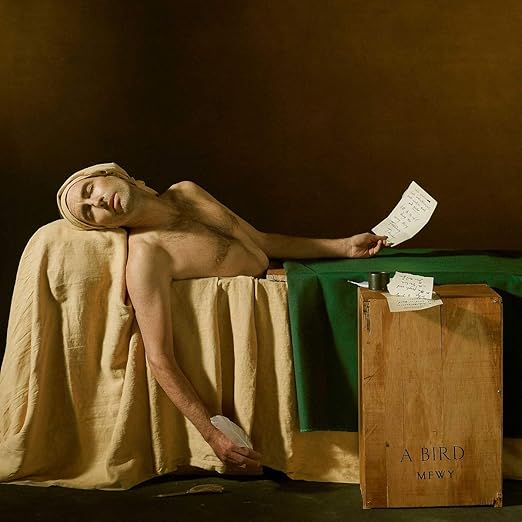
Andrew Bird: My Finest Work Yet
Genre: Indie-Folk/Classical
Label: Loma Vista
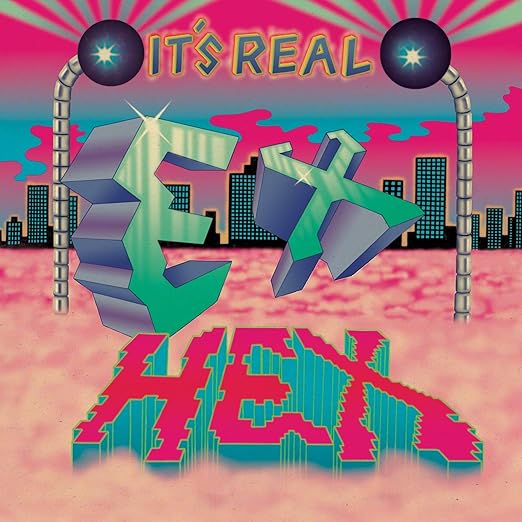
American Football: American Football
Genre: Emo/Math Rock
Label: Polyvinyl
A still life is the last I will see of you A painting of a panic attack
Scott Hutchison (Rest in Peace, 5/10/2018), was an inspiration to many as he battled the depression that would eventually take his life. 2008’s TheMidnight Organ Fight is still seen as the benchmark for this band – and rightfully so. It was the embodiment of being shattered, desperate, and needy; the monologue of an introvert trying to navigate his way through the most painful breakup of his life. On ‘Floating in the Forth’, in which he imagines a suicide that he eventually carried out almost exactly 10 years later, he manages to pick himself up and – at least momentarily – conquer his depression, singing “And fully clothed, I float away (I’ll float away) / Down the Forth, into the sea / I think I’ll save suicide for another day.” It is one of the most uplifting moments of personal triumph in the history of music.
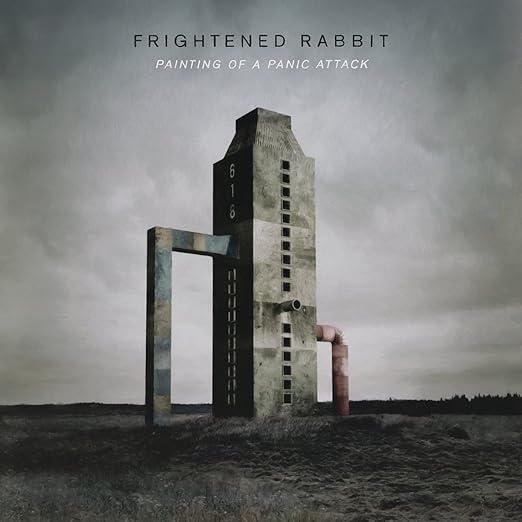
Enter this decade, which saw the majority of Frightened Rabbit’s discography come to fruition: The Winter of Mixed Drinks (2010), Pedestrian Verse (2013), and Painting of a Panic Attack (2016). The latter would prove to be Hutchison’s last album under the Frightened Rabbit moniker, and it has moments on it that still haunt me to this day. At the forefront of those songs is “Death Dream”, where Hutchison recalls a dream in which he found a friend dead on the floor…
Can a relatively conventional 4 minute alt-rock track really contend for song of the decade? Considering there is always something out there that’s more innovative, brilliant, and weird, I have to admit it is unusual. However when you are as talented as The Dear Hunter is, any feat is made to look easy. Effortless is as good of an adjective as any to describe their 2015 smash hit “Waves” – a track that combines all of your standard breakup cliches with a gorgeously bleak burial-at-sea metaphor. As lead vocalist Casey Crescenzo passionately pleads “I can see the lighthouse”, it feels like bargaining, as images of waves knocking his ship sideways come more and more into focus. It’s not your typical breakup song because The Dear Hunter is an atypically skilled bunch. So when the experience wraps up with the utterance “I thought that I knew love, but it was just a wave crashing over us”, it feels all too easy to relate to.
It’s amusing to think that a band as eccentric as The Dear Hunter (who have composed an act in five parts and who also once wrote a 9-EP, 36-song collection) might see one of their most straightforward offerings ascend to the top of their entire discography. “Waves” isn’t part of some grand scheme or concept, it’s just pure emotion set to the most sweeping melody that the band has ever written. Sometimes, that’s all you need.
“Untitled” wouldn’t just have improved Noonday Dream if it had been recorded for the album, it’s downright essential to its entire tapestry. The song ties together an astonishing amount of this dreamy, impressionistic LP – clarifying “Towing the Line”‘s rookery-as-metaphor, contrasting the closing of “Murmurations” with its celebration of sight, unnervingly foreshadowing the ‘something in the canopy’ in “The Defeat” which makes Ben ruminate on death like the birch tree in “Untitled”. There’s actually something weirdly fitting about the thematic, like, key? to an album this distant and unaccommodating being impossible to find outside of a couple YouTube live vids, which makes you wonder if it was sidelined for giving away too much of the album’s thematic tissue. Then again, this is the dude who never released “Keiko”, so chances are he’s just fucking insane with this ‘dropping his best music’ stuff.
The definitive version of “Untitled” thus far, in this writer’s opinion.
Whatever. “Untitled” is a gorgeous piece of work, often played as an intro to “The Defeat” in live shows as above. It’s almost more powerful to read it poetically than it is to hear the words sung out loud. Birch tree lost its branch one day in violent winter / I said it was grieving, you said ‘it don’t feel nothing / I bet you think everything’s in its rightful place – that sentiment is man’s disgrace’. Howard’s lineage of imagistic lyrical masters in the folk scene – Cohen, Dylan, Drake – is…
The Seer is the stuff nightmares are made of. From the witch-like incantations of “Lunacy” through the jarring discordance of “The Apostate”, it’s basically all dimensions of hell sprawled across an immersive two hour experience. The 32 minute title track would have been an easy selection for one of the decade’s best songs, but when I think about the moments on this album that make me return, it has more to do with the digestible cuts: “Lunacy”, “The Wolf”, “Song for a Warrior”, et al. “The Seer Returns” also benefits from rare accessibility on an album that is otherwise abrasive – however, it sacrifices nothing in terms of the pure evil that it’s able to conjure.
Thumping along to an addictingly villainous beat, Gira spews some ugly imagery that seems like nonsense upon initial inspection but actually makes a whole lot of sense if you pay it a careful listen. Some of the lyrics are more cryptic (“Behind the veil of silver scars / There is a special inverted star”…”There’s a jagged deep crack in the crust of the earth, spreading from north to south / Put your light in my mouth”) while others are just grotesque (“I’m down here naked, there’s a hole in my chest / Both my arms are broken, pointing east and west”), but one of my favorite passages is both: “Ahh, the mountains are crumbling / Ahh, the canyons are thundering / All the people are fucking / They’re…





![WHEN WE ALL FALL ASLEEP, WHERE DO WE GO? [Deluxe Clamshell Box Set]](https://images-na.ssl-images-amazon.com/images/I/610nCqbjeEL._SX522_.jpg)
![Gobstopper [VINYL]](https://images-na.ssl-images-amazon.com/images/I/71-SYvz%2BWbL._SX522_.jpg)





![You're The Man [2 LP]](https://images-na.ssl-images-amazon.com/images/I/71kUyCcfsVL._SX522_.jpg)


![Holy Vacants [Explicit]](https://m.media-amazon.com/images/I/71fOJ64uPfL._SS500_.jpg)




![Go Farther In Lightness [Explicit]](https://m.media-amazon.com/images/I/81g4mXDaSIL._SS500_.jpg)
![Trouble Will Find Me [Explicit]](https://m.media-amazon.com/images/I/A1ZqkeVrf0L._SS500_.jpg)







!["Awaken, My Love!" [Explicit]](https://m.media-amazon.com/images/I/81aYuDTpo3L._SS500_.jpg)


![POWER [Explicit]](https://m.media-amazon.com/images/I/713Pdp0hXzL._SS500_.jpg)
![[Untitled]](https://m.media-amazon.com/images/I/81Yig76akQL._SS500_.jpg)







![Undun [Explicit]](https://m.media-amazon.com/images/I/81Nl5xk+bGL._SS500_.jpg)
![E·MO·TION [Deluxe Edition]](https://images-na.ssl-images-amazon.com/images/I/71%2BSiv1oLDL._SX522_.jpg)

![I'm All Ears [Explicit]](https://m.media-amazon.com/images/I/91EhSgO2TtL._SS500_.jpg)










![MAGDALENE [Explicit]](https://m.media-amazon.com/images/I/A16f62eXR8L._SS500_.jpg)
![Vitriola [Explicit]](https://m.media-amazon.com/images/I/91XEFSrcCpL._SS500_.jpg)
![House Of Balloons [2 LP]](https://images-na.ssl-images-amazon.com/images/I/51xrSLGmiOL.jpg)