Nick Cave has written some pretty bleak verses, especially following the passing of his son Arthur, but I’m not sure any have hit me as hard as the lyrics to “Bright Horses”: I can hear the whistle blowing, I can hear the mighty roar / I can hear the horses prancing in the pastures of the Lord / Oh the train is coming, and I’m standing here to see / And it’s bringing my baby right back to me. Cave has been wallowing in gloom since 2016’s Skeleton Tree, but somehow the hope (denial?) present in this track is even more obliterating. Here’s this man who has lost his son tragically, just waiting at the train station to see his child again. Whether he’s literally waiting at a station, or if it’s a metaphor for some kind of afterlife, is up to interpretation. As a new father, this passage during the more broadly breathtaking Ghosteen absolutely broke my heart. It’s also the most beautiful and memorable song on what might be Cave’s best album – so no matter how you look at it, “Bright Horses” is a must-hear moment.
Read more from this decade at my homepage for Sowing’s Songs of the Decade.
I’m not what you’d call an electronic expert and, to level with you guys, this is the only Flying Lotus album I’ve ever heard more than once. Still, that should tell you something about just how impactful this album was at the time of its release, and how influential it remains. I’m not well-versed enough on popular opinions surrounding Cosmogramma to accurately predict what the most popular songs are (although a cursory search of review threads seems to suggest either ‘Zodiac Shit’ or ‘Do The Astral Plane’ [maybe ‘Pickled!’ low-key?]), but I’ve always been drawn to ‘Arkestry’ – a stunning electronic symphony of freestyle jazz elements. Other songs on Cosmogramma offer more layers and textural complexity, but this is always the moment that stops me in my tracks with its sheer beauty. Bubbling electronic effects give way to cascading drums, which eventually split the center of the song open into a gorgeous ravine of jazz horns. As subtle pianos underscore the transition into the track’s final minute, an eerie, apparition-like voice begins to hum in a theatrical-yet-ominous fashion. The way the song fluidly progresses within itself is a thing of beauty, and while it may not be the most popular pick from Cosmorgramma, it’s the one that captured the attention of an indie-head like me. If Cosmorgramma is the album that got me into electronic music back in 2010, then I have to credit ‘Arkestry’ as one of the most influential tracks on my own personal…
Well, another 10 years have gone by which means it’s time for another music list, and possibly some reflection on the last 10 years. I’ve got the music thing covered, but I’m not going to waste time on reflection. The artwork links to the album review (or the band page in the absence of a review). The recommended track will link to either bandcamp or Youtube. So, be proactive… read some descriptions, click some links, check out some music…
** u kno when a dog dies in a movie and ur hella sad right well this album is like when the dog dies only he instantly comes back on a skateboard with a bong in his mouth and he is wearing a satan shirt and is talking about the benefits of tax evasion and he be mouldin’ young minds similar to pottery— ramon.
The Wake is the album that almost never happened. The band’s guitarist (and main songwriter) of twenty-three years died of Cancer in 2005, which left the remaining members with a pretty tough decision. They could either call it quits or try to get another guitarist/songwriter with the same unique flair and technique that made their original guitarist so special. They went with the second option and released Target Earth. While Target Earth was pretty great, it wasn’t until The Wake…
Narrowing down an entire decade’s worth of music to two or three songs was a tough call, but I can’t think of a more appropriate top pick than this. On the face of it, Saishuu Koen (Last Performance) is a case study of the most beautiful, raw facets of indie folk, spinning a bitter snapshot of dejection into a stunning outpouring of frustration, heartbreak and loneliness. I used to think it would be impossible to recreate this song’s magic beyond the original version, but hearing the almost-as-good rock revamp on Seiko’s Pink Tokarev side project gave me bad ideas and it’s since become the only Japanese song I can cover by heart. Putting aside her incredible songwriting talent, one of the things about Oomori Seiko that has always spoken to me is her knack for turning her distinctly imperfect voice into a dazzling force of personality. Her lyrics and performance are presented in a way that foregrounds her own weaknesses, with a fierceness and boldness that a long way to explaining why her exemplary discography has stolen the show this decade.
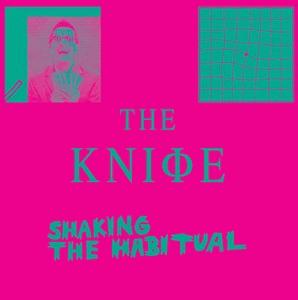
The Knife – “Full of Fire”
Finding a worthy runner-up for Saishuu Koen was a tough call. A lot of songs might have held the slot, but I gave myself a load of silly criteria: it shouldn’t be Japanese, it shouldn’t be overrepresented across the rest…
If we’re being realistic, I could probably fill about 10 spots on this decade 100 with Dear Hunter songs that I simply adore. That’s how prevalent they’ve been in the rock scene since 2010, with The Color Spectrum marking my introduction to the band in a grand 9 EP, 36 song fashion. Out of all those EPs, I was always partial to Yellow for its overarching pop aesthetic and summer-like warmth. And within that 4 song shell, “Misplaced Devotion” carved a special place out in my mind.
When I think back to 2011, I can’t not start to hum those massive, Coldplay-like woah-oh-oh’s. The whole track has an urgency that isn’t mirrored anywhere else on Yellow, which otherwise possesses a very laid back, tropical sway. The lyrics depict a forbidden relationship and unbridled confidence – two things I could relate to in my early twenties when this track seemed to strike right when I needed it to. Instrumentally, this is a piece that relies on persistent, energetic percussion; otherwise, it’s very much a vocal-centric effort that lives and dies by the strength of the melody. But just as with many DH songs, the melody is the best part and deserves to be highlighted.
More than anything, “Misplaced Devotion” is just one of those earworms that even after a decade I can’t seem to shake. Whenever I parse these 36 songs into a more manageable playlist for practical reasons, this song is the first…
“Open” is an anxiety attack in a song. The lush piano notes rise and fall gently, subtly building to a gorgeous but understated chorus: “potentially lovely, perpetually human, suspended and open.” It’s a song about vulnerability; being suspended in time and exposed to all of the wonderful – and terrible – things in life. After a flourishing refrain halfway through, the song starts trending dark rather quickly. Spektor starts gasping as if she’s struggling for air, evoking this deeply unsettling feeling that could only be likened to claustrophobia or drowning. She has the vocal power to rein in her gasps and start singing again seconds later, and – no pun intended – it’s breathtaking. The lyrical content also takes a turn from poetic (“In the night, the snow starts falling / And everybody stares, through their windows at the streetlights / Too beautiful to see”) to descriptions of feeling isolated and trapped: “I am in a room I’ve built myself / Four straight walls / One floor, one ceiling.” The song ends on a note of uncertainty, with verses like “Day after day I wake up feeling, feeling…” and “Open up your eyes, and then…”. The entire track builds up to this release that never occurs, it just leaves you suspended with an uneasy/panicked sensation — it’s not necessarily something I want to feel, but this song brings it out in me like no others can.
Spektor is renowned for her endearing quirks, and while…
No feeling in music can match the emotional magnitude of one of your all-time favorite bands, one that you grew up with and connected to your entire life, hanging up the mic. That’s what happened for me with Yellowcard in 2016, and I was fortunate enough not to have to endure one of those ugly breakups – nor a painful-to-watch fade into irrelevancy. For the most part, even if their radio success waned after Ocean Avenue, YC was very much a strong presence in pop-punk until the day they retired. Their farewell self-titled LP, Yellowcard, was the ultimate curtain call, and the lengthy finale to that album, “Fields & Fences”, will go down as one of my favorite songs from the band.
“Fields and Fences” will be remembered as the last thing Yellowcard ever composed as a band, and it is downright jaw-dropping and worthy of the role it plays. Commencing as a simply strummed, country-esque ballad (I want to start living I want to be brave, I want to find where I belong / Because I still remember the reasons I write, things that I’ve dreamed for so long), it slowly evolves into something more. Violins chime in midway through, joined by stunning acoustic picking, and as the track begins to wind and turn – almost like a long retrospective walk through the band’s past – it finally erupts into a crescendo of electric guitars, purposeful and echoing drums, and the band’s emotional…
The memories I have attached to Hey Rosetta! are fleeting, but very powerful. As such, I wouldn’t consider myself a fan, but I do have a profound appreciation for Seeds, and in particular the tracks “Yer Fall” and “Welcome.” The first time that I actively listened to Hey Rosetta! was in 2011, driving from my apartment in Philadelphia to a friend’s wedding. Not just any friend, but that of my high school crush who I was both fortunate and unfortunate enough to have remained very close friends with for the duration of both high school and college, despite being romantically rejected during my first ever declaration of love. It’s a wound that I’ll never forget, although now I look back at it through a very different lens that both appreciates her honesty and blushes at my own naivety.
Anyway, Seeds soundtracked my drive up the northeast extension of the Pennsylvania turnpike, air conditioner broken while attempting to blast away the sweltering July heat with all four windows down, and “Yer Fall” did what I imagine is the equivalent of reducing a person to tears. I’ve never been able to cry when I’m supposed to – breakups, funerals – much less for the sake of music, but I felt a lump in my throat when Tim Baker burst into the crescendo: “My love, my love is dead I buried it / What a senseless thing! this heart in shreds in the whipping wind!” …
I was late to the Circa Survive party, with The Amulet serving as my first full-album experience with the talented post-hardcore/indie-rock outfit. Although Blue Sky Noise went on to become my favorite album of theirs, as I backtracked through the discography, no individual song has stuck with me quite like the title track from the band’s 2017 LP6. The track is an epic, powerful closer to what is, in my opinion, the most cohesive and consistent album in Circa Survive’s catalog. The verses are catchier than the chorus, which is nice because the majority of the track sways along to that gorgeous melody (“you wanted it so bad, that you didn’t see how fucked it was’) – only erupting in chaos by the concluding minute, where frontman Anthony Green unleashes a series of chilling screams. The main adjectives that come to mind are tight, sprawling, and mysterious – ‘The Amulet’ is all of these things, existing as the perfect microcosm of The Amulet as well as the best Circa Survive song of this decade. It’s a dark horse, certain to be overlooked but very much deserving.
Read more from this decade at my homepage for Sowing’s Songs of the Decade.
As a rather obvious indie/folk aficionado, I probably don’t have nearly enough progressive rock on this list – and in a decade where there has been some damn good examples. Fair to Midland is a band that caught my ear in 2011 – their album, Arrows and Anchors, serving as one of the best records to kick off the new decade at that time. As the years have passed by and blurred into one another, I’ve more or less forgotten about Fair to Midland – a band that dissolved out of a lack of funds of all things. That’s why reflective projects such as this Top 100 Songs feature are so important to me on a personal level, because it gives me a chance to re-discover albums that impressed me at the time of their release, but fell by the wayside as the music industry saw an uptick in streaming, and access to music became so limitless that gems such as Arrows and Anchors became possible to forget.
When I re-played this album yesterday, some of my favorite hits immediately stood out again. The roaring energy of “Whiskey & Ritalin”, the unforgettable chorus of “Musical Chairs”, the stirring underlying urgency of “Uh-Oh”, the zaniness of “Rikki Tikki Tavi”, the lush atmosphere of “Golden Parachutes” — it was all as I remembered it, maybe even slightly better (I bumped this remarkably consistent album from a 4.0 to a 4.5, and time will tell…
Fleet Foxes’ “Third of May / Ōdaigahara” begins as if we arrived in the middle of a show, unannounced – crashing in with drums and hearty acoustic chords atop Robin Pecknold’s all-too-appropriate line of “light ended the night / but the song remained.” Clocking in at nearly nine minutes, it covers a lot of ground. It has all the makings of a modern rock epic, ebbing and flowing through different styles and signatures across three totally different sections. The aforementioned opening partition has more of a classic Fleet Foxes charm, with fluttering acoustic guitars and earnestly sung passages like “aren’t we made to be crowded together, like leaves?” Compared to what is to come however, it’s merely an appetizer.
The song’s pinnacle arrives with its second section, and its first obvious transition in tone. On the fourth verse when Pecknold sings “can I be light and free?”, the urgency of the entire song kicks into high gear, amping up the crescendoing guitars while the percussion responds at a furious pace. It feels like the score to an existential revelation, and that might be just what Fleet Foxes are going for when Robin sings out his penned poetry: “But all will fade. All I say. All I needed.” Fleet Foxes have always had a flair for crafting pieces that gradually surge with emotion, and “Third of May / Ōdaigahara” delivers once again. The length might appear daunting at first, but it’s necessary in order to flesh…
I still remember being pretty taken aback by just how good Tidal Wave was. I came to expect catchy pop-punk from Taking Back Sunday, but not, however – and especially at this point in their careers – anything that sounds like “Death Wolf.”
“Death Wolf” is the fulcrum – the tipping point – that proves Taking Back Sunday have finally and once-and-for-all found their voice. It takes a few listens to sink in, but holy shit is it beautiful. The faded chants that start and end the song – nobody will know – give it a cyclical feel, and for the first time it’s as if Taking Back Sunday sound like fully matured versions of their angst-ridden former selves. The punk-ish vibes are still here in full force, especially in the verses, but the entire song is glazed over in this summery atmospheric haze that feels more dynamic and mature than any of their past recordings.
It may be blasphemous to draw such a comparison, but Brand New accomplished this markedly with The Devil and God Are Raging Inside Me, when they grew out of their clever one-liners and discovered the meaning of life. I’m not saying that “Death Wolf” sounds like that album at all, but the feeling is the same. Here it’s as if the band has finally arrived. The subsequent output is one of the very best TBS songs, and also one of the best of the decade.
“Lit Me Up” is a simmering brooder; this moody slow-burn whose pinnacle isn’t a guitar solo or chorus, but rather a creepy, electronically distorted “when I grow up, I want to be a heretic.” The song is hauntingly prophetic, as Lacey unwittingly predicts his demise: “Lit me up and I burn from the inside out / Yeah, I burn like a witch in a Puritan town” and then ultimately concludes that “it was a good dream.” Many of the #metoo movement’s detractors referred to it as a witch hunt, so the Salem witch trial depiction, in retrospect, is uncanny and downright chilling. Then, the song ends with an equally spine-tingling reversed audio passage: “If so…you will be dead tonight”. This is one of the only Brand New songs that doesn’t “go anywhere” but is better because of it. One can almost hear the crackling of wood and imagine the flicker of flames dancing against the silhouette of an autumn night sky. Absolutely haunting stuff.
Read more from this decade at my homepage for Sowing’s Songs of the Decade.
A Moon Shaped Pool is sort of the antithesis of 2011’s The King of Limbs. The album takes a much safer, warmer approach than its electronically-infused predecessor. The results were disappointing to some who hoped that the band would continue to push a more experimental direction, but to the rest, it represented something of a Radiohead Best-Of – this resume-to-date that sounded like a collective of their best traits sans any failed or boring experiments. From the lush, piano driven ambience of “Daydreaming” to the hook-laden, rock-oriented “Identikit”, the record sees the band pull it all together for a single experience that could be presented to just about any newcomer as the definitive Radiohead experience.
Although the album isn’t lacking for gorgeous gems – namely the beautiful and emotionally detached “Glass Eyes” or the sweepingly orchestral “Tinker Tailor Soldier Sailor Man Poor Man Beggar Man Thief” – the song to represent the decade for this generation-defining band ultimately came down to either “Daydreaming” or “Ful Stop”. The former is stunning in every way imaginable, but “Ful Stop” eeks it out; on an album full of all things shimmering and pretty, it’s the track that brings something rougher…rawer…more aggressive.
When the drums kick in it feels like you’re being sucked into a black hole. The entire song echoes this spiraling sensation; a dizzying atmosphere espoused with equally disorienting lyrics – a repeated “…truth will mess you up.” The longer the track goes on the more dissonant…
Who had a more productive and revered ten years than Kristian Matsson? The man started off the decade by earning top honors from multiple publications for his 2010 masterclass in folk, The Wild Hunt. From there, he cemented his position atop the genre with There’s No Leaving Now – a great and oft overlooked gem. Dark Bird is Home stretched his sonic boundaries, and I Love You. It’s a Fever Dream. reminded us that he never lost his touch through the aforementioned record’s experimentation. Needless to say, his legacy – at least with regard to the 2010’s – was never in doubt.
“Burden of Tomorrow” embodies everything about Mattson’s music in a tidy three and a half minute package. It’s like a spur of the moment road trip through the countryside: the deceptively complex fingerpicking and skeletal guitar-and-vocals songwriting approach feels like a refreshing breeze blowing through the open roof of a car. It’s as if that sensation, that joyous spontaneity that Matsson has become known for across the span of his career thus far, was captured in a bottle.
It’s not overly showy; it’s just Kristian’s raw, scratchy vocals atop acoustic guitar plucking – pretty standard fare by any means. What makes this track special is his delivery and the melody. He’s not an artist renowned for his hooks, but this track’s chorus is one of his very best – and the way he belts it out showcases his…