
I’m going to totally honest with you about why South Korea are getting their day in this blog now, the day after being eliminated from the competition by a rampant Uruguay side. The whole point from here on out, really, was to try to second-guess each game as it came, posting up each country just before they get knocked out whenever possible. It’s been such a unpredictable World Cup, though, that I’ve ended up with France, Italy, Denmark, and Switzerland flying back to Europe before I’ve even thought about them, while Uruguay, Japan, Paraguay, and Slovakia have made a fool of me for getting them out of the way so quickly. Honestly, I thought South Korea would win against Uruguay yesterday. And honestly, there is not a hope in hell you will get me to try to predict the winner of either of today’s games. No way.
So instead, here’s a write-up of South Korea, a country that is the exact opposite of North Korea in more ways than just the obvious.
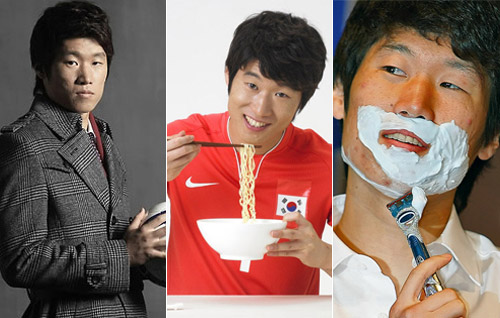
I mean, would Kim Jong Il allow this? WOULD HE?!?
Those of you that idolize and worship everything Nippon – c’mon, admit it, there’s a lot of you – may be surprised to learn of the cultural sway South Korea has in the Far East; in fact, there is a large cult following of South Korean cultural artefacts in Japan not unlike America’s cult following of Japanese trends. For that reason alone, it seems counter-intuitive to delve into traditional Korean music here (particularly as it was touched upon in North Korea’s entry). No, this will be all pop; so why not dive head-first into the deep end? This batch of charming young ladies go by the name of Girls’ Generation, and the song is “Gee”, a wildly popular track from 2009. And you know what? As much as I desperately want to hate this, I can’t do it.
To roll things back a few years, South Korea boasted a strong psychedelic scene in the 1970s, with San Ul Lim, Shin Jung Hyun, and He6 all earning acclaim for their various psych offshoots. It’s one that has continued into recent years, too, with Kim Doo Soo’s psych-folk slowly earning itself a word-of-mouth following since he came out of exile earlier this decade. This is Kim Jung Mi, though, with some psych-informed sunshine pop from 1972.
Seemingly, there’s Korean music available that parallels every major Western genre, including some completely unexpected ones – reggae and black metal, to name just two. As a small representation of the broad church that the country can offer outside of the bubblegum pop and R&B divas that dominate its chart, here Bluedawn. Elements of slowcore, post-rock, folk, dream pop, and occasionally shoegaze inform their gorgeous, light-as-air music – think of them as a Korean Mazzy Star and you won’t be too far off. They are without question one of the best things this blog series has led me to. A fitting way to bow out on a country as exciting and vibrant as South Korea, I think.



06.27.10
Lost me right there.
06.27.10
06.27.10
fukin love me some k-pop
06.27.10
06.27.10
06.27.10
06.27.10
06.27.10
how did that work out for you
06.28.10
i'm a quarter german so
win win
06.28.10
plus the women are hot. like, really hot