» Edit Band Information
» Edit Albums
» Add a Review
» Add an Album
» Add News | Frank Sinatra
Frank Sinatra was arguably the most important popular music figure of the 20th century, his only real rivals for the title beingBing
Crosby,Elvis Presley, and the Beatles. In a professional career that lasted 60 years, he demonstrated a remarkableability to maintain his
appeal andpursue his musical goals despite often countervailing trends. He came to the fore during theswing era of the 1930s and '40s,
helped to definethe "sing era" of the '40s and '50s, and continued to attract listeners duringthe rock era that began in the mid-'50s. He scored
his firstnumber one hit in 1940 and was s ...read more
Frank Sinatra was arguably the most important popular music figure of the 20th century, his only real rivals for the title beingBing
Crosby,Elvis Presley, and the Beatles. In a professional career that lasted 60 years, he demonstrated a remarkableability to maintain his
appeal andpursue his musical goals despite often countervailing trends. He came to the fore during theswing era of the 1930s and '40s,
helped to definethe "sing era" of the '40s and '50s, and continued to attract listeners duringthe rock era that began in the mid-'50s. He scored
his firstnumber one hit in 1940 and was still making million-sellingrecordings in 1994. This popularity was a mark of his success at singing
andpromoting the American popular song as it waswritten, particularly in the 1920s, '30s, and '40s. He was able to take the work of great
theatercomposers of that period,such as Jerome Kern, Irving Berlin, George Gershwin, Cole Porter, and Richard Rodgers, and reinterpret their
songsfor lateraudiences in a way that led to their rediscovery and their permanent enshrinement as classics. On records and in
liveperformances,on film, radio, and television, he consistently sang standards in a way that demonstrated their perennialappeal.
The son of a fireman, Sinatra dropped out of high school in his senior year to pursue a career in music. In September 1935,he appeared
aspart of the vocal group the Hoboken Four on Major Bowes' Original Amateur Hour. The group won the radioshow contest and toured
withBowes. Sinatra then took a job as a singing waiter and MC at the Rustic Cabin in Englewood,NJ. He was still singing there in the spring
of1939, when he was heard over the radio by trumpeter Harry James, who hadrecently organized his own big band after leaving
BennyGoodman. James hired Sinatra, and the new singer made his firstrecordings on July 13, 1939. At the end of the year, Sinatra accepted
anoffer from the far more successful bandleaderTommy Dorsey, jumping to his new berth in January 1940. Over the next two and a half
years,he was featured on 16 TopTen hits recorded by Dorsey, among them the chart-topper "I'll Never Smile Again," later inducted into the
GrammyHall ofFame. During this period, he also performed on various radio shows with Dorsey and appeared with the band in the films
LasVegasNights (1941) and Ship Ahoy (1942).
In January 1942, he tested the waters for a solo career by recording a four-song session arranged and conducted by AxelStordahl
thatincluded Cole Porter's "Night and Day," which became his first chart entry under his own name in March 1942.Soon after, he gave
Dorseynotice. Sinatra left the Dorsey band in September 1942. The recording ban called by theAmerican Federation of Musicians, which had
begunthe previous month, initially prevented him from making records, but heappeared on a 15-minute radio series, Songs By Sinatra,
fromOctober through the end of the year and also did a few livedates. His big breakthrough came due to his engagement as a support act
toBenny Goodman at the Paramount Theatre inNew York, which began on New Year's Eve. It made him a popular phenomenon, the first
realteen idol, with school girlsswooning in the aisles. RCA Victor, which had been doling out stockpiled Dorsey recordings during the strike,
scoredwith"There Are Such Things," which had a Sinatra vocal; it hit number one in January 1943, as did "In the Blue of the
Evening,"anotherDorsey record featuring Sinatra, in August, while a third Dorsey/Sinatra release, "It's Always You," hit the Top Fivelater in
the year, and afourth, "I'll Be Seeing You," reached the Top Ten in 1944. Columbia, which controlled the Harry Jamesrecordings, reissued the
four-year-old"All or Nothing at All," re-billed as being by Frank Sinatra with Harry James & HisOrchestra, and it hit number one in September.
Meanwhile,the label had signed Sinatra as a solo artist, and in a temporaryloophole to the recording ban, put him in the studio to record a
cappella,backed only by a vocal chorus. This resulted in fourTop Ten hits in 1943, among them "People Will Say We're in Love" from Richard
Rodgersand Oscar Hammerstein II's musicalOklahoma!, and a fifth in early 1944 ("I Couldn't Sleep a Wink Last Night") before protests from
themusicians union ended acappella recording.
In February 1943, Sinatra was hired by the popular radio series Your Hit Parade, on which he performed through the end of1944. Adding tohis
radio duties, he appeared from June through October on Broadway Bandbox and in the fall again took upthe Songs by Sinatra show, whichran
through December. In January, it was expanded to a half-hour as The Frank SinatraShow, which ran for a year and a half. In April 1943,he
made his first credited appearance in a motion picture, singing "Nightand Day" in Reveille with Beverly. This was followed by Higher
andHigher, released in December, in which he had a smallacting role, playing himself, and by Step Lively, released in July 1944, which gave
hima larger part. MGM was sufficientlyimpressed by these performances to put him under contract. The recording ban was lifted in
November1944, and Sinatrareturned to making records, beginning with a cover of Irving Berlin's "White Christmas" that was in the Top Ten
beforetheend of the year. Among his eight recordings to peak in the Top Ten in 1945 were Jule Styne and Sammy Cahn's "SaturdayNight (Is
theLoneliest Night of the Week)," Johnny Mercer's "Dream," Styne and Cahn's "I Should Care," and "If I Loved You"and "You'll Never Walk
Alone"from the Rodgers & Hammerstein musical Carousel. Sinatra insisted that Styne and Cahn behired to write the songs for his first MGM
musical,Anchors Aweigh, and over the course of his career, the singer recordedmore songs by Cahn (a lyricist who worked with several
composers)than by any other songwriter. Anchors Aweigh, in whichSinatra was paired with Gene Kelly, was released in July 1945 and went on
to becomethe most successful film of the year.
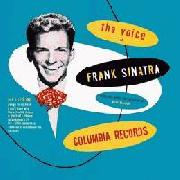
The Voice of Frank SinatraSinatra returned to radio in September with a new show bearing an old name, Songs by Sinatra. Itran weekly forthe
next two seasons, concluding in June 1947. Among his eight Top Ten hits in 1946 were two that hitnumber one ("Oh! What It Seemed toBe"
and Styne and Cahn's "Five Minutes More"), as well as "They Say It's Wonderful"and "The Girl That I Marry" from Irving Berlin's musicalAnnie
Get Your Gun, Jerome Kern's "All Through the Day," and KurtWeill's "September Song." He also topped the album charts with thecollection
The Voice of Frank Sinatra. His only filmappearance for the year came in Till the Clouds Roll By, a biography of the recentlydeceased Kern, in
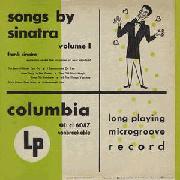
which he sang "Ol' ManRiver."Songs by Sinatra By 1947, Sinatra's early success had crested, though he continued to worksteadily in several
media. Onradio, he returned to the cast of Your Hit Parade in September 1947, appearing on the series for the next twoseasons, thenhad his
own 15-minute show, Light-Up Time, during 1949-1950. On film, he appeared in five more movies through the end ofthedecade, including
both big-budget MGM musicals like On the Town and minor efforts such as The Kissing Bandit. Hescored eight Top Ten hits in1947-1949,
including "Mam'selle," which hit number one in May 1947, and "Some EnchantedEvening," from the Rodgers & Hammersteinmusical South
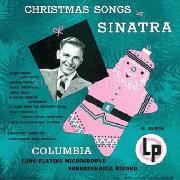
Pacific. He also hit the Top Ten of the album charts with 1947'sSongs by Sinatra and 1948's Christmas Songs by Sinatra.Sinatra's career was
in decline by the start of the '50s, but he wasfar from inactive. He entered the fall of 1950 with both a new radio showand his first venture
into television. On radio, therewas Meet Frank Sinatra, which found the singer acting as a disc jockey; it ran through theend of the season. On
TV, therewas The Frank Sinatra Show, a musical-variety series; it lasted until April 1952. His film work had nearlysubsided, though inMarch
1952 came the drama Meet Danny Wilson, which tested his acting abilities and gave him the opportunity to singsuchsongs as Harold Arlen
and Johnny Mercer's "That Old Black Magic," "I've Got a Crush on You" by George and Ira Gershwin, and"How DeepIs the Ocean?" by Irving
Berlin.At Columbia Records, Sinatra came into increasing conflict with musical director Mitch Miller, who was findingsuccess for hissingers by
using novelty material and gimmicky arrangements. Sinatra resisted this approach, and though he managed toscorefour more Top Ten hits
during 1950-1951 -- among them an unlikely reading of the folk standard "Goodnight Irene" --he and Columbia partedways. Thus, ten years
after launching his solo career, he ended 1952 without a record, film, radio, ortelevision contract. Then he turned it allaround. The first step
was recording. Sinatra agreed to a long-term, boilerplatecontract with Capitol Records, which had been co-founded byJohnny Mercer a decade
earlier and had a roster full of faded'40s performers. In June 1953, he scored his first Top Ten hit in a year and ahalf with "I'm Walking Behind
You." Then inAugust, he returned to film, playing a non-singing, featured role in the World War II drama FromHere to Eternity, aperformance
that earned respect for his acting abilities, to the extent that he won the Academy Award for BestSupportingActor for the part on March 25,
1954. In the fall of 1953, Sinatra began two new radio series: Rocky Fortune, a drama onwhich heplayed a detective, ran from October to
March 1954; and The Frank Sinatra Show was a 15-minute, twice-a-weekmusic series that ran fortwo seasons, concluding in July 1955.
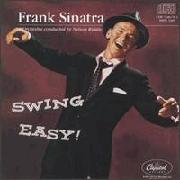
Swing Easy! Meanwhile, Sinatra had begun working with arranger/conductor Nelson Riddle, a pairing that produced notablechart entries
inFebruary 1954 on both the singles and albums charts. "Young-at-Heart," which just missed hitting numberone, was the singer's biggest
singlesince 1947, and the song went on to become a standard. (The title was used for a 1955movie in which Sinatra starred.) Then there was
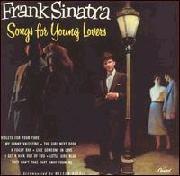
the10" LP Songs for Young Lovers, the first of Sinatra's "concept" albums,on which he and Riddle revisited classic songs by Cole Porter,
theGershwins, and Rodgers and Hart in contemporaryarrangements with vocal interpretations that conveyed the wit and grace of the lyrics.
Thealbum lodged in the Top Five. InJuly, Sinatra had another Top Ten single with Styne and Cahn's "Three Coins in the Fountain," and
inSeptember Swing Easy!matched the success of its predecessor on the LP chart. By the middle of the '50s, Sinatra had reclaimed his place
asa starsinger and actor; in fact, he had taken a more prominent place than he had had in the heady days of the mid-'40s. In 1955,he
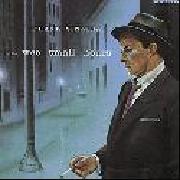
hitnumber one with the single "Learnin' the Blues" and the 12" LP In the Wee Small Hours, a ballad collection laterinducted into the Grammy
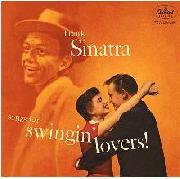
Hallof Fame.Songs for Swingin' Lovers! On September 15, 1955, he appeared in a television production of Our Town and sang "Love
andMarriage"(specially written by Sammy Cahn and his new partner James Van Heusen), which became a Top Five hit. Early in1956, he was
back in theTop Ten with Cahn and Van Heusen's "(Love Is) The Tender Trap," the theme song from his newfilm, The Tender Trap. As part of his
thematicconcepts for his albums of the '50s, Sinatra alternated between recordsdevoted to slow arrangements (In the Wee Small Hours) and
thosegiven over to dance charts (Swing Easy). By the latewinter of 1956, the schedule called for another dance album, and Songs for
Swingin'Lovers!, released in March, filled the bill,stopping just short of number one and going gold. The rise of rock & roll and Elvis Presley
began tomake the singles chartsthe almost-exclusive province of teen idols, but Sinatra's "Hey! Jealous Lover" (by Sammy Cahn, Kay
Twomey, andBeeWalker), released in October, gave him another Top Five hit in 1957. Meanwhile, he ruled the LP charts. The Capitol
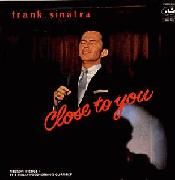
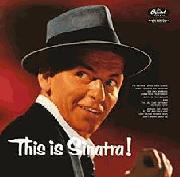
singlescompilationThis Is Sinatra!, released in November, hit the Top Ten and went gold.Close to You and MoreSinatra began 1957 by
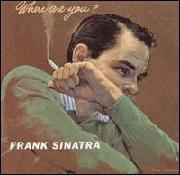
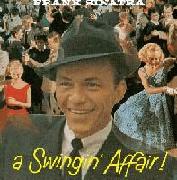
releasing Close to You, aballad album with accompaniment by a string quartet,in February. It hit the Top Five, followed in May by A Swingin'
Affair!, which went tonumber one, and another ballad album,Where Are You?, a Top Five hit after release in September. He was also
represented in the LP charts inNovember by thesoundtrack to his film Pal Joey (based on a Rodgers & Hart musical), which hit the Top Five,
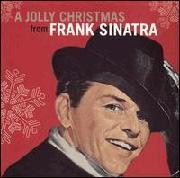
and by the seasonal collectionAJolly Christmas From Frank Sinatra, which eventually was certified platinum. The Joker Is Wild, another of his
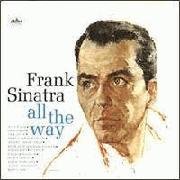
1957 films,featured the Cahn-Van Heusen song "All the Way," which became a Top Five single. In October, he returned to prime timetelevision
with another series calledThe Frank Sinatra Show, but it lasted only one season, and subsequently he restrictedhis TV appearances largely to
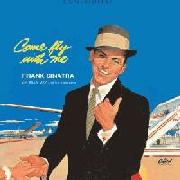
specials (of which hemade many).Come Fly with Me In February 1958, Sinatra reached the Top Ten with "Witchcraft," his last single to
perform that well forthenext eight years. That month, Capitol released Come Fly with Me, a travel-themed rhythm album, which hit number
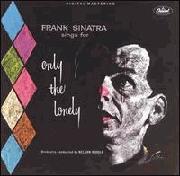
one.The year's balladalbum, Frank Sinatra Sings for Only the Lonely, released in September, also topped the charts, and it wentgold. In
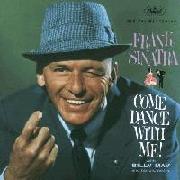
between, Capitol releasedthe compilation This Is Sinatra, Vol. 2, which hit the Top Ten. 1959 followed a similarpattern. Come Dance With Me!
appeared in January andbecame a gold-selling Top Ten hit. It also won Sinatra GrammyAwards for Album of the Year and for vocal
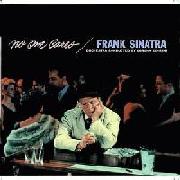
performance. Look to Your Heart, acompilation, was released in the spring andreached the Top Ten. And No One Cares, the year's ballad
collection, appeared in the summer andjust missed topping thecharts.Sinatra's Swingin' Session!!! And MoreSinatra gradually did less singing
in his movies of the '50s, but in March1960, heappeared in a movie version of Cole Porter's musical Can-Can, and the resulting soundtrack
album hit the Top Ten.Meanwhile, Sinatrawas beginning to think about the approaching end of his Capitol Records contract and to enter the
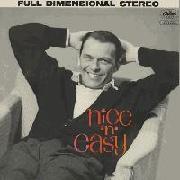
studioless frequently for the company. Hisnext regular album was a year in coming, and when it did, Nice 'n' Easy was a mid-tempocollection,
breaking his pattern of alternating fastand slow albums. The wait may have caused pent-up demand; the albumspent many weeks at number
one and went gold. Although Sinatrahad not yet completed his recording commitment toCapitol, he began in December 1960 to make
recordings for his own label, which he calledReprise Records. As a result, recordstores were deluged with five new Sinatra albums in 1961: in
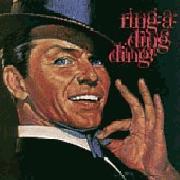
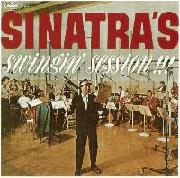
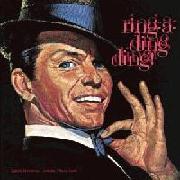
January, Capitol had Sinatra's Swingin'Session!!!; in April,Reprise was launched with the release of Ring-a-Ding Ding!; in July, Reprise
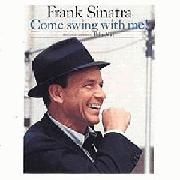
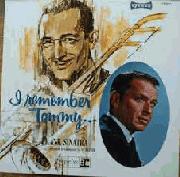
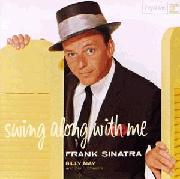
followed with Sinatra Swings the same weekthatCapitol released Come Swing with Me!; and in October, Reprise had I Remember Tommy..., an
album of songs Sinatra hadsung with theTommy Dorsey band. There was also the March compilation All the Way on Capitol, making for six
releases inone year. Remarkably, they allreached the Top Ten.Point of No Return Meanwhile, Reprise's first single, "The Second Time Around,"
a song written by Cahn and Van HeusenforBing Crosby, won Sinatra the Grammy for Record of the Year. By 1962, the market was glutted.
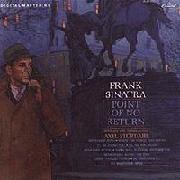
Capitol released its last newSinatra album,Point of No Return, as well as a compilation, and Reprise put out three new LPs, but only Reprise's
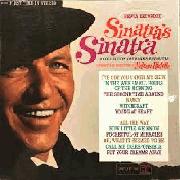
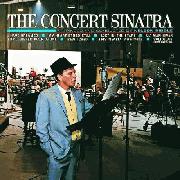
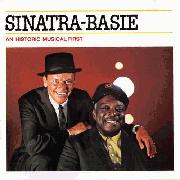
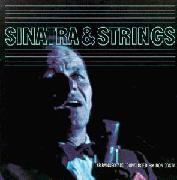
Sinatra &Strings reached the Top Ten. In1963, however, all three Reprise releases, Sinatra-Basie, The Concert Sinatra, and the gold-selling
Sinatra's Sinatra, made the Top Ten. Theonset of the Beatles in 1964 began to do to the LP charts what Elvis Presleyhad done to the singles
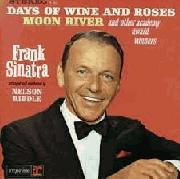
charts in 1956, but Sinatra continued toreach the Top Ten with his albums of the mid-'60s, albeitnot as consistently. Days of Wine and Roses,
Moon River, and Other Academy AwardWinners hit that ranking in May 1964, asdid Sinatra '65 in August 1965. That same month, Sinatra
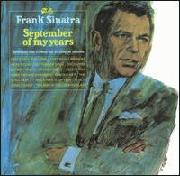
mounted a commercial comeback byemphasizing his own advancingage. Nearing 50, he released September of My Years, a ballad collection
keyed to the passage of time. After"It Was a VeryGood Year" was drawn from the album as a single and rose into the Top 40, the LP took off
for the Top Five and went gold.Itwas named 1965 Album of the Year at the Grammy Awards, and Sinatra also picked up a trophy for best
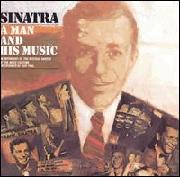
vocal performancefor "It Was aVery Good Year."Sinatra at the Sands In November 1965, Sinatra starred in a retrospective TV special, A Man
and His Music, and releasedacorresponding double-LP, which reached the Top Ten and went gold. It won the 1966 Grammy for Album of the
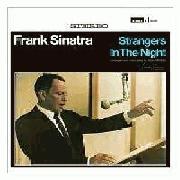
Year. Sinatrareturned tonumber one on the singles charts for the first time in 11 years with the million-selling "Strangers in the Night" inJuly
1966; the song won himGrammys for Record of the Year and best vocal performance. A follow-up album named after thesingle topped the LP
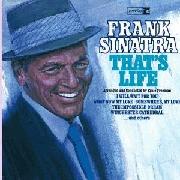
charts and wentplatinum. Before the end of the year, Sinatra had released two more Top Ten, gold-selling albums, Sinatra at the Sands and
That's Life, thelatter anchored by the title song, a Top Five single. In April 1967,Sinatra was back at number one on the singles charts with
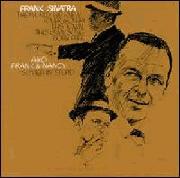
the million-selling "Somethin' Stupid," a duet with his daughterNancy. By the late '60s, even Sinatra had trouble resisting the succeeding
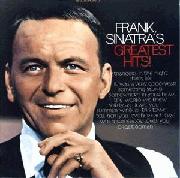
waves of youth-oriented rock music that toppedthe charts. But Frank Sinatra's Greatest Hits!, a compilation of his '60s singles successes
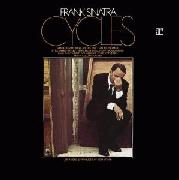
released in August1968, was amillion-seller, and Cycles, an album of songs by contemporary writers like Joni Mitchell and Jimmy Webb,
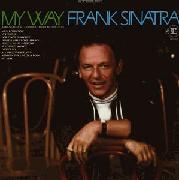
released that fall,wentgold.Ol' Blue Eyes Is Back In March 1969, Sinatra released "My Way," with a lyric specially crafted for him by Paul Anka.
It quicklybecame asignature song for him. The single reached the Top 40, and an album of the same name hit the Top Ten and wentgold. In
the spring of 1971,at the age of 55, Sinatra announced his retirement. But he remained retired only until the fall of1973, when he returned to
action with a newgold-selling album and a TV special both called Ol' Blue Eyes Is Back. In thislate phase of his career, Sinatra cut back on
records, movies,and television in favor of live performing, particularly in LasVegas, but also in concert halls, arenas, and stadiums around the
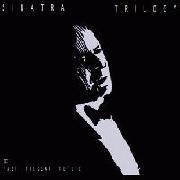
world. Herefrained from making any new studio albums forsix years, then returned in March 1980 with a three-LP set, Trilogy: Past, Present,
Future.The most memorable track fromthe gold-selling set turned out to be "Theme From New York, New York," the title song from the 1977
movie,which Sinatra'srecording belatedly turned into a standard.Sinatra Reprise: The Very Good Years By the early '90s, the CD era had
inaugurateda wave of box set reissues, and the 1990Christmas season found Capitol and Reprise marking Sinatra's 75th birthday by
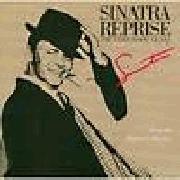
competing with thethree-disc The CapitolYears and the four-disc The Reprise Collection. Both went gold, as did Reprise's one-disc highlights
version, SinatraReprise --The Very Good Years. Sinatra himself, meanwhile, while continuing to tour, had not made a new recording since his
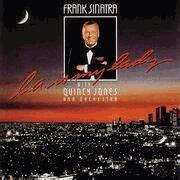
1984 LPL.A. IsMy Lady. In 1993, he re-signed to Capitol Records and recorded Duets, on which he re-recorded his old favorites,joined by
other popularsingers ranging from Tony Bennett to Bono of U2 (none of whom actually performed in the studio withhim). It became his
biggest-sellingalbum, with sales over 3,000,000 copies, and was followed in 1994 by Duets II, which wonthe 1995 Grammy Award for
Traditional PopPerformance.Sinatra finally retired from performing in his 80th year in 1995, and he died of a heart attack less than three years
later.Anyonewill be astonished at the sheer extent of Sinatra's success as a recording artist over 50 years, due to the changes inpopular taste
during thatperiod. His popularity as a singer and his productivity has resulted in an overwhelming discography.Its major portions break down
into theColumbia years (1943-1952), the Capitol years (1953-1962), and the Reprise years(1960-1981), but airchecks, film and
televisionsoundtracks, and other miscellaneous recordings swell it massively. As a moviestar and as a celebrity of mixed reputation, Sinatra is
so muchof a 20th century icon that it is easy to overlook his realmusical talents, which are the actual source of his renown. As an artist, he
worked tointerpret America's greatest songs andto preserve them for later generations. On his recordings, his success is apparent. « hide |
Similar Bands: Tony Bennett, The Ames Brothers, Dean Martin, Frank Sinatra and Antonio Carlos Jobim, Nat King Cole Contributors: Divaman, NickLizard49, TwigTW, ASnideReturns, rockandmetaljunkie, ThrashingWhiplash, Bulldog, ninjuice, RandyfromPennywise, scheim, ToSmokMuzyki, nylonhair, Chrysalis76, TheLongShot, Asdfp277, SandwichBubble, TwigTW, KILL, Frippertronics, Jom, Parallels, Voivod, ThrashingWhiplash,
|