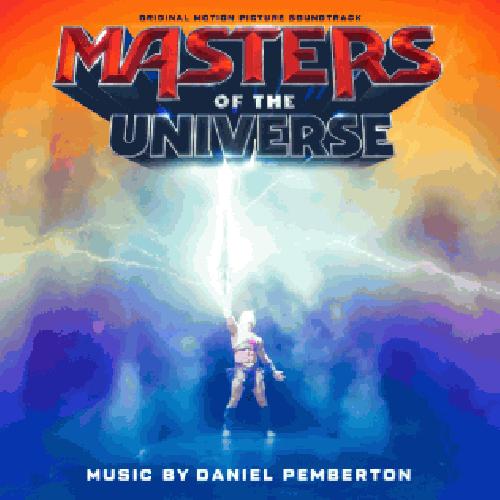
Review Summary: Now that’s a crescendo!
For all the cartoons I watched as a kid,
Masters of the Universe has left surprisingly little in my adult memory. There was a muscular fellow with a long sword and a ridiculous haircut, accompanied by an assortment of equally improbable characters fighting whatever evil turned up that week. Beyond that, the details escape me. I remember the appeal, though. Like so many programmes designed to keep the toy shops busy, it offered an absurd world that a child could readily digest. Travis Knight’s film understands the joy of that arrangement. It preserves the colourful fantasy and straightforward heroism, with enough good humour to acknowledge how peculiar the whole business looks.
I though roughly enjoyed the movie's handling of the jokes. Skeletor’s remarks about phallic symbolism could easily have become tiresome, yet the delivery makes them work, and the teasing of macho posturing seldom interrupts the adventure to explain itself. The film can laugh at its characters while still allowing us to care about them. Daniel Pemberton’s score is crafted in such a way as to preserve that balance. It gives their exploits a splendour that no amount of elaborate scenery could achieve alone, and its enthusiasm makes it remarkably easy to cheer for a man raising a magic sword above his head.
Pemberton approaches this world with the resources of a fantasy epic and the appetite of a stadium rock band. An eighty-piece orchestra and a hundred singers join electric guitars, synthesizers and forceful drumming, creating music that occasionally seems one vocal entrance away from a rock opera. The electronics have the dated charm of an eighties vision of the future, entirely appropriate for a setting where ancient powers coexist with implausible machinery. There is some industrial abrasion among the more threatening sounds, but the prevailing character is exuberant and theatrical. The film’s use of Queen’s
Princes of the Universe belongs to the same musical sensibility, although that song is absent from the soundtrack album. The Darkness’s newly written title song does appear, and its flamboyance makes good company for Pemberton’s score.
The Queen connection goes considerably deeper, of course. As soon as the guitar started screaming, I found myself exclaiming, "That’s Brian May!" The credits brought the satisfying confirmation that I had recognised him correctly. That tone is difficult to mistake, and the riffs, solos and little flourishes recall the tougher side of his playing on
I Want It All,
Stone Cold Crazy and
Hammer to Fall. May sounds thoroughly at ease amid all this fantasy. His guitar can be imperious one moment and almost mischievous the next, making him an excellent partner for a composer willing to indulge both qualities. Pemberton’s comparison of the Red Special to Adam’s Sword of Power feels especially apt once you hear what the instrument contributes.
Their collaboration is most immediately rewarding in
Eternia. Its main melody sends a shiver through me before I have given much thought to why. I hear something of the awe associated with Howard Shore’s Gondor music, particularly that ability to make a place seem magnificent and worth defending. The resemblance is one of emotional effect, and Pemberton gives his theme a more playful setting through the synthesizers and May’s guitar embellishments. Hope and nostalgia seem to arrive together, carried by a tune that remains lodged in the memory long after the film ends. When its related material swells around Adam’s transformation in
The Power of Grayskull, the voices and radiant effects lend the sword an almost divine presence. For a moment, the power really does sound as though it has descended from the heavens.
That uplift would mean less without the score’s quieter passages. The piano rendition of the Cure’s
Boys Don’t Cry is a particularly touching choice. To my ears, its gentleness suggests an innocence Adam is leaving behind as the responsibilities awaiting him become harder to avoid. There is a modest, vulnerable kind of courage here that belongs alongside the spectacle of his transformation. Elsewhere,
Eternos in Ruins and
What’s Left of Us give the loss of home a sombre musical expression. These brief changes of tone allow sorrow into an album otherwise so eager to entertain, and make the eventual recovery of confidence more affecting.
As a standalone listen, however, the original eighty-two-minute release exposes how much responsibility falls upon its central theme. Fragments of
Eternia recur throughout, and its familiarity holds the score together, but relatively few of the surrounding cues establish an equally strong claim on my memory. There is worthwhile action writing in
Sky Fight and
Fight for Snake Mountain, with enough rhythmic attack to enjoy away from the screen. Passages such as
Mulched and
Enter Snake Mountain also contribute to the larger drama without becoming pieces of music that I am particularly inclined to seek out individually. The darker material would benefit from a more memorable melodic answer to the hero’s music, especially around Skeletor. Even the transformation sequence, one of my favourite moments, draws much of its appeal from ideas already introduced. I enjoy the album’s company, but my strongest urge is usually to replay its principal melody.
Pemberton nevertheless understands how to make that affection count. The arrival of the original cartoon theme in
A Job for He-Man gives the score a fitting salute to its source, following music that has already made Adam’s heroism convincing on its own terms. The result has enough tenderness to support its noisy celebrations and enough humour to keep the grandeur enjoyable. I may have forgotten most of the He-Man adventures I watched as a child, but this music makes their appeal perfectly clear again. Pemberton and May make this unlikely fantasy feel worth believing in, and they sound as though they had a hell of a time doing it.