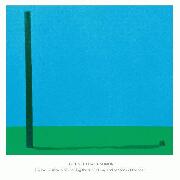
Review Summary: Sometime I'll be dead and gone / Sooner than I hope, but I hope I'm wrong
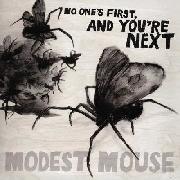
At one point in time I truly believed that Isaac Brock had dug Modest Mouse’s grave and interred the remains in a Golden Casket of unsatisfactory closure. Not only did that album sound like third-day leftovers from 2015’s Strangers to Ourselves, but it also marked the last album to include the immensely underappreciated talents of drummer Jeremiah Green who passed away from cancer in late 2022. With the backbone of the group now gone, how could this collapsed skeleton of a band be able to move on?
It’s hard not to admire the genius-insanity of founder, lyricist, and leadman, Isaac Brock. To him, Green’s death marked the end of a decades-long friendship rather than the loss of a fellow musician and partner in the art they had created over the course of 30-odd years.
“I didn’t lose the drummer to Modest Mouse. I lost Jeremy. I know that distinction might not land how it’s supposed to, but they are different things.”
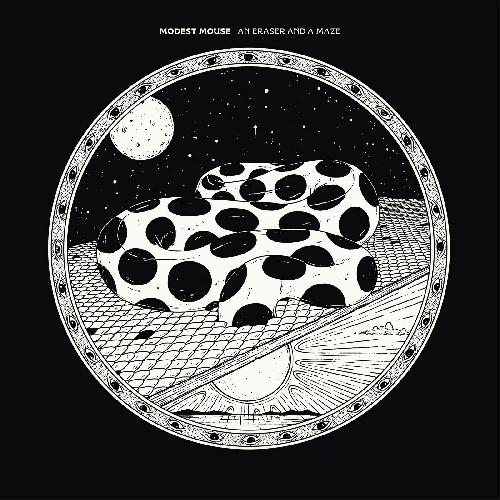
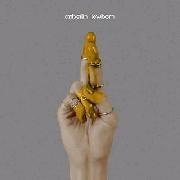
From that perspective, An Eraser and a Maze is many things: a reflection on death in its many forms, isolation and belonging, and a social commentary on today’s climate. For fans of the band, this wouldn’t seem like a marked departure from what the band has produced and sung about before. And they’re not wrong. Modest Mouse’s new album dips its proverbial toes in the rivers of its forefathers and Brock draws on the many eras of the band with a hand that is alternately delicate and heavy-handed. For fans, it’ll be easy to trace the lineage of certain songs. “Third Side of the Moon”, the album’s standout track, opens with an electric guitar riff that could be the depressed cousin of the classic acoustic riff that introduces The Moon & Antarctica’s opener, “3rd Planet”. The track maintains heavy M&A DNA throughout and is Brock’s most personal and literal track on the entire album. As is his tendency to contradict in the same breath, Brock recalls these lost friends while questioning whether he remembers them enough. The sort of thoughts that grief is wont to bring: did we really pay attention to the people we claimed to have loved so dearly?
Like an archaeologist digging through the remains of history, the band continues to mine past sounds. The opener, “Picking Dragons’ Pockets”, leans into the bombast of Good News for People Who Love Bad News and We Were Dead Before the Ship Even Sank with a steady buildup before exploding into a firework display of horns, strings, and cymbals. The band-cum-collective that is modern Modest Mouse cram ideas, instruments, and sounds into a sonic blender that risks a mess if not held to a certain degree of restraint. And this is where the band shows that they’ve learned a few lessons in the intervening years between releases. As guilty as the band is for indulging in excess, they seem to have paid some penance on An Eraser and a Maze as Brock and company (sometimes) know when to dial things back. “Remember Yourself” turns 180-degrees away from the opener with an acoustic opening and a respectful sensitivity that recalls the gentle sentimentality from past songs such as “Blame it on the Tetons” as Brock meditates on grief and reminds the listener to always remember themselves when in the trenches of life. These are the sorts of songs that Brock has always excelled at as a lyricist as he leverages his love of abstract meaning to communicate the most basic of human emotions. A particularly good example of this is on “Speak N’ Spell (Or Not)”, a driving slice of indie rock where Brock employs his trademarked wordplay that is playfully sardonic as he speaks on the collective fallibility of hindsight and selfish decision-making.
Although I can wax positive about all the good things on this album, it’s important to note that it is a descendant of the same bloodline that has given us some stinkers. “Dogbed in Heaven/Give it a Skeleton” will be sacrificed to the throne of the almighty skip button while “Stoner Party”, even at a mere 35 seconds, is an indulgent piece of randomness that risks spoiling what is, overall, a very sincere record. Tracks such as “Rotten Fruit” and “Absolutely Necessary Never” incorporate a level of effects work that harken back to “Pistol” and “*** in Your Cut” which proved to be fairly divisive songs on Strangers to Ourselves. To their (and Isaac Brock’s) credit, neither song contains the same level of lyrical cringe.
The album closes with a pair of vintage Modest Mouse songs. “Look How Far” certainly doesn’t overstay its welcome at less than two minutes, and is another great opportunity for Brock to yell into the mic and sing about how stupid dumb we all really are. “Impossible Somedays” closes the album on a respectful note, with an opening bassline that recalls another Modest Mouse classic, “Tiny Cities Made of Ashes”, “Impossible Somedays” is the group’s parting message to not just exist passively in life and to not let grief convince you to bury yourself in an early grave just because it feels momentarily easier.
An Eraser and a Maze might not be the great comeback some were hoping for. However, what it more accurately is is the ladder that Modest Mouse cobbled together to break out of that golden casket and climb out of the grave they seemed to dig for themselves over five years ago. The band, now a collective of uniquely talented musicians, under the direction of Isaac Brock resurrect their reputation with an album that succeeds far more than it flounders. While it can be excessive and obtuse, isn’t that part of the nature of being human? The band seems to think so as it presents the listener with an imperfect album that unveils itself like a photo album. A collection, a collage of past and present sounds that reminds us why we love this band as much as we tend to roll our eyes at them.