Review Summary: Saosin Was the First Band I Ever Saw Live: An Awkward Essay
Saosin was the first band I ever saw live.
During the 2000’s, I was just starting to catch onto music beyond the songs that my parents played on the stereo during long car rides when I was a kid. Up till then, it was
Nirvana and
Paul Simon,
R.E.M. and
John Hiatt. But into my adolescence, I was steadily discovering what I felt was my own identity as a music fan. These were songs that weren’t passed down to me, but songs I was finding and experiencing myself, on my own terms. At the time, bands like
30 Seconds to Mars were the coolest thing ever to me, and my angsty teen years were what eventually drew me to the Cove Reber-fronted incarnation of post-hardcore band Saosin, who was opening for 30 Seconds to Mars at a small venue near my hometown.
On the whole, my knowledge of the band was scarce. I admittedly had no experience with Anthony Green and the
Translating the Name era of Saosin. All I knew is that “It’s Far Better to Learn”, the opening track from the Reber-led self-titled “beetle” album, one that I discovered on a random Myspace page online, absolutely rocked and seeing the band play that song alone was enough to burn that performance into my memory for a lifetime. It was never forgotten. I instantly connected with that first album without a second thought.
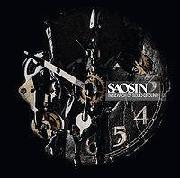
Fast-forward quite a long time and Saosin was celebrating their history with a live album recorded at the Garden Amphitheater in Orange County, California. The full production included two sets: the first with vocalist Cove Reber on the mic, the second with original vocalist Anthony Green. With a few covers and monologues sprinkled in, each vocalist performed songs of their own tenures, rounding out with a Green-fronted band playing their now legendary
Translating the Name EP in its entirety.
This whole live recording, lasting nearly 75 minutes across 23 tracks, is a story being told. It’s a story about a band that went through plenty of style shifts, overcame plenty of rough patches, but ultimately came together to celebrate their history for an in-person crowd of avid fans, along with the millions of people who listened to their music across 20 years of activity. With
Live From the Garden Amphitheater, Saosin chronicle nearly every high and every low, making it a truly honest and beautiful portrait of a band that deserves it and so much more.
“Saosin Part 2” vocalist Cove Reber openly admits that we all succumb to time’s tightening grip. “Your boy is no longer 21 years old…” he says, “he’s pushing 40.” It’s tough to reach that vocal range of his younger years and he knows it. But he keeps performing. He lets guitarist Beau, bassist Chris, and most importantly, the wild folks in the crowd all sing along with the parts that he has trouble reaching in his older age. And even as we grow up, even as, as Reber says at the end of his performance of “Sleepers”, we are “missing a couple of notes off the top end”, the value of those songs and performances will always endure. You don’t need to perfectly emulate the style and technique of your youth to still hold that energy in place, to still connect with others. And even as Reber leaves the stage, he gives his thanks not just to the bandmates he worked with on their first two LPs, but to Anthony as well, the one whose large shoes he had to fill.
Green, on the other hand, uses his stage presence to face his demons in front of everyone. Before the band’s performance of “3rd Measurement in C”, he describes his past mistakes and explains how he should’ve settled his beef long before he eventually did. Smack dab in the middle of his full performance of the EP that “changed his life”, the very record that put Saosin on so many people’s radars, he gets astonishingly confessional. He shows that it isn’t just the music he made that created such importance to him, but the bonds he had with his bandmates, the connections he took for granted and took a decade to fully put together again. Back in the 2000’s, as
Translating the Name was only beginning to be regarded as a classic of its era, there was clearly some baggage that was stacking, and in a way, this performance feels like Green fully confronting those demons without anything holding him back.
Though I didn’t know it at the time, Saosin was living proof of how important a good live act can be, how seeing a band perform on stage in front of your own eyes is a special moment. It’s something I believe that many of us took for granted when we saw our own "first live band", because living through this decade in particular, there were many moments where the very idea of live music felt like it was inches away from disappearing forever. Live music is a connection, whether through the performers, the audience, or both at the same time. It’s not something that really can be duplicated over a Youtube video. It’s very distinct.
And I think the entire band knew this. In an earlier interlude during Green’s set, Anthony describes how important it is to reach out, to cherish the meaningful connections that we often take for granted. The final track, an extended rendition of “They Perched on Their Stilts…” from the
Translating the Name EP, begins with Green saying he’s “eternally grateful.” Whether it was through Green's own unity with the band which steadily unraveled as he departed, or the headbanging elder emos in the packed amphitheater pit as each song plays, the band understood that live music, and even music in general, is about connections. It’s about sharing the spirit of your band’s history with both vocalists that each have their own stories to tell and memories to share. It’s about adoring the music of
Blindside,
At the Drive-in, and
Sunny Day Real Estate when you were young, and wanting to perform those songs that inspired you to a new generation. It’s about singing a duet with a younger vocalist, one who likely wouldn’t be performing if it weren’t for you being there to artistically inspire them.
Because live music is about connections and Saosin’s lingering vibe is a binding agent, one that’s united the minds and hearts of all of those awkward misfits who felt unheard during the 2000’s. As a celebration of the band’s endlessly enduring spirit and what it meant to all of the people who had the lucky chance to hear even a minute of just one of their songs, you really couldn’t find a better example.