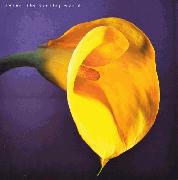
Review Summary: To listen to "The Seer" is to encounter the sublime.
Accessibility is not a trait I would associate with the band Swans- in fact, they’re as close to inaccessible as most bands would ever dare to come. As I looked into getting into them earlier this summer, no album in their gargantuan discography managed to emerge as a clear-cut, beginner friendly starting point, so I decided to begin my excursion into the music of Swans with their newest record, "The Seer", and I don‘t think I possibly could have made a better choice. It goes against conventional wisdom to describe a experimental double-disc album that features centerpieces of 32, 19, and 22 minutes, respectively, as a friendly starting point, but then again, nothing about Swans is really conventional. The music found on "The Seer" exudes a gripping intensity that does not let up for its entire 119 minute runtime, effectively trapping the listener in a nightmarishly vibrant world that occasionally lets up for blissfully transcendent moments of melancholic grandiosity. In short, everything on "The Seer" feels humongous, heavy, and above all, powerful.
The obvious standouts from "The Seer" are the aforementioned centerpieces- the title track, A Piece of the Sky, and closing track, The Apostate. Thanks to the perfect balance of repetition and variation within each of these tracks, they manage to feel much shorter than their colossal runtimes suggest. All of them contain many abrasive elements, as they often utilize heavy distortion and ambient noise to set a mood. The arrangements are, in many places, abstract, but as a result of the band's amazing songwriting abilities, they never feel directionless. The monumental size of these tracks does not make them a chore to listen to, and surprisingly, they do not dissuade repeat listens. Instead, they encourage them, as every single facet of these pieces begs to be fully absorbed. A Piece of the Sky may be the best of the bunch, as it evolves from an indescribable cacophony into a soothing, bass-driven section that feature incomparably beautiful vocal melodies, the distinctive qualities of Michael Gira’s voice standing out even more thanks to its relative sparseness throughout the record.
Besides the three centerpieces, the “short” tracks have plenty of things going for them, as well. Opener "Lunacy" is a strongly-driven piece, featuring terrifyingly chanted vocals that are eventually topped by the songs acoustic conclusion and the mournful lyrics about how “Your childhood is over”, a statement which the music heavily and unapologetically invokes. "Mother of the World" and "Avatar" are two other favorites, both of which showcase the strongest examples of the album’s impressive use of tempo changes, their eventual bursts of aggressive energy showing how the band’s hypnotic use of repetition is always building towards something. The only complaint I really have is in regards to in regards to Song For A Warrior, which is by no means a bad song, but its overwhelming brightness feels out of place alongside the oppressive darkness and melancholy present on most of the tracks.
"The Seer" is an album that I will listen to over and over again, for to listen to it is to encounter the sublime. It is a thoroughly enveloping record that proves that there is still plenty of originality to be mined in the world of music. Albums this rich and rewarding don’t come around often, making "The Seer" a definite must-listen for 2012.