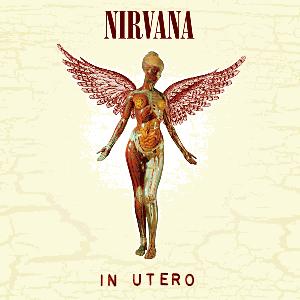
Review Summary: Nirvana's magnum opus, In Utero, is the polar opposite of their previous release, Nevermind, and defines them for what they were. A rock band.
In 1991 Nirvana, one of the most highly publicized and acclaimed bands of the Seattle grunge scene released their commercial breakthrough record, Nevermind. The album wasn’t expected to make much of an impact on the charts or have impressive sales, but by 1992 the album knocked Michael Jackson’s Dangerous out of the number one spot on the Billboard Charts. The leading single, “Smells like Teen Spirit”, became the hard rock anthem of the decade and the band’s most well known song. The success of Nevermind boosted the band in to international fame and recognition which could have been for better or worse considering the instability of the bands infamous front man, Kurt Cobain. To date, Nevermind has sold over 30 million copies worldwide and is now recognized as one of the best and influential rock albums in music history.
However, Nevermind is far from Nirvanas greatest work. It is a pop record. It is against everything that band had stood for. It lacks the hard, raw rock sound that the band had strived for and previously displayed on their 1989 debut, Bleach. They were just a rock band and that’s all they ever wanted to be. So in 1993, the band returned to the studio with a new approach to recording and created their crushing, beautiful magnum opus, In Utero. Disgusted with Butch Vig’s perfect, polished production approach and use of double tracking for vocals on Nevermind, they set out to create a record that was the complete opposite of Nevermind. The band hired producer Steve Albini (of Big Black and Rapeman) to record, produce and mix In Utero. Albini decided to record the band playing the music live and later recording and overdubbing Cobain’s vocals in to the mix. All of Kurt’s vocal tracks were recorded in a total of a mere six hours. The end results were a drastic change from the clean, smooth production aesthetic heard on Nevermind. From the distorted, catchy mess of In Utero’s opener, Serve the Servants, to the somber, genuinely emotional closer, All Apologies; they had crafted something that blended everything they had ever done superbly in to one fantastic package.
The contrast of sound is extremely evident on this album unlike their previous efforts. Cobain’s melodic inclined writing style is present on the album with tracks such as “Serve the Servants”, “Dumb”, “Heart Shaped Box” and “All Apologies”. However the darker, heavier side of his writing is also prevalent with tracks such as “Very Ape”, “Milk It”, and “Radio Friendly Unit Shifter”. Feedback and dissonance is often used as musical devices in tracks such as “Tourette’s” and “Scentless Apprentice”. The album is an interesting blend of soft and hard numbers that all flow together surprisingly well. One minute, you’ll be singing along to the sad, dissociative but catchy lyrics of “Dumb”, and then head banging along to the heavily distorted, repetitive riff of “Very Ape”. In Utero is a dissonant, hard rocking mess with a soft side and much more comparable to Bleach than Nevermind.
The lyrics are another intriguing aspect of the album. While, Cobain has gone as far to deem his lyrics as, “a big pile of contradictions. They're split down the middle between very sincere opinions that I have and sarcastic opinions and feelings that I have and sarcastic and hopeful, humorous rebuttals toward cliché bohemian ideals that have been exhausted for years.” He also referred to the lyrical content of In Utero as being “very impersonal”. The other members have debuted this with Dave Grohl claiming that “"A lot of what he has to say is related to a lot of the *** he's gone through.” The lyrics contain themes ranging from suicide, drug addiction, depression, love, angst, fame and fatherhood. He may not be the most impressive lyricist but he is able to convey emotion and make it feel genuine and natural. From him screaming “What is wrong with me/ what is what I need/ what do I think I think” on “Radio Friendly Unit Shifter” to half singing, half mumbling, “I’m not like them/ but I can pretend/ The sun is gone/ but I’ve got a light” on “Dumb”. This album isn’t fueled by foolish teenage angst. Cobain was growing older, growing bored and was becoming even more discontent with the world around him and his personal life. Even if it isn’t a completely clear and honest look in to Kurt Cobain’s mind, it is certainly haunting, beautiful and painfully relatable at times.
In the end though, In Utero will never be considered by the masses as Nirvana’s best effort for its lack of pop sensibility and its overall depressing aesthetic. It didn’t break alternative music in to the mainstream music scene. It simply didn’t have as big of impact on music. It wasn’t fit for mass audiences and it was never intended to be. What In Utero had was more blood, sweat and tears behind it than Nevermind did. It was an honest rock record, free of any rock star cliché or music industry bull***. It was Nirvana at their finest and was the record that stands best for what they were. Just a ***ing rock band.