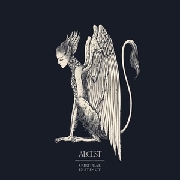
Review Summary: This is where it all began.
Alcest's 2005 EP Le Secret hasn't received quite the amount of attention that one might expect from a release that pioneered such an intersting and influential style of heavy metal: the lighter, less abrasive interpretation of black metal that bears more than a passing resemblance to post-rock and the shoegazing of the earl nineties. Regardless of your feelings about the genre, there's no denying the amount of influence that it has had in the modern black metal scene, and this release really marks the inception of that trend. Other metal artists had experimented with styles reminiscent of shoegaze before, but Neige, the creative force behind Alcest, effectively created the “post-black metal” or “blackgaze” scene as it has come to be labeled among fans.
As important as this was, Le Secret isn't often mentioned in discussions about the genre in the way that pioneering records in other genres of music frequently are. There are a few possible reasons for this; it may simply be a result of the disdain many black metal fans hold for the multitude of derivative artists that have emerged from this style (which is often rightfully held), and an unwillingness to give any attention to their progenitor. This doesn't quite explain, however, why Alcest's ever-growing fanbase haven't latched on to this release. My guess is that a lot of fans may have been turned off either by the relatively raw production, or simply any associations with Alcest's strictly black metal origins. This would certainly make sense in the context of comments that Neige has made about Le Secret; misconceptions that the music was intended to be “dark” or “sinister” prompted the artist to state that he hadn't succeeded in communicating his ideas effectively with his first release. In the same interview, Neige expressed an interest in re-recording the entire EP to fix these problems. With Alcest's popularity rising fairly consistently, Neige has made good on his promise to improve what should have been a defining release for new and old audiences alike.
That isn't to say that there is anything seriously wrong with the two original tracks, which are also included in this release. Musically, the two songs act as a sort of mission statement for Alcest, and in many ways their progression outlines the stylistic direction that the band has taken over the past few years. The title track is airy and atmospheric, embracing the dense yet soothing disposition that would go on to dominate Alcest's first full-length, Souvenirs d'un autre Monde. Clean guitars and natural ambiance lead into an extended section of enveloping distorted guitars and light, floaty chanting. Black metal techniques like tremolo picking and blast beats are used to create a soft, melancholic atmosphere and a pulsating sense of rhythm rather than dark, aggressive sounds. Outside of these techniques there is hardly anything 'metal' about the song; if it were to follow more conventional song structure it could unequivocally be labeled a piece of relatively heavy shoegaze. Élévation, while resembling traditional black metal on the surface, represents an equally radical departure from the genre's characteristic moods. Harsh shrieks and an unrelenting tempo are channeled towards a constant dynamism and an almost transcendental feeling that parallels a lot of the themes and feelings that Neige attempted to evoke with Alcest's sophomore release, Écailles de Lune. Major chords dominate both compositions, and though it's easy to pick out black metal influences, the music here really isn't black metal at all. It lacks any truly dark themes, and comes off as pleasant and even uplifting.
While neither of these tracks were without flaw, they managed to nail one essential quality that other artists to this day haven't quite figured out: a genuine purpose and intent that resulted in a sound that doesn't feel forced or contrived. There is nothing in either of these songs to suggest that the artist was listening to Slowdive or Sigur Rós and thought “Hey, I wonder if I can throw this stuff together with some black metal and see what comes out.” This isn't a cynical or opportunistic attempt at fusing genres for the sake of an attracting an audience; it is, rather, an attempt at using the musical techniques of one genre to express genuine emotions and concepts that would normally lie well outside the scope of said genre. By Neige's own admission, the musician hadn't even heard any shoegaze music until after the release of his first full-length; the similarities to that style of music are, believe it or not, purely coincidental. It's positive, reflective heavy metal music that was legitimately groundbreaking at the time, and absolutely filled with ambition. The actual music here, however, doesn't always live up to that ambition. Though the purpose here was to move beyond traditional black metal aesthetics, Neige was forced to operate in the lo-fi, DIY mode of production characteristic of the genre. Music that should sound lush can feel tinny and empty at times, and there's a real lack of nuance in the recording or production. This is especially problematic in Élévation, where the “strangled chant” in conjunction with the poor production makes the song sound a little too cold and a little too dark. As admirable as the ideas behind this song and the record as a whole were, it's clear that Neige didn't really have to resources to express them as clearly and professionally as he might have liked.
Now, six years later, Neige has finally seen fit to provide execution and sound quality that measures up to his original intent. The result is an excellent experience that captures the quintessential quality of Alcest's music in a way that is both consistently engaging and constantly entertaining. The re-recordings of both tracks are the highlights of this release; though there aren't any significant compositional changes, they demonstrate production values that are up-to-date with Alcest's most recent efforts and all-around superior musicianship. The improvements at first appear rather subtle on the title track, giving it a richer, warmer sound, but not doing much else. Tighter drumming by Winterhalter (who has since joined the band to replace Neige's admirable but overly simplistic work behind the kit) and fuller, deeper vocals (which demonstrate that Neige has some serious vocal ability beyond simply crooning) certainly improve the song, but by themselves one might question if a full re-release was really necessary.
Any doubts about the value of these recordings, however, should be completely and utterly silenced upon considering the re-recording of Élévation. As I mentioned previously, this really was the problem track on the original release, and likely the primary cause of Neige's dissatisfaction. An enhanced attention to nuance and detail is evident even before the song really kicks in, with the addition of a few tasteful harp flourishes to the choral intro. Once it really gets going, however, Élévation brings the entire release up to an entirely different level. The richer, warmer sound that marginally improved Le Secret has a much more obvious effect here, crafting something that is both incredibly intense and relentlessly uplifting. The blast beats and blistering shrieks do nothing to obscure the fact that this is a happy song; in fact, they make it even more evident. Neige's vocals are really something else here. He has quite the scream, and the improved production turn that “strangled chant” into something beautiful. It's clear that these are screams of euphoria rather than desperation or anger. These significant improvements frame a number of other minor but equally effective changes, including cleaner transitions facilitated by Winterhalter's drums and the addition of some clean vocals in the middle portion of the song, that really complete the experience. I could go on for a lot longer about how this song makes me feel, but I'm sure that my descriptions would probably get even sappier than they already are. Let me just leave it at this: this is one of the few metal recordings that I would truly label “rapturous,” and Neige's efforts have turned what was a mere curiosity in Alcest's discography into one of the band's best songs.
Of course, these are re-recordings rather than re-imaginings, and as such a few flaws do remain from the original compositions. Both pieces can drag a bit, especially Le Secret, which dwells on certain riffs a little too long and never really goes anywhere during its fourteen-minute duration. It's very pleasant, but there isn't much going on; Neige would later learn to curb these kinds of songs down to about half the running time , and the lack of restraint here means things can get pretty tiring. This is less of an issue for Élévation, which seems to be constantly moving, but Neige still relies on merely a few key riffs, another element which was remedied in other releases. However, this was never intended to be the perfect Alcest album. Le Secret is a proof-of-concept, a demonstration of the key ideas behind the project, and taste of things to come. Now that Neige has redeemed past missteps, this release truly succeeds in representing the birth of Alcest's groundbreaking (and endlessly imitated) interpretation of black metal.