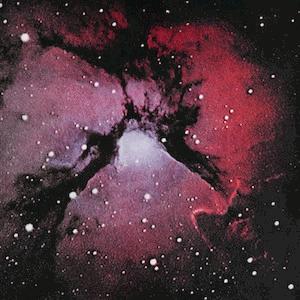
Review Summary: An unworthy closer of an era...
Islands is the last entry into King Crimson’s first era, in which Peter Sinfield still wrote lyrics for the band. Sadly enough, it is also its worst. After the
Lizard formation had once again proven to be unstable, it were bassist/vocalist Gordon Haskell and drummer Andrew McCulloch who stepped out. They were replaced by Boz Burrell and Ian Wallace, respectively, and so the Crimson spirit lived on. Through these early years, the group had been losing more talented members and replaced them with less capable ones.
Islands was the point where problems truly started arising because of this fact. Though the main sound is in the hands of Fripp and Collins, the material isn’t enduring as on
Lizard, which made the lesser capabilities of some of the members forgivable.
Islands is faced with mainly two problems: the aforementioned Burrell and Wallace, and poorly written compositions. Burrell is one of the weakest vocalists Crimson has known so far: though he’s got a decent sense of intonation, his voice does not carry strength akin to Lake’s, or doesn’t work so well with the music as Haskell’s. His singing is weak, and he is often a bore to listen to. His bass abilities aren’t particularly any better. Wallace’s drumming suits the music to some extent, but never manages to get actually interesting.
The album still shows some of the lingering jazz influences found on
Lizard (which is mainly due to Collins’ work on the sax), but moves into a more classical-influenced sound. Unfortunately, this only turns out to make it more of a bore to listen to. Never does either Fripp or Collins go all out with their respective instruments, omitting the dark and aggressive layer that made earlier songs like
21st Century Schizoid Man so compelling to experience. The points where they make an attempt, as for example heard in
Ladies of the Road, they never push through their ideas. This is also a counting factor in the uninspired compositions, along with too much, and especially too dragging improvisations. Logically, the songs that suffer most from this are the longer compositions:
Formentera Lady,
Sailor’s Tale and the title track. Though more structured, middle tracks
The Letters and the aforementioned
Ladies of the Road are still not quite up to par. Only
Prelude: Song of the Gulls, the most classical-sounding piece, is coherent both in sound and style, where other tracks dabble between the newfound classical and the older jazz influences.
So it is, in the end, mainly coherency that drives
Islands on the Crimson cliffs. It is too loosely composed to work, doesn’t know what style exactly to settle on, and features a rather letdown vocal and rhythm section. Ending the era with Sinfield’s medieval-esque lyrical content, it still has that particular sound only found on the band’s first four albums, even though most of these are very different style-wise.
Islands is the most disappointing work in Crimson’s first era, and yet, it is a vital component in understanding how this group works as a creative identity. Admirers of their early age should therefore still want to look into this.
Islands’ King Crimson was:
- Robert Fripp ~ Guitar, Mellotron, Peter’s Pedal Harmonium, Sundry Implements
- Peter John Sinfield ~ Words, Sounds and Visions
- Melvynd Desmond Collins ~ Saxophones, Flutes, Mellotron
- Raymond ‘Boz’ Burrell ~ Lead Vocals, Bass Guitar, Choreography
- Ian Russell Wallace ~ Drums, Percussion
- Keith Graham Tippetts ~ Piano
- Robin Miller ~ Oboe
- Mark Charig ~ Cornet
- Paulina Lucas ~ Vocals
- Harold Simon Miller ~ Double Bass
TO BE CONTINUED...