Review Summary: Making the most of their autumn years
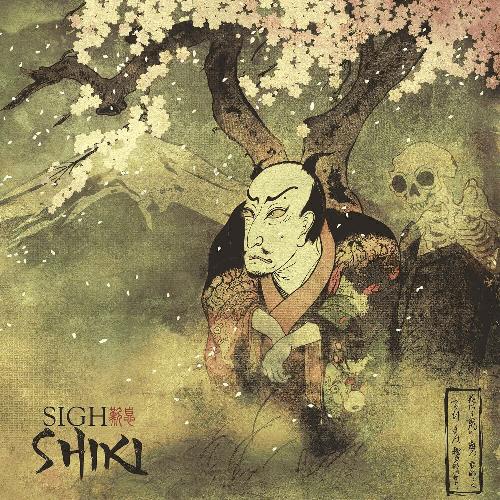
It’s hard to remember the last time Sigh sounded as thoroughly heavy as they do on their twelfth full-length, Shiki. Much of that could be attributed to the inclusion of Fear Factory drummer Mike Heller and Kreator/Dragonforce bassist Frederick Leclercq for guitar duties; their performances bring out a never-before-seen tightness to the musicianship with the guitars maintaining a dominant bottom-heavy crunch throughout. A vibrantly polished production job also does well to reinforce that machine-like precision.
On top of that, the songwriting feels more vicious than usual. Sigh has always had an underlying menace to go with their mischievous hyperactivity, but there isn’t as much playfulness this time around. Following the brief ambiance of “Kuroi Inori,” “Kuroi Kage” and “Shoujahitsumetsu” offer immediate brutality through contrasting means as the former almost reaches back to their earliest black metal days with its creeping mid-tempo lurch while the latter puts in whiplash-inducing blasts and shrieks. “Shouku” is perhaps closest to previous albums with its double bass accompanied by flamboyant guitar and cleaner vocals.
Of course, there’s still plenty of room for the band’s usual avant-garde shenanigans. The warped electronics, folk instrumentation, and backing cleans maintain healthy presences on even the heaviest numbers and completely dominate “Fuyu Ga Kuru.” Elsewhere, “Satsui – Geshi No Ato,” gets a little extra symphonic bombast, “Mayonaka No Kaii” has a fun use of vocoder to go with its swing rhythm, and the closing “Touji No Asa” makes for a swell comedown instrumental. The decision to continue the exclusively Japanese lyrics from 2018’s Heir to Despair was also a good move, simultaneously reinforcing the weirdness as well as the more personal concept behind it all.
Shiki is easily Sigh’s best album since 2012’s In Somniphobia and perhaps one of their strongest offerings overall. While the group has managed to maintain a consistent track record for high quality releases since the nineties, it’s hard to remember the last time their musicianship was this tight. The heavier approach also does well to refresh their formula and give weight to their weirdness. True to the album’s theme of the four seasons as a metaphor for life, it’s great to see Sigh continuing to flourish in their self-admitted autumn years.