Review Summary: Do you like music, question?
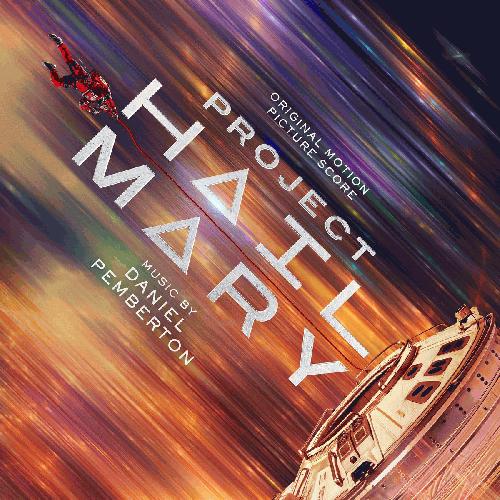
Project Hail Mary first caught my attention in the closing months of 2025, when I watched a trailer on YouTube. Until then, I knew nothing about its premise, who starred in it, or whether it was based on a book. That short promo was enough to make me suspect I might be looking at one of the following year's best films. The cinema delivered on that promise. Of the mainstream Hollywood releases I've seen in 2026, this is easily my favourite, and it belongs among the best films I've watched in my life. Daniel Pemberton deserves a considerable share of the credit.
Phil Lord and Christopher Miller's film, adapted from Andy Weir's novel, finds Ryan Gosling's Ryland Grace waking aboard a spacecraft with no recollection of how he got there. Recovering his memories means confronting the scale of a mission on which humanity's survival depends on. His encounter with Rocky, an alien engineer facing a similar predicament, gives that responsibility an unexpectedly tender focus. Their experiments, misunderstandings and growing affection make the enormous stakes comprehensible. The music shares their inquisitiveness, finding humour in bewilderment and companionship in a situation that initially seems unbearably lonely.
That makes it two out of two with the Pemberton scores I've heard this year.
Masters of the Universe married orchestral rock with classical overtures; Project Hail Mary is harder to pin down, continually changing its methods as the story demands. Both have a warmth I seldom encounter in mainstream Hollywood music. Here, the sheer variety is extraordinary, although a list of instruments barely begins to explain what makes the result so affecting.
Alongside electronics and the Chamber Orchestra of London, Pemberton employs steel drums, wooden clackers and glass instruments, including the rare cristal baschet and glass harmonica. Even the sound of a friend's tap found its way into his experiments. The glass tones have a fragile, lingering resonance, while the clackers sound hollow and immediate. Voices hover above them, sometimes recognisably human, sometimes manipulated into something harder to identify. Handclaps and body percussion keep these experiments connected to movement and touch, however remote the setting. You can hear the curiosity behind these combinations. A story built around observation and discovery has a composer willing to investigate what an unfamiliar noise might become. Headphones are strongly recommended: the separation between these sounds, and the small details tucked around them, can escape notice through speakers.
For all that ingenuity, the melodic ingredients are often surprisingly simple. The four-note figure introduced in
Ryland Grace, Cognition Assessment remains recognisable as the arrangements grow in scale or change character. Several ideas first register as bass patterns or percussive pulses before their melodic outlines emerge. On later listens, you can recognise them before the arrangement draws attention to them. Small rhythmic patterns can suggest an immense, indifferent cosmos, then acquire an almost domestic familiarity as Grace and Rocky begin working together. Listen to
Learning to Communicate, where high and low registers take turns answering those motifs. It sounds like a conversation being assembled, with each response making the next exchange possible. The bouncy wooden rhythms associated with Rocky are particularly endearing, giving this strange creature an approachable, occasionally awkward personality.
Pemberton is just as adept at letting several feelings coexist.
Invalid Operation catches Grace's confusion as he discovers where he is and how far he has travelled. The situation is terrifying, his reaction is funny, and the distance from home is heartbreaking. Somehow, all three register without the music becoming indecisive. The innocent cheer of
The Message offers another glimpse of how much character he can convey with modest means. These are only a few examples. I would rather leave the rest for you to discover.
The choir gives the solitude a human presence, its reverberant voices carrying the suggestion of people far beyond the ship. At their most solemn, they lend the mission an almost devotional gravity. As the friendship develops, the returning melodies gather associations with shared discoveries, danger and separation. The music of their partnership becomes more prominent as Grace's duty to Earth grows inseparable from his attachment to Rocky. The idea of helping another civilisation now carries the immediate importance of helping a friend. That is why the sorrow of
Goodbye My Friend reaches so deeply. By
Believe in the Hail Mary, Pemberton can reach for an enormous emotional release without making it feel unearned. He has spoken openly about wanting the audience to cry. On this evidence, he knows precisely how to get there.
His command of suspense is equally impressive. Across the seven minutes of
Time Go Fishing, instruments gradually build up around a tapping woodblock. Additions tighten the rhythm, withdrawals leave you waiting, and the returning force becomes almost overwhelming. This is the sort of writing that makes a complicated undertaking feel exhilarating even away from the screen. The climax becomes a little congested, muddling some of the earlier detail. The pounding rhythms of
Excessive Centrifugal Force can also be tiring without the film. Those are minor irritations amid so much inventive, purposeful music. Within the film, I was more distracted by a few placements of pre-existing songs, which interrupt the atmosphere Pemberton has so carefully established. That reservation concerns the film's musical sequencing; those recordings are separate from this OST.
Despite its many triumphs, the album's length remains my clearest reservation. The full list comprises thirty-eight tracks and lasts almost two hours. Some of the music devoted to maintaining suspense has less to offer away from the screen.
Entering the Tunnel, for instance, keeps the suspense alive onscreen, but gives me less to follow once the images are gone. Such moments are easier to accept with the scene in mind, and listeners approaching the album first may find their attention wandering. Pemberton's shorter selection offers a useful summary, although I would not want it to discourage anyone from exploring the full recording. There is enough detail, melodic invention and emotional generosity here to reward the time it takes.
By the closing cue, the principal melody and Rocky's familiar percussion have come together. Sounds that once proposed an unfamiliar presence now belong to a fully disclosed, full-fledged appearance, a character we have grown fond of, and their reunion gives the album a thoroughly satisfying conclusion. Its shifts between solemnity, mischief and optimism leave me wondering what another listen might reveal. In the cinema, image and sound absorbed me so completely that two and a half hours seemed to pass in two and a half seconds. Pemberton's music brings that astonishment rushing back. This is a magnificent score, and one of the reasons this film will stay with me for years.