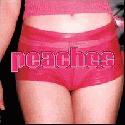
Review Summary: Peaches really just wants to tell you all about her special "peach." All I want to tell you is how repetitive this album gets, and that a shame that is in the end.
Electroclash is something of a distasteful word. While it mainly classifies the subset of Electronica where house, new wave and punk are interwoven, it also describes so much more. People identify themselves with the scene Electroclash has created, including the unorthodox late 80’s underground attire and a wide variety of sociological trains of thought, some scenes reveling in cocaine and predominantly fronted by transsexuals, others more traditional and closely related to late 80’s dance. What is evident in the large majority of Electroclash, however, is a strong feminist theme, mixed with a large amount of sexuality. If any one artist was to exemplify this aspect of the culture of Electroclash it would be Peaches, a Canuck whose been making her brand of hyper-sexual and strong gender-melding themed Electronica for a little over ten years.
With
The Teaches of Peaches, Peaches achieved a large amount of fame and notoriety. The album was certainly shocking to an average person, and no small due can be given to the single “F
uck the Pain Away.” The beat itself is something reminiscent of what a current Danger Mouse and Kid Koala collaboration would sound like; a deep bass synth and some fine scratching. What’s most evident, however, is Peaches singing and lyrics; she sounds like a less angsty and more resigned black version of P!nk. It certainly suits her subject matter; the hook of “Fu
ck the pain away” is enough to get Robert Kennedy in a hissy-fit, but the verses are a sight to behold in modern prose:
Suckin' on my titties like you wanted me,
Callin me, all the time like blondie
Check out my chrissy behind
It's fine all of the time
Like sex on the beaches,
What else is in the teaches of peaches? huh? what?
That’s generally what you can expect from her songwriting. This being her “coming out” album, she hadn’t yet progressed to the social commentary she would later epitomize, and was really limited to trying to expand female sexual boundaries. There is rarely a moment when he isn’t talking about how much she wants to and/or does get laid, and how much
we all want to get some. While its interesting for a while, and undoubtedly pretty funny, it gets tiring after 5 songs. And then when you realize there 6 more to go, you’ll be wondering why she cant just talk about George Bush for a song or two. Oh wait, this was before Bush bashing became topical, or even before Bush. *Insert cliché 2000 lyrical subject matter here.*
So, she gets a bit tired on the subject matter. It kind of sucks, but this is, at its core, dance music, so all we can really worry about is how kickin’ this is to groove too, right? If you’re looking for pure dance jams…you won’t really be disappointed. Every song here (sans the boring and useless “Felix Partz”) has a solid dance rhythm to work off of, and it really is one of those albums where you could throw any one of these songs onto a party mix. However, much better dance records have been put out by other artists with a very similar sound before this; both Miss Kittin and Felix da Housecat were doing a similar style of music before and during this time period, and both do it a whole lot better.
Where the album ultimately falls is that its really just not interesting. Most straight house cant last up to standard listening, as there just isn’t enough variation to keep anyone interest (nor does there really have to be for what it is). Peaches, however, sought to create an album that you could just sit down and enjoy listening to, and unfortunately she stays too true to those house values too often to be very intriguing. Songs frequently go through their entirety with the same bass synth, with only a few crash cymbal samples or swirling effect to really distinguish themselves.
Peaches is more effective when she gets closer to New Wave and punk inspired numbers. “Sucker” features an excellent riff that gives the song a surprising sense of bite and urgency, and the hilarious lyrics (only slightly-sexually themed here) give the song a quirky, tongue-in-cheek feel. “Rock Show” is very much influenced by anti-culture rock operas like
Velvet Goldmine and the
Rocky Horror Picture Show, with a bouncy and mocking glam-mixed-with-alternative feel. Peaches also shows she can flow here, with quite the little rap:
Do you wanna get it for credit?
Forget it
Don’t bet it
Call in the medic
It's pathetic
You’ve gotta let it go
(Hey, the lyrics may be tripe, but it has to be heard to be believed)
All in all, the second album from Peaches is enjoyable. It really isn’t that great of an album, and often repeats itself and bores more than its entertainment and shock value is worth. It’s a work of transition; Peaches was just discovering her musical identity after a rather poor debut under her real name years earlier. She would go on to create far better albums with
Fatherfucker and
Impeach my Bush, but
The Teaches of Peaches is an enjoyable early-era electroclash album that almost makes the term have a real musical connotation beyond fashion and culture. But not really.
Recommended Songs:
F
uck the Pain Away
Rock Show
Sucker