Review Summary: Only time can tell...
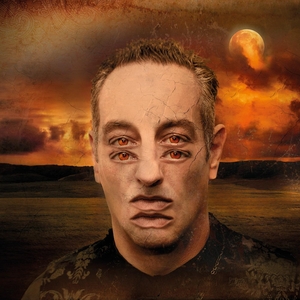
“Double Vision” was the point at which I gave up on Arena. Pre-release information that the album is going to be a sequel to “The Visitor” (there is a song named “Double Vision” on that album) already was a red flag for me. When a band makes a sequel to their most acclaimed album, to me it’s a sure sign of creative stagnation. Then the album arrived, and my first impressions were that it’s even more boring than the two previous LPs which I already was not impressed with. I gave “Double Vision” a few listens, shrugged, and thought “okay, apparently I don’t care about Arena anymore.” So, I’ve basically stopped listening to the band’s music at all for the next couple of years, maybe revisiting some individual songs very occasionally. However, during my second “lune de miel” with the band something (I don’t remember what) spurred me to revisit all three Paul Manzi era albums, and all three of them opened up to me simultaneously. To a different extent, but I did learn to appreciate each of them rather than nitpicking “okay, this song is kind of nice, but the rest is dull.” So, now it’s time to look at “Double Vision” more closely and see how it holds up.
Is it really a sequel to “The Visitor,” though? No, it isn’t, or at least I couldn’t find any reliable confirmation of that on the Internet. Not the whole album anyway. But we’ll revisit this point a bit later. For now, it’s important to know that in terms of its structure “Double Vision” is closer to “Immortal?” than to “The Visitor.” There are several shorter songs, and one super long and epic track as a closer. Arena experimented with doing an album consisting entirely of (relatively) short songs on “The Seventh Degree…” and “The Unquiet Sky,” and now they’ve taken the next logical step by (almost) dropping the concept. Which is something Arena hasn’t done since 1996, so it made sense to create just an album of songs unrelated to each other for a change.
I’ll tell you straight away, that the main issue I have with “Double Vision” is the opposite to the one I had with “Immortal?” On that album I liked most of the shorter songs but struggled to get into the epic “Moviedrome.” This time, the epic song “The Legend of Elijah Shade” is a saving grace for what otherwise would have been a rather unremarkable album. But let’s not discard the rest of the songs altogether. They still have their appeal, sometimes quite immediate. A few years ago, I was renting an apartment together with a couple of friends, and one day I’ve randomly decided to listen to “The Mirror Lies” in my room. Just a few seconds after, I’ve heard one of the guys asking: “What is this cool music you are listening to?!” He then proceeded to comment, “This sounds like a rock song written by Danny Elfman.”
Indeed, “The Mirror Lies” is probably the most accomplished song on the album with groovy riffs and bass lines, ear-candy vocal melodies in the verses, a soaring chorus, and an excellent bridge section. The song is a bit of socio-political commentary which hints at Trump and/or British populists I guess, but it’s not too straightforward or preachy. Unfortunately, most of the other songs are more about nitpicking the good parts for me. Like, “Poisoned” has a stunning acoustic guitar solo delivered by John Mitchell towards the end of the song, but overall, it’s just a standard cute ballad. “Paradise of Thieves” struts super melodic and pleasant verses and some cool drumming and guitaring wizardry, but the repetitive and simplistic chorus sort of kills the impetus. This remains an issue for most of the songs. The vocal melodies in the verses are supremely pleasant, and the keyboard parts are particularly excellent, especially when they come in full view like in the mid-section of “Red Eyes,” but the choruses lack the impact that the one for “The Mirror Lies” has.
Luckily, the epic closer comes and delivers on all the promises, although there is a small catch. Initially, I dismissed “The Legend of Elijah Shade” together with the rest of the album, mostly because its opening section
very closely resembles Arena’s earlier song “The Butterfly Man.” I mean, the ghostly keyboard melodies of the opening section are extremely similar to the ones that song is based upon as is the lyrical content. I mean “Enslaving the spirit / He dines on the souls / Of the ones far too weak to escape…” Yep, another song about a supernatural soul-stealing creature. Or is it?
One of the key differences is that “The Butterfly Man” was one big diss on the titular character, whereas this time the Elijah dude gets an opportunity to speak on his own behalf and explain that he is not “the big bad wolf” everyone thinks he is. If I understand correctly, the album as a whole
is not a sequel to “The Visitor,” but its closing song surely is, and Elijah Shade turns out to be that same mysterious Visitor from the old classic album, so we get some clarification on that story. But that’s just the lyrical part of it, what about the music? Well, as most of these big sprawling prog epics “The Legend…” consists of several chapters or sections, which works in the song’s favor this time. I’ve just complained about the lack of good choruses on the album, but the epic is written and structured in such a way that it’s like we get at least four or five great sweeping choruses within the space of this huge song. The band leads us expertly through several moods and stylistic changes, and the song overall is a nice call-back to the flighty and guitar-driven sound of “Pepper’s Ghost” which Arena rarely revisits. The “believe it or not, I’m the best chance you’ve got” climax is particularly hard-hitting, but the song in general is full of life and excitement. Paul Manzi plays a particularly important role, because the song is quite loaded lyrically to fit in the whole story, with the only big instrumental break coming around fourteenth minute. So, Paul had quite a mouthful of lyrics to handle and he did a great job with his voice sounding richer and more confident than ever.
Still, despite an incredibly satisfying conclusion, the LP as a whole lacks some bite and creative spark that defined the best Arena albums. In fact, all three records from Paul Manzi era leave somewhat diluted impression, despite possessing a lot of strengths as well. I don’t think it’s the singer’s fault though, although I needed to get used to his voice a bit. It’s rather that this trio of albums was aimed not so much at moving forward as at looking back at the band’s legacy and reassessing it somewhat (unlike the follow-up album “The Theory of Molecular Inheritance,” which is an oddity on many levels and I’m still not sure if I’ll be able to write a proper review about it). You can’t always move forward, and application of a more retroactive approach to songwriting is a valid thing to do, but the impact is somewhat diminished. Still, if you chose to only listen to “classic” Arena albums, you’d miss a lot of fun. But that’s only my take, and I am naturally inclined to look beyond the classics.