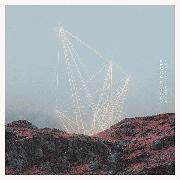
Review Summary: Sam Raimi did it better
If there’s one thing Clive Nolan and his crew know how to do, it’s making concept albums. And yet, for the second time in a row the concept is a liability rather than an asset for an Arena album, although in a different way. The concept for “The Seventh Degree of Separation” was too pretentious and convoluted and existed separately from the album’s music. This time, however, there is the opposite problem, as the concept chosen by Arena feels too straightforward and limiting.
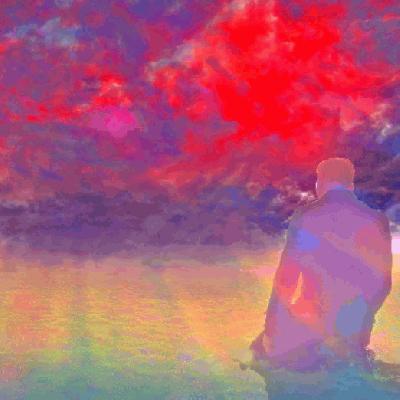
“The Unquiet Sky” is a verbatim adaptation of a classic horror story “Casting the Runes” by M.R. James. Curiously enough, Sam Raimi tackled the same story just a few years earlier in his “Drag Me to Hell” (2009) horror flick which is based preliminary on “Night of the Demon” (1957), an earlier film adaptation of M.R. James’ tale, but retains its key plot elements (someone who dabbles in the occult curses the protagonist after being rejected/insulted by them, the only way for the protagonist to save their life is to pass the cursed object to someone else). Hardly the best Sam’s movie, but fans of “The Evil Dead” franchise should find it quite enjoyable. Sam’s take is full of gore and dark humor, a nice throwback to his low-budget horror-making days of yore. Raimi puts his own spin on the old classics, and maybe such off-the-wall treatment is exactly what was needed to breathe some life into this rather prim, “I’m so British I sh*t pudding” story. I mean, in the original tale the evil guy from Lufford Abbey literally unleashes an ancient demon on an editor who (gasp!)
criticized and refused to publish his article! True Victorian pettiness!
Which is where the problem lies for “The Unquiet Sky.” Arena didn’t really do anything
interesting with the story. They are just retelling it diligently from the beginning to the end, which means that this time the music serves the story instead of the reverse. In other words, what the band is playing and singing about is strictly defined and limited by the original plot. Arena tries to expand on the themes M.R. James touches upon in his writing, but their reflections on the nature of evil or relationship between an author and a critic are not very deep or interesting. Besides, there always was some ambiguity in the stories the band was telling in its previous concept masterpieces: an open ending, a plot that spurred the listener to reflect and look for the answers. This time, it’s just a dark fairytale with morals in the end.
However, I’d be the first to say that the band does the best it can within the constraints it imposed on itself. To put it simply, the album is neatly structured and full of enjoyable songs. Only a couple of shorter tracks that serve more as interludes are not that memorable, whereas most of the songs are very well done and normally contain some extra cool moments. From the fittingly cinematic intro and ominous foreboding of “The Demon Strikes” the album smoothly flows into the touchingly forlorn “How Did it Come to this?” and retains similar dynamics throughout: the bulk of the LP consists of rather epic and sinister songs interspersed with calmer, reflective tracks. Of the latter category, the penultimate track “Unexpected Dawn” hits especially close to home for me with the protagonist breathing an earnest sigh of relief after narrowly avoiding the grim fate assigned to him. I recall that song sometimes, waking up in Kyiv after yet another night under the barrage of Russian missiles. This time Arena tried to conjure the atmosphere of an old horror movie with classical piano of “What Happened Before” and symphonic touches of the title track. All that sounds good, and the story flows quite well, right to the closer “Traveler Beware” that reuses the motifs from “No Chance Encounter” and the epic “seven ancient symbols…” refrain from the title track to greater effect and gives the tale a proper closure.
I also have to underscore the importance of Paul Manzi’s input. The singer feels more comfortable and at ease with Arena’s music on his second album and employs the band’s signature theatrical approach to singing with the necessary gusto and passion. The villain parts are especially convincing, and when Manzi wails “Don’t ever doubt what I can do!” in “The Bishop of Lufford” or “No doubt you’ll try… no doubt you’ll fail!” in “No Chance Encounter,” you can hear that he means business. And of course, he can sound like a wise old turtle on calmer songs like “Oblivious to the Night.” Paul applies his best efforts to put an extra flair on the material he’s been given, but of course his involvement with the songwriting is limited.
It speaks volumes about the quality of Arena’s output (and my own pickiness) that an album as good as “The Unquiet Sky” still leaves me wanting more. And yet, I can’t help but notice some issues, apart from the concept being too rigid and British for its own good. Most importantly, while all the songs are good, this time the album lacks a definitive stand-out song or two. Even “The Seventh Degree…” had that in its fierce and formidable closer “Tinderbox.” There are no higher peaks on “The Unquiet Sky,” which is partly due to the fact that Arena didn’t really try anything new on this LP, except for some limited experiments with the symphonic and cinematic vibes. Besides, Arena used to tell
their own stories with each preceding album, although, naturally, there were sources of inspiration. This is the first time that the band is just retelling a story already told by somebody else more than a century ago.