Review Summary: Timeless and ageless
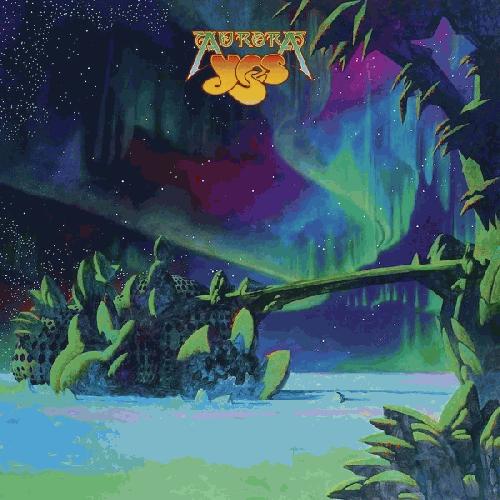
In the history of any musical collective, a moment inevitably arrives when its greatest achievement becomes the mere fact of survival. Albums turn into continuous references to their own past, concert tours transform into a mechanical celebration of former glories, and the music itself begins to suffocate under the crushing weight of its legacy. Yet, progressive rock titans Yes manage to defy this scenario once again with striking grace. Their twenty-fourth studio album,
Aurora, is undeniable proof that the group is still alive, breathing, and overflowing with ideas. The current lineup sounds engaged, adventurous, and once again demonstrates an impeccable balance of progressive complexity and emotional warmth.
Right from the opening title track, the album begins to radiate a genuine sense of wonder.
Aurora sounds incredibly cinematic in the best traditions of the classic Yes era: the composition kicks off with a piano passage by Geoff Downes and powerful orchestration, before transitioning into shimmering 12-string guitar arpeggios and intricate bass work. Jon Davison leans into the band's familiar mysticism, while Jay Schellen's percussion infuses the sound with folk and psychedelic moods.
The undeniable centerpiece of the album is rightfully the colossal 14-minute track
Countermovement, recorded with the participation of the Czech National Symphony Orchestra. Musical ideas unfold leisurely here: unexpectedly, Steve Howe steps up to the microphone at the start of the composition, supported by Davison. Dedicated to the triumph of the human soul, the piece swirls into a vortex where Howe showcases his entire instrumental arsenal, including the Portuguese guitar. A gorgeous quiet section featuring slide guitar gives way to a marching finale, and an a cappella moment by Davison at the very end delivers a striking emotional punctuation mark. Here, Yes resorts to something so often missing in modern progressive rock: technical complexity is subordinated to dramaturgy and the emotion of the moment, rather than serving as mere technical showing off.
The record demonstrates a surprising breadth of palette. Alongside monumental pieces, the tracks
Love Lies Dreaming and
Ariadne reveal a softer, airier side of the band – they seem to glow from within. The former greets the listener with bagpipes, intricate organ parts, and folk-rock vocals reminiscent of 1990s-era Yes, while Howe's wandering guitar work brings an added layer of sincerity. As for
Ariadne, born out of the sessions for
The Quest, it bursts in with massive orchestration and tells the tale of a mad king's tyranny. At first, the overall melody seems elusive, but as the opus develops, a tangible central theme forms, tying all the elements together. This very track sounds like the result of work by a truly cohesive and tightly knit band.
The track
Turnaround Situation" surprises with its catchy, pop-progressive sensibility with a folk edge, mandolin interludes, and Howe's virtuoso nylon-string solo.
All Hands on Deck relies on heavy guitar, organ, and nautical themes. The more experimental
Outside the Box greets with wordless vocal harmonies and acoustics, abruptly giving way to heavy instrumentation. The beautiful and heartfelt
Emotional Intelligence revisits the theme of human relationships against the accompaniment of Howe's pedal steel. The quirky little piece
Jambustin' flirts with funk and ringing guitar riffs, adding an unexpected groove to the record. The closing
Watching the River Roll brings Billy Sherwood's vocals to the forefront against a backdrop of winding guitar lines by Howe, allowing the album to conclude on a contemplative note.
Despite the compelling nature of the material presented on
Aurora, what leaves the greatest impression is the continuity of Yes' creative spirit and their genuine passion for crafting progressive rock. Although they continue to draw upon tradition, the band interprets it as a living, evolving language. This record balances on the intersection of energetic ascents and a comforting final resolution; it does not merely honor the legacy of the British icons, but actively enriches it. While many veterans have begun to resemble living monuments to themselves, Yes remarkably retains its youthful spark, proving that age for them is just a number.