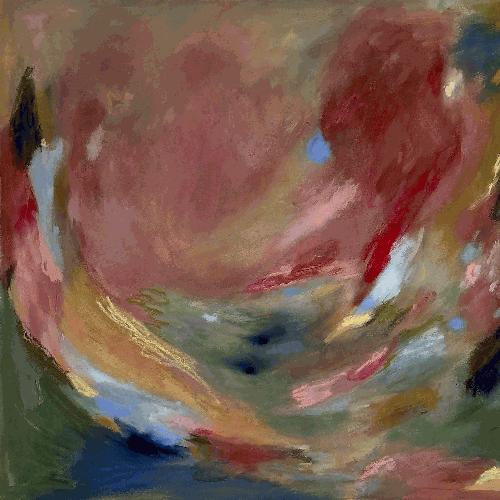
Review Summary: Finding her sound between joy and grief.
Being happy can be an impediment to creating art. This sounds very pretentious, in
r/im14thisisdeep territory, but it can become increasingly difficult to argue. This is not an argument for the suffering artist stereotype–pay artists what they’re worth, offer them healthcare, and all that jazz (we’re not here for my political diatribe, although I would be happy to offer it). However, with the exception of something meant to be comedic (the rise of "poptimism" could also completely derail this argument), it is difficult to find a piece of critically acclaimed art that is based around a life that is entirely happy.
With
Angel, Lizzy McAlpine is happier than she’s ever been, and it is quite obvious if you are a fan of her past work. The album bookends make this clear: “light in the painting” is about the wondrous feeling of falling for someone new and the title track, which also serves as the closer, describes her new partner, who she is clearly smitten with.
Angel is also not an exception to the previously established rule, as it is forged by happiness, but is quite a great album. Just because McAlpine is happy does not mean she has become one-dimensional. Angel’s success lies in the emotional lines it toes between new love, old regrets, and everlasting grief.
Angel works not because McAlpine is happy, but because she allows herself joy amidst the pain of life.
McAlpine is part of a class of singers that have been, both derogatorily and adoringly, referred to as sad girl music. If someone enjoys Phoebe Bridgers, they are often recommended Lizzy McAlpine and vice versa. However, this also ignores the musical evolution McAlpine has gone through in the past years.
Five Seconds Flat, her biggest commercial and critical success, was full of sweeping, cinematic pop music with acoustic leanings. On her previous album, Older, she parted ways with the producers that brought her success and put out a more stripped back sound, much closer to folk than pop.
On the
Angel press tour, McAlpine often discussed the influence of Joni Mitchell, which becomes clear without being derivative, for the most part. She balances her previous mainstream success with her more pastoral sound to find something in between. The acoustic melodies are paired with piano, strings, and, harkening back to
Five Seconds Flat, the occasional electronic beat. These elements are most successfully heard in album highlights “the moon” and “Peach”, in which McAlpine’s equally soothing and powerful voice is able to show its strength behind a rock backdrop. The influence of
Blue-era Joni Mitchell becomes clearest on “Over country”, which is a simple love song, bordering on lullaby, but is almost infectious in its simplicity. McAlpine’s sonic journey continues throughout the album, with her folk leanings certainly making themselves clear, perhaps no more so than on “Soldier of the Road”, featuring genre darling Fleet Foxes. This journey reaches its high point with “A Car Wash and a New Pair of Jeans,” a rollicking theatrical folk song that features a writing credit for Nick Drake, again making clear McAlpine’s inspiration for her musical growth.
The largest criticism of the album may be that McAlpine is a young singer-songwriter that is still hunting for
her sound. This doesn’t mean the album isn’t disjointed. In fact, the issue is that it's almost the opposite. There are a couple of songs that remain too simple, that seem to see McAlpine settling into a place of comfort opposed to pushing her artistic craft. While not every song needs to push boundaries, they do need to do something interesting. Opener and lead single “Light in the Painting” is a clear example of this issue. The song’s intention is to immediately signify McAlpine’s Joni Mitchell-ification with a simple melody, repeated lyrics, and light strings, but ends up a bit too simple to be engaging. It is still a lovely song, but feels more like an imitation as opposed to McAlpine’s own artistic voice coming through. This is a trap the album falls into a bit too often, where atmosphere replaces the strong songwriting found on the rest of the album.
McAlpine is only twenty-seven years old and has already put out four albums, so she is certainly an experienced artist. She has even carved out a mainstream audience for herself: her biggest hit is 2022’s “ceilings”, hitting nearly a billion streams on Spotify after a viral TikTok trend, an example of the social media app elevating a very deserving artist.
Angel comes close to hitting the perfect balance between that mainstream cinematic viability and indie folk simplicity, but largely presents itself as the work of a strong artist who is still yet to release her best work, which is exciting in and of itself.
One of the most emotionally resonant moments on album comes from the one-two punch of “Mason’s Song” followed by “the crowd”. The latter is a starkly honest piece about the loss of McAlpine’s father, a heart-on-her sleeve song that forgoes metaphor to deliver a message of loss set to a simple piano arrangement. It is preceded by “Mason’s Song”, which ends with a repeated refrain of “I can’t do it alone”, joined in with a chorus of more voices and community. This is the thesis of
Angel: grief persists, but it does so alongside love, community, and
hope.