Review Summary: A loud reminder of the value of restraint
My first encounter with Scorpions’ Uli Jon Roth years left me hungry for more. Once I had absorbed the songs, I kept returning to the guitar parts, wishing a solo would last longer or a passing flourish would develop into something I could spend another minute enjoying. Naturally, the announcement of
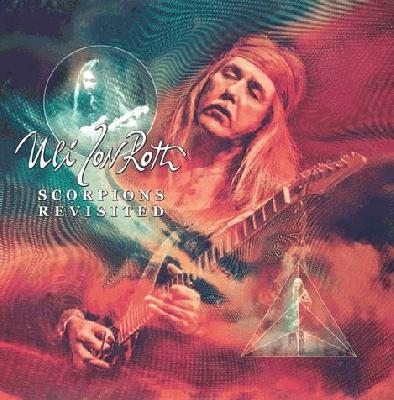
Scorpions Revisited had me counting the days. I had already seen Roth and his band in Greece in June 2013, and the album’s arrival two years later confirmed my impressions of that performance. It gave me much of what I had wanted, along with a fuller appreciation of why some listeners find his extravagance difficult to stomach.
The selection is understandably personal. Of the eighteen Scorpions songs revisited here, fourteen carry Roth’s writing credit, and
Rainbow Dream Prelude supplies an additional introduction to the closing piece. The recordings were made in the Hanover Hall where his former band rehearsed during his tenure, but the performances reflect the musician he subsequently became. His Sky Guitar dominates a catalogue featuring revised solos, extended instrumental passages and plentiful decoration. As an opportunity to hear him reconsider music he helped create, it is often fascinating. It also places his instrumental prowess ahead of the ensemble balance I remember from those records.
That distinction is most apparent beneath the solos. Roth’s preference for alternative chord voicings over straightforward power chords can take some of the bite out of the rhythm work. The parts become more ornate without necessarily making the songs rock any harder. Rudolf Schenker’s contribution is sorely missed in this respect. His economical accompaniment gave Roth something firm to play against, making the lead guitar’s departures all the more striking. Here, the guitar sound is deliciously rich and everything seems dialled up to fifteen, yet the underlying attack sometimes disappoints. To draw a comparison, think of a chocolate cake whose icing is so enticing that I reach for it first. Eventually, though, I want the cake underneath; Roth’s embellishments can overwhelm the very foundations that once made them so enjoyable.
Sometimes, that sheer abundance of extras can give rise to something genuinely meaningful in its own right. The Hendrix mannerisms of the
Polar Nights introduction do nothing to diminish its splendour, and
Rainbow Dream Prelude is a beautiful acoustic guitar piece in its own right. Its placement before
Fly to the Rainbow gives the closing performance a sense of occasion entirely appropriate to the song.
The Sails of Charon and
We’ll Burn the Sky gain enough force and grandeur to approach epic metal, and I can hear an argument for preferring these versions. My objection to the former’s vocal embellishment survives, but the instrumental expansion suits both compositions. The originals were written with the potential of accommodating the longer excursions, giving Roth opportunities to develop their drama without exhausting their appeal. This is where his willingness to rethink the material pays off most handsomely.
Nathan James faces a different challenge. He can suggest Klaus Meine’s forlorn wail without erasing his own character, and his efforts deserve credit. What I miss is the passion Meine brought to these melodies, a quality that no amount of vocal resemblance can quite supply. Roth’s own singing is a more pleasant surprise. Returning to his old vocal parts, he remains an acquired taste, but the performances are easier to accept than I had anticipated. He appears to judge his limitations more carefully, knowing when to press a phrase and when to hold back. Whether experience or studio interference deserves more credit is something I cannot determine from listening. The improvement itself is welcome.
For all my reservations, there is considerable pleasure in hearing Roth lavish such attention on this repertoire. His lead playing remains exceptional, and the finest reinterpretations give this collection a purpose beyond indulging my affection for the originals. Even so, it has made me reconsider what I was asking for when I wanted those early solos to continue indefinitely. Their endings mattered too. So did the return to a verse, the solidity of the rhythm guitar and the arrival of Meine’s voice. Roth was a remarkable presence within that group, and the other musicians helped make his contributions count.
I still believe Scorpions with Roth made better music than either went on to make separately.
Scorpions Revisited offers several compelling exceptions at the level of individual performances, but it strengthens that conviction overall. There is enough here to satisfy the admirer who always wanted more of his guitar. The listener who loved the whole band may come away with a renewed respect for everything that surrounded it. I happen to be both.