Review Summary: A guitar virtuoso’s operatic daydream.
Electric Sun had outgrown the power trio by the time Uli Jon Roth brought its recording career to a close. On 1985’s
Beyond the Astral Skies, the company includes additional singers, keyboards and orchestral instruments, all enlisted for a work whose theatrical aspirations dwarf those of its predecessors. Hearing a soprano enter this once guitar-dominated world is quite a surprise, even after the eccentricities of
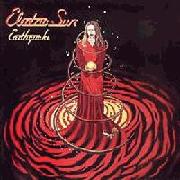
Earthquake and
Fire Wind. Roth sounds thoroughly at home in these colourful surroundings. The music comes closer to his own peculiar conception of a rock opera, complete with celestial imagery and unabashed sentiment. I find it an absorbing farewell, and, generally, a more satisfying listen than
Fire Wind, despite some lingering reservations about his ability to contain everything he wants to express.
The change of scale is substantial. Clive Bunker’s drums and percussion join an expanded cast that includes vocalists Michael Flexig and Nicky Moore, while piano embellishments and layered vocal harmonies introduce a richness the earlier records could only suggest. Roth’s classical interests now govern much of the writing. Operatic passages sit alongside heavy rock, and the folk-like melodies occasionally remind me of early King Crimson and Jethro Tull. Hendrix is still audible in the vibrato and the cries wrung from the strings, but his influence no longer dictates the album’s personality. With so many other musical desires coming forward, the resemblance becomes less distracting.
What strikes me most, though, is how hopeful the music sounds. Dedicated to Martin Luther King Jr., the record returns to peace, love and spiritual transcendence with a conviction that leaves little room for irony. The buoyant melodies and devotional singing invite you to participate in Roth’s idealism, however far removed it may be from your own outlook. The title
Return (Chant of Angels) gives a fair indication of the atmosphere, and the soprano passages in
Eleison take that aspiration into overtly sacred territory. Such gestures can certainly become extravagant, but they also supply an emotional character that distinguishes this record from another virtuoso’s collection of elaborate solos.
Naturally, the guitar remains a substantial attraction. This was Roth’s first album to feature his custom Sky Guitar, whose extended upper register accommodated the violin-like phrasing he had been seeking beyond the limits of a conventional Stratocaster. The instrument suits the direction of the compositions, allowing those elevated melodies to sit alongside the voices and keyboards. His rapid runs retain their suppleness, and the layered parts reveal a player thinking carefully about how several lines can interact. There is less need to dominate every available moment. When a lead does emerge, the divergence with the surrounding accompaniment gives it an added splendour. The forceful playing in
The Night the Master Comes is an immediate reminder that all this refinement has scarcely dulled his attack.
For an album so lavishly furnished,
Beyond the Astral Skies also displays a surprising degree of restraint. I mean that comparatively, of course. Roth still takes detours, and anyone who finds himself feeling allergic to his sense of grandeur, will find plenty to object to. Yet the exchanges between instruments and singers give the arrangements a sense of proportion that
Fire Wind frequently lacked. Piano can carry a phrase without another guitar flourish arriving to embellish it, and the variety of voices helps separate passages that might otherwise blur together. I can not distinguish anything here that moves me quite as much as the finest stretches of
Enola Gay, but I am less inclined to spend the album waiting for a particular instrumental climax. There is more to enjoy here between the frequent flights of virtuosity.
That improvement does not excuse every single indulgence. Some of the more atmospheric sections linger after their melodies have exhausted my interest, and the ceremonial sumptuousness can become ponderous. At those points, Roth seems reluctant to relinquish a mood simply because the composition would benefit from moving on. The operatic flourishes can also feel like awkward trappings to the rock material, leaving transitions that feel more conspicuous than they should. This is where his ambitions still outstrip his judgement. There is genuine beauty in these arrangements, but admiration for the undertaking does not make every excursion equally rewarding.
The additional vocalists, meanwhile, make Roth’s insistence on continuing to sing all the more puzzling. Their presence demonstrates what a more capable voice can contribute to his music, only for his own delivery to bring back familiar problems. His phrasing lacks the refinement of his guitar work, and the more elevated sentiments become difficult to take seriously when the singing cannot support them. That disparity is especially frustrating on a record which has already assembled the personnel to address it. The arias and ensemble harmonies broaden the expressive possibilities considerably, so the weaker vocal passages feel like an avoidable compromise.
Even so,
Beyond the Astral Skies leaves Electric Sun with a distinctive final statement. Its extravagance is often engaging, its optimism feels organic and translates well through the instruments, and the greater attention to arrangement makes the occasional excess easier to forgive. I would still choose
Earthquake for the sheer fascination of hearing Roth establishing this musical identity, but the third album demonstrates how much more he could do once he gave other apparatuses and voices a larger role. His most persuasive achievement here is making that crowded, improbable gathering sound as though it belongs together. The heavens may remain some distance away, but Electric Sun’s farewell has enough earthly beauty to justify the ascent.
Recommended tracks:
Why?
Return
I am a river
Angel of Peace