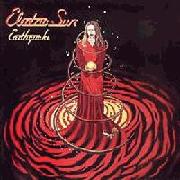
Review Summary: The Uli Jon Roth Experience
I admire Uli Roth’s willingness to follow his impulses well beyond the point where most guitarists would have put them aside. That stubbornness gave Electric Sun’s debut much of its appeal, and it is just as apparent on
Fire Wind. Released in 1981, the follow-up finds him increasingly absorbed in the possibilities of combining psychedelic and progressive rock with European classical music. His old band sounds further away, his compositions more elaborate, and his guitar seems capable of expressing almost anything that occurs to him. In general, I only wish the songs were as consistently rewarding as his guitar playing. The record brims with ideas, although Roth sometimes seems more interested in pursuing them than in deciding how they fit together.
The classical inclinations are more pronounced here than on
Earthquake. Intricate arpeggios and pedal-tone figures run through the arrangements, with melodies climbing into registers that suggest a violin as readily as an electric guitar. In retrospect, these sequences already contain much of the vocabulary that neoclassical metal would later adopt. There is still plenty of blues in his touch, though. He bends and stretches a note, lets it moan, then sends a flurry of others tearing after it. The solos in
Cast Away Your Chains and the extended passages of
Indian Dawn capture that restless enthusiasm particularly well. Even when the surrounding material isn’t as accomplished, a sudden expression can pull me straight back into the music.
Electric Sun also benefits from a rhythm section capable of accommodating these excursions. Ule Ritgen remains on bass, while Sidhatta Gautama takes over the drums from Clive Edwards. The percussion is an intriguing part of the record’s character, occasionally suggesting Indian or African rhythms to my ears and lending movement to music that could otherwise become crowded with guitar parts. There is tenderness here as well. The acoustic introduction to
Chaplin and I offer a welcome change of texture, and Roth’s softer passages reveal how much care he puts into shaping a melody. This mixture of hard rock, idyllic reflection and more adventurous instrumental writing gives the album a peculiar charm. Its best moments make me want to follow him further into this strange little world.
Unfortunately, the distance travelled from Scorpions does not always translate into a more idiosyncratic sound. Hendrix remains an overwhelming presence, and some of these songs bring their models too readily to mind.
Just Another Rainbow sounds uncomfortably close to
House Burning Down, while the gentler,
I’ll Be Loving You Always also leans heavily on familiar Hendrix mannerisms. There is a difference between hearing someone’s musical upbringing and spending a song thinking about another artist. Roth crosses that line often enough to make the imitation distracting. He occasionally revisits his own vocabulary as well: the main riff in the closing Hiroshima suite immediately recalls
Polar Nights. None of this diminishes his command of the instrument, but it makes the album’s claims to new territory harder to sustain.
Roth’s singing tests my patience more often. His wavering delivery and awkward phrasing struggle with melodies that call for greater assurance, particularly on the title track. His singing can be endearing in quieter moments, when the modest scale suits his voice, but the more forceful performances expose its limitations. The spiritual imagery and earnest declarations of love suffer accordingly. I believe in his sincerity, yet certain lines land with an unintended silliness that disrupts the mood. Combined with songs that sometimes feel like a succession of promising sections awaiting a final edit, this leaves too much of the album dependent on the next solo. The faster numbers can also begin to resemble one another despite the ingenuity of their individual flourishes.
The ten-minute epic
Hiroshima shows how much Roth can accomplish when that ingenuity serves a subject powerful enough to hold the composition together. Its familiar opening riff initially raises the same reservations, but the later instrumental passages are phenomenal. An onslaught of apocalyptic riffs, shifting chords and seething feedback gives way to melodies carrying an unmistakable sense of mourning. His guitar screams and moans like it’s no one’s business, making the devastation suggested by the title horribly tangible. Hendrix’s
Machine Gun comes to mind in the way the instrument seems to enact the violence itself. Here, that association adds to my appreciation of what Roth is attempting. The grief in the playing stays with me long after the spectacle has passed.
For admirers of Roth’s playing,
Fire Wind offers plenty to return to. There is enough invention and feeling here to reward their patience, and the closing suite belongs among his most compelling achievements. As a complete album, however, it asks me to overlook more than
Earthquake did. The singing remains a stumbling block, the borrowings are conspicuous, and several compositions leave the impression that another round of revision might have helped. Still, I would hate to lose the eccentricity that makes it worth hearing in the first place.
Fire Wind is a respectable, often frustrating record by a musician whose boundless imagination could be his best friend and his worst enemy. His expression is something I constantly admire, even when his core ideas promise more than what the songs deliver. At his best, Roth can make a single guitar lick worth the trouble of getting there. At his worst, he makes a few inspired minutes feel like a long time coming.
Earthquake and
Fire Wind capture both sides of him. His melodic gift and classical curiosity produced some wonderful music, even as his Hendrix fixation and limited singing get in the way. The debut brings those qualities together more successfully, but both albums carry the excitement and occasional frustration of hearing a gifted musician indulge his every impulse.
For better or worse, that's who Uli Jon Roth is, and who he's always been.
Recommended tracks:
Cast Away Your Chains
I'll be Loving You Always
Fire Wind
Enola Gay (Hiroshima Today?)