Review Summary: Long-awaited rehabilitation after a prolonged nightmare
By the early 1990s, Cheap Trick seemed to have reached a point of no return. Released in 1990,
Busted finally crushed any hope that yesterday’s power-pop heroes could ever pull it off again. Total disorientation and an inability to focus on themselves, coupled with a long and damaging dependence on label trends and the fleeting whims of trendy producers, drove a stake through the creative pulse of a band from an era gone by.
Having left Epic Records and signed a ten-album deal with Warner Bros. (which, to look ahead, didn’t happen), the band set out to record an album that, without label support, was destined not to find the commercial glory of something like
Lap of Luxury. Yet it achieved something else, far more important: it won back their identity, at least partially.
In fact, everything that begins to echo in your ears right from the opening track,
My Gang, testifies that Cheap Trick had woken up – raw guitar sound, simple rhythm, a minimum of electronics and gloss, maximum ferocity and saucy melodic delivery... You’d think, what stopped them from doing this sooner, since everything sounds so accessible and effortless? But therein lies the difficulty of crafting punchy, catchy songs that sweep you away, intoxicated and charmed, into the nearest back alley. Overcomplicating things and muddying the waters to release a bland creation with crumbling makeup is always easier; thousands upon thousands of bands do that. Reclaiming oneself, finding the old path lost in the swampy darkness – that is the lot of the few. And Cheap Trick wouldn’t be the band that burst into musical history in the 70s if they hadn’t eventually managed to step into that same river again.
Work on
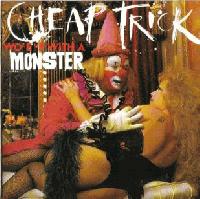
Woke Up with a Monster took a full year and a half, but this period was far from wasted. Having finally made a strategically sound decision, the band set a course to return to its rock roots, dropping synthesizers and keyboards. Veteran hard-rock producer Ted Templeman, brought in for the project, made no attempt to soften the sound to pander to the calendar’s fads. As a result, guitarist Rick Nielsen described the record as a “breath of fresh air,” emphasizing that the collaboration with the new label literally breathed a second life into Cheap Trick. For the musician himself, this album holds a special value: it opened the second half of the band’s career and still resonates deeply and warmly in his heart.
The tense narrative of a family destroying itself from within in the title track leaves a dual impression – it’s unclear what facial expression the band approaches this story with (serious or sarcastic). At the same time, one cannot ignore the metallic heaviness of the performance and the killer character of the composition itself – somewhat viscous and, as history has shown, irritating to many, it turns out to be entirely sustained in the atmosphere of the dark stories from their very first album.
In the best traditions of the band, the third track is the fiery and crushing
You’re All I Wanna Do – a song with unpretentious lyrics and one-hundred-percent hit potential. On this front, Cheap Trick restore the balance, much to the delight of ears heartily tired of their bubblegum-synthesizer period.
Didn’t Know I Had It has the exact same potential; it won significantly less praise and airplay, but is in no way inferior in power to hit number one. Added to this lineup is the hard-rock specimen of better times,
Girlfriends.
At the same time,
Woke Up with a Monster is not perfect. In some songs, the influence of the band’s unsuccessful 80s is clearly felt – such as the measured, albeit pleasant and soulfully performed ballad
Never Run Out of Love, or the rather filler-like
Ride the Pony. At times, Cheap Trick clearly tread water, failing to properly develop non-obvious ideas, ultimately resulting in monotony, as on
Let Her Go or
Cry Baby. It must be remembered that most of the material for the record, although re-recorded, consisted of unused drafts from past years, so the conclusion of the record falls short of the top-tier opening in terms of intensity. Nevertheless, this still doesn’t stop
Woke Up with a Monster from holding its ground and pulling along the long-awaited audience choice award of many years.
An unfortunate fact remains that by the time the record was released, internal changes at Warner led to some of the team that signed Cheap Trick being laid off, leaving the album without proper support from the label. The band was forced, as they had done before, to turn to the live side of their persona – a full month of touring Japan and the usual US tour. The notorious financial component once again prevented a clear creative breakthrough from cementing their success. But Cheap Trick would never stray from their found path again.