Review Summary: Dancing self-flagellation
Tove Lo has never been known for emotional refinement, preferring direct and uncompromising statements. Her unappealable declaration in the opening seconds of
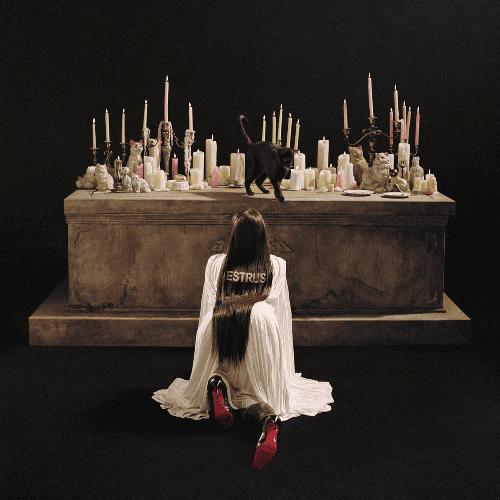
Estrus about a multitude of experienced feelings, juxtaposed with the admission of their inability to find a resolution, sets the tone for an entire record full of intense contradictions and emotional ambivalence. It sounds like a warning label, reflecting how Tove, much like many of us, navigates daily between discipline and self-destruction in search of an ever-elusive inner balance.
Despite a four-year hiatus since the release of her last full-length work,
Dirt Femme, the Swedish pop-rebel chose not to retreat into introspection, preferring instead to double down on the atmosphere of dancing self-flagellation that has always defined her.
Estrus once again plunges the listener into club darkness, filling the beats with potent doses of jealousy, lust, and relentless self-doubt. The songs are permeated by rage, anxiety, and shame, yet they retain the resilient sound of something made to dissolve in the moment, twisting in continuous motion within the semi-darkness. The sonic palette feels curated and cohesive, while rare flashes of light cutting through the dancefloor’s darkness elevate the pulse with brief yet powerful bursts.
The album flourishes through the artist's constant emotional fluctuations, where an inability to outgrow one’s own destructive habits becomes a thematic foundation – and proof that emotional baggage does not always get lighter with age. The record exists in an abyss of inner contradictions: the dark grooves of the track
Die for My Art with a Lonely Heart expose the conflict between artistic ambitions and personal happiness – can Tove create with her former fervor if she is no longer fueled by negative emotions? In turn,
I'm Your Girl, Right? uses piercing piano lines to seemingly underscore the vicious cycle of arguments, flirting, and pain experienced by someone who surrenders entirely to love and often finds themselves on the verge of obsession, while the arrangement transforms the composition into a stadium anthem pierced by sharp synthesizers and anxious sirens.
Sonic details and contrasts actively accentuate the mood swings. The buildups and sharp drops in
Are We on a Break reflect a panic state with its exhausting ebbs and flows, while
Idiot, starting off with cowbells, conveys deep regret through a hollowed-out vocal delivery. Recorded with the participation of Stromae, the track
Des Fleurs exists at a crossroads between playfulness and hedonism, emphasizing this duality through transitions between English and French, where a radiant camp-joy coexists with theatrically rolling sounds. Yet everything invariably comes full circle: in
DNH (short for ‘Drunk n’ Horny’), the neon-drenched night merely conceals traces of sweat, alcohol, vomit, and tears that accompany an unhealthy thirst for a turbulent life.
The standout track
F.A.M.T. expands the space with rich, warm layers beneath whose cover pain and hedonism endlessly hide from one another. It flows into the humorous
I’m the Cake, where the neglected heroine seems to cut off her self-reflection mid-sentence. Elevated to an end in itself, sexuality in
The Bad One explores its own nature, where admissions of underlying duality are accompanied by dark electro-pop beats. Such vacillations between forms and thoughts feel not like the result of the author's haste, but rather a deliberate choice, where it is more important for the musician to raise the question while leaving the search for satisfying answers outside the bounds of the record.
Estrus does not offer razor-sharp observations, and grand revelations or declarations of love or growing up still remain outside Tove’s interests. Her mind lingers in a haze of desires, and her thoughts remain feverishly fragmented. The album remains focused on dirt, lust, and uncompromising femininity, embodied in a triumphant (though at times contradictory) pop format. Lo is ready to come to terms with the contradictions of her own life, asserting that a dark dancefloor can be not merely a way to escape an annoying reality, but also a space for an honest dialogue with oneself.