Review Summary: Tony dancing in his sleep.
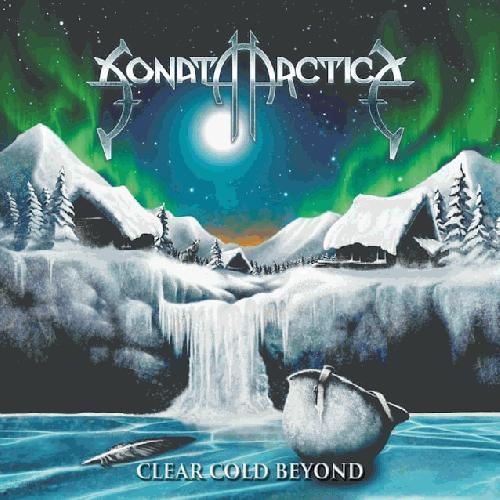
I don’t remember what spurred me to give “Clear Cold Beyond” one more listen this spring, but without that random re-visiting this review wouldn’t have happened. Despite reasonably good feedback on Sputnik and elsewhere, I did not get the album at all at the time of its release. If I wrote a review for it back in 2024, it would have been basically just me yelling “Guys, how is this better than Talviyo?!”
The main reason for such rejection would have been Tony’s vocals which remain an issue. Yes, the godfather of Snore Metal is at it again. He does not sound as drowsy as on Talviyo, but his voice is still unusually nascal and monotonous, and he relies on backing vocals and layering more than he used to. Of course, faster songs suffer the most, even though the instrumentals are quite strong. “First in Line” is a classic Sonata song with bittersweet lyrics reminiscent of “The Last Amazing Greys,” and “California” is the only song on the album that I liked from the get-go. Still, Tony manages to kill the momentum quite significantly, and his sleepy droning blurs the distinction between verses and choruses, even more so for the following faster songs, such as “Cure for Everything.” When set against the backdrop of faster guitars, Tony sounds like he’s trying to chase a scooter on foot and is already getting out of breath.
There is, however, a saving grace to “Clear Cold Beyond.” Apparently, if you can’t run, you can still dance. And I’m not talking about modern club dancing or rave parties. In its best moments, the album calls to mind an image of an old-fashioned ballroom. “Dark Empath” is the first unapologetically great song on the album, and its lyrics already mention dancing in pair. I don’t know if there is a Caleb saga song on this album, but if there is, it must be “Dark Empath.” It deals with Tony’s favorite topic of obsessive love, and this time he doesn’t have to “chase” the song, as it mostly stays in mid-tempo range, instead showing that his singing can be suitably theatrical and sarcastic when it’s required.
As the album progresses, this feeling of visiting a ballroom is not just hinted in the melodies and lyrics but is reinforced and amplified. In fact, there is a whole palette of old-school dancing styles on display. “Teardrops” is one of the more solemn dances like minuet, while the romantic ballad “The Best Things” waltzes as it goes, and “A Monster Only You Can’t See” recalls one of the livelier dancing styles, perhaps something like fandango. I am hardly an expert in ballroom dancing, so take these descriptors with a ton of salt, but I hope they represent the general idea. My point though is that these songs add a great dose of variety to the album and are more suitable for Tony’s current vocal style than classic fast Sonata tracks.
The best song on the album continues this old-school dancing trend, but this time we’re talking about something more frantic, like a jig. “Angel Defiled” is the song that made me look at the whole album through different lenses, featuring a spry cabaret-style melody which is supremely catchy and quite unusual for Sonata. Even Tony rises from his sleep for this occasion, adding suitable emotion and bite to his singing, although I think a younger Tony would have done the song more justice. This is probably the most eighties-inspired song Sonata ever did, but they give this influence such an unusual spin that I’m not sure if we are talking about eighties of the twentieth or nineteenth century.
The whole album is full of little gems like this, which is quite surprising. The general consensus is that Sonata Arctica stopped being a proper band a while ago, and now it’s more like Mr. Kakko and his corps de ballet. Yet, we see the band delivering a strong album despite Tony clearly not being in the best shape and lacking inspiration. Miraculously, the Sonata vehicle managed to arrive at its destination point even though the driver is soundly asleep at the wheel.