Review Summary: An amazing important debut. The revival of progressive rock.
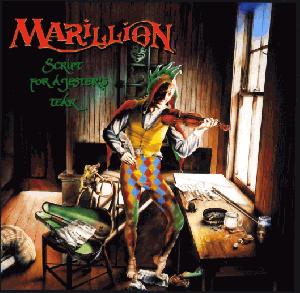
“Script For A Jester’s Tear” is the debut studio album of Marillion and was released in 1983. The line up on the album is Derek Dick “Fish”, Steve Rothery, Mark Kelly, Pete Trewavas and Mick Pointer. The album also had the participation of Pete James, Peter Cockburn and The Marquee Club parents association Children’s Choir.
As we know, Marillion is a British neo prog rock band. It was formed in 1979 and rose prominence in the 80’s. The band began as “The Silmarillion”, inspired by the book by J.R.R. Tolkien. After threats of legal action, the name was shortened to Marillion. With the original vocalist Fish, Marillion had early success with his poetic lyrics and theatrical performance. Their first work, their fantastic EP “Market Square Heroes”, was released in 1982 with three tracks, the title track, “Three Boats From The Candy” and on the B side their great epic “Grendel”. It was followed by their debut album, “Script For A Jester’s Tear”, in the following year, which is considered by many as the best work of the band.
At the time when the debut album of Marillion was released it was considered by many an odd bird with the lengthy and technical compositions in the Genesis’ style of Gabriel’s era. In reality, Marillion ushered in a new generation of prog rock that bound them forever to the heroics of early days of prog. Intricate, complex, and theatrical almost to a fault, “Script For A Jester’s Tear” remains an impressive work that sets the bar for their later works. It also sets the bar for works of some other British prog bands that were formed at the same time, such as IQ, Pendragon and Twelfth Night.
Everything just fits perfectly on “Script Of A Jester’s Tear”. Bombastic and melodic pieces combined with Fish’s vocals, which lead the songs in a powerful manner. That makes it very difficult to single out individual tracks from the album, as there are no weaknesses. Focus is on the dominant lyrics. Fish is a master of using strong melody lines to carry the lyrics, that every meaning is put into the words. If we add Kelly’s powerfully melodic and ambient understated keyboards, Trewavas’ solid, melodic and strongly rhythmic bass, Rothery’s brilliant Gilmour influenced yet originally melodic guitar solos and Pointer’s playing just enough on the kit to keep things moving, we have heard near perfection.
“Script For A Jester’s Tear” has six tracks. The title track opens the album in great style. It’s a fantastic track, a brilliant opener, a memorable moment on the album. It has a strong melody and is sung wonderfully by the fantastic voice of Fish. It reminds us of the good old times of prog, especially of Genesis in the vein of Gabriel’s era. “He Knows You Know” is the shortest track on the album. It represents another great song. It’s powerful with great lyrics. It begins with the guitar followed by Fish’s voice and soon the keyboards appear. It reaches its great climax when the drum section enters on the scene. “The Web” is another great track, a beautiful composition with powerful lyrics. It isn’t as appealing as the other two previous songs, but is very melodic with a magnificent harmonic progression. It has great individual performances, especially the fantastic guitar work of Rothery and the magnificent and bombastic keyboard work of Kelly. It’s very enjoyable to listen to. “Garden Party” has absolutely fantastic lyrics, very satiric. It represents perhaps Fish’s best lyrical performance on the entire album. It reminds me strongly of the very personal and unique style of Gabriel in the good old Genesis’ times. This is another great track on the album. “Chelsea Monday” is another highlight on the album. It’s a simple track but is still a powerful song. It became one of the classic songs of the band. It remains, even today, as fresh as it was in those days. It always was one of my favourites of the band. It’s mellow with rich ambience and deep lyrics. The arrangements are fantastic. “Forgotten Sons” is another highlight, a pretty powerful anti-war track. It’s one of the best moments on the album. The opening of the song is powerful. It has powerful lyrics and a clear political message. It’s one of their greatest pieces with fantastic individual performances, culminating with a great guitar solo. It’s a powerful and overwhelming song, a great close to the album. It was a big live number for years.
Conclusion: “Script For A Jester’s Tear” and “Misplaced Childhood” are probably the two best studio releases by the band in Fish’s era. But, the opinion of which is the best, is divided. Both have their supporters. However, nobody can deny the fundamental importance of “Script For A Jester’s Tear”, in those times, for prog rock. In a certain way “Script For A Jester’s Tear” was as important as “In The Court Of The Crimson King” of King Crimson was for prog rock music in the 70’s. In the summer of 1982 the punk explosion was gone but some echoes remained, a parade of a new romantic musical movement. So, when the music world seemed to be at the mercy of the new romantics, “Script For A Jester’s Tear” was a landmark and a breath of fresh air that prog rock music so needed in those years. We can even say that since “Script For A Jester’s Tear” the world of prog rock music has risen again and no longer was the same again.
Music was my first love.
John Miles (Rebel)