Review Summary: Feels wrong on so many levels
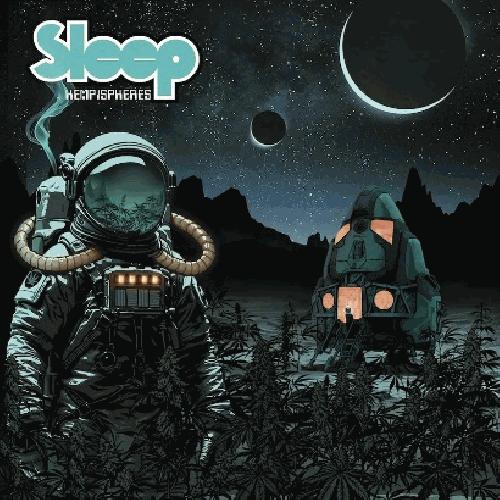
I struggled with the idea of a Sleep album without Matt Pike before I heard a note of Hempispheres. “Sleep without Matt Pike isn’t Sleep” kept intruding as I listened, and I cannot pretend that attachment has had no bearing on my response.
The Sciences had made the band feel almost indestructible again. Its return was so assured that this subsequent upheaval is difficult to reconcile with it. Now Al Cisneros fronts a trio with Bubba Dupree on guitar and Dale Crover replacing Jason Roeder on drums. I would like a clearer account of how the previous lineup came apart. Whatever the circumstances, though, the new record has problems that extend well beyond the names missing from its credits.
Pike’s contribution is easy to reduce to distortion and enormous riffs. He wrote some of the finest motifs I have ever heard on a heavy metal record, setting a daunting standard for anyone taking his place. What I miss most here is how he utilized his chops. His sudden bursts disturbed the music’s slow momentum, his feedback became part of the arrangement, and his control of dynamics gave a repeated phrase enough life to sustain those seemingly endless passages. Dupree retains the low tuning and some of the familiar Sabbath influence, but the riffs seldom leave much of an impression. The more recessed guitar sound compounds that weakness. There are notes and textures to follow, yet little of the physical pull that made Sleep’s music so difficult to resist. Occasional sitar-like fills and loose, psychedelic leads offer a different approach, without developing into an equally persuasive guitar voice.
Cisneros is much easier to hear. His bass occupies the foreground, while his chants reinforce the music’s meditative character. The resemblance to OM becomes pronounced in the spacious, droning passages, where the guitar seems to accompany a bass-led piece already complete in outline. The groove is still there, with the unmistakable rhythmic sway that has always made Sleep’s material work. Yet the overall feel is so close to Cisneros’s other band that I struggle to hear Sleep in it. That affinity could have been fruitful. Sleep’s sense of scale has always allowed room for patient exploration, and a more spiritual, space-rock direction need not diminish it. Here, however, the prominent bass lines too often settle into patterns that the surrounding instruments do little to unsettle. I find myself waiting for a change in emphasis, a convincing riff, or some interaction that makes the repetition worth following.
The playing gives me little reason to believe that ability is the problem. Crover can supply a steady groove, and Dupree has no difficulty moving around his instrument. What is missing is the sense that their contributions shape the songs together. The extended lead work on the title track meanders, while the instrumental activity in
Whole Wheat Mountain / Well Baked adds material without bringing the record to a satisfying conclusion. These passages leave me conscious of musicians filling out an arrangement. On earlier Sleep records, the mutual pull of bass, guitar and drums could make a modest idea engrossing for far longer. Here, even with more room around the instruments, their relationship feels strangely passive.
That passivity affects the five songs as a whole. The easy-going chug of
Have Spacesuit Will Travel offers a reasonable introduction, but the similar pacing of
The Morrisist soon makes the approach feel limited. The structures suggest a loose jam session, with too few decisions about where the music should go. Changes in texture provide some variety, though they rarely produce a substantial development or payoff. Even the solos can recall the simpler excursions of early Electric Wizard without acquiring much character of their own. This is a more accessible version of Sleep, but I find it harder to remain involved in than the sustained repetition of
Dopesmoker. The riffs there justified the commitment. Too many of these merely occupy the time.
The familiar marijuana and science-fiction humour also fare poorly in this setting. I have no objection to Sleep’s absurd mythology, which was hardly a recent addition to their work. The older music gave its ridiculous imagery an imposing presence, and Cisneros’s delivery helped make the whole invention convincing on its own terms. On
Hempispheres, the more intelligible vocals draw attention to jokes that the backing struggles to carry. The puns become tiresome, and the title’s nod to Rush adds another reference to a record already relying heavily on familiar associations. Without stronger writing, the aesthetic starts to feel overused.
There is a recognisable direction here, and the lighter textures make it easy enough to understand what attracts Cisneros to this incarnation of the band. I would have preferred to hear the three musicians pursue it more freely. Instead, the album keeps returning to unremarkable riffs and tentative elaborations, preserving familiar habits while losing much of the chemistry that once made them rewarding. Releasing it under another name would ease the comparison with Sleep’s past, but it would do little for the aimless arrangements. For all my attachment to Pike, I came away wanting better songs as much as I wanted the old band back.
Coming after
The Sciences, this is a particularly dispiriting turn. That record had renewed my faith in Sleep, and I wanted to hear where the band could go from there. Cisneros’s bass and voice remain essential to my affection for their music, but hearing them so prominently here makes me appreciate how much Pike brought out in him. Their partnership gave Sleep a character that
Hempispheres struggles to recover, even when the familiar groove falls into place. Sleep isn’t Sleep without Al Cisneros, but the same can be said of Matt Pike.
Recommended tracks:
Have Spacesuit Will Travel
Hemispheres