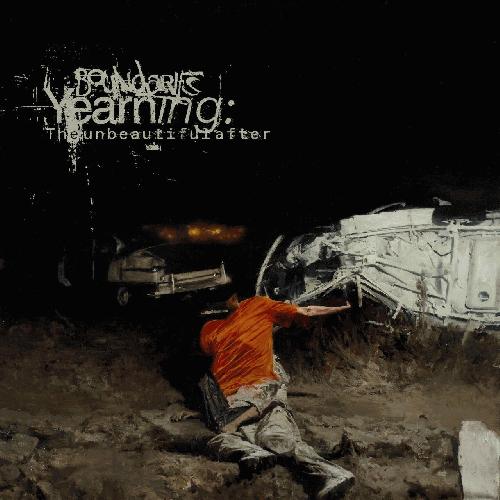
Review Summary: You are fucking nothing, and Boundaries want you to know that...
Boundaries have something to say, but before they even speak, they want you to know just how angry they are. This isn’t just the usual “we made a heavy record” kind of anger, or the “here’s a breakdown, get in the pit” kind. This is anger that feels woven into every note, a raw, cellular-level fury. The guitars snarl, the bass shoves you back, and the drums hit with a force that almost feels personal. When Matt McDougal starts screaming, it’s less like a performance and more like someone finally exploding after holding it all in for too long. Boundaries don’t ease you into their world. They grab you by the collar and make sure you know exactly where they stand.
Matt’s vocals are, for lack of a better word, wild. “Feral” doesn’t even do it justice. He sounds desperate, accusatory, and truly furious, like he’s tapping into a place most people never go. Take “Malconscience” for example: the drums hammer away beneath him while his delivery turns “YOU ARE ***ING NOTHING” into something that feels less like a lyric and more like someone screaming in your face. The whole band backs him up, and the result isn’t just heavy. It’s deeply personal.
That is also why Tim Sullivan’s clean vocals matter so much. On an album where almost every moment feels heavy, both sonically and emotionally, his voice brings a rare sense of levity. The cleans do not erase the darkness or suddenly turn the record uplifting; they simply give it air. For a few moments, the tension releases just enough for the listener to breathe before the weight comes crashing back down. Without those sections, the album’s relentless hostility could easily become numbing. Instead, Sullivan’s presence gives the brutality context and makes the return to heaviness feel even more severe.
Guest appearances shine when they bring something new to the table. Make Them Suffer’s spot on “Torn Wide Open” works because the switch in vocal pitch instantly changes the song’s feel, giving the album one of its few true shifts in mood. Alex Reade’s soft, clean vocals at the end push that contrast even further. For a short while, the record seems to exhale. The aggression backs off, the atmosphere opens up, and something fragile peeks through. It’s a rare break from the album’s usual emotional heaviness, just long enough for you to notice the calm before Boundaries slam the door shut again.
Landon Tewers’ appearance on “Crowned and Crucified” sadly doesn’t stand out. For someone with such a recognizable voice in The Plot in You, he feels oddly anonymous here. It’s a bit like Lochie Keogh’s guest spot on the last Boundaries record; interesting on paper, but it never quite meshes with what Boundaries are doing. On a record such as this that doesn’t really reinvent anything, guest vocals need to shake things up or become an essential part of the sound. Just tossing in another familiar scream doesn’t have much effect when McDougal already sounds like he’s about to devour the microphone.
But it’s that relentless aggression that makes the album so gripping. It’s like Boundaries are whacking you with a sledgehammer, pausing just long enough to grin and ask if you want another go. And somehow, even though you know what’s coming, you still find yourself nodding along.
For all its brutality, Yearning: The Unbeautiful After works because Boundaries never lose sight of the emotion pulsing beneath the chaos. The album is exhausting, abrasive, and sometimes almost suffocating, but there’s a real sense of purpose in all that intensity. It doesn’t try to reinvent metalcore, and honestly, it doesn’t have to. Instead, it takes a familiar sound and plays it with so much conviction, energy, and raw emotion that it feels fresh again. Boundaries come across like a band with something they urgently need to share, and by the end, you feel like you’ve carried some of that weight with them.