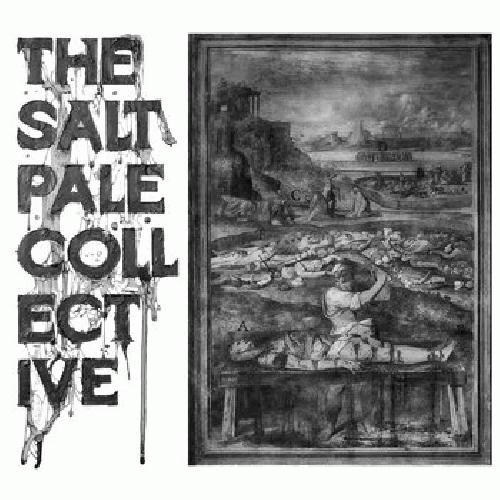
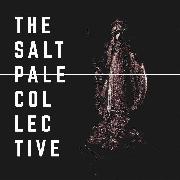
Review Summary: Monumental riffs, suffocating atmosphere and post-metal used as more than an aesthetic exercise.
On …And God Said Nothing, The Salt Pale Collective return to the same bleak territory they mapped out on their debut, only this time the horizon feels even emptier. Their second album revolves around the need to keep searching for answers long after it has become clear that none are coming. Religious symbolism runs through the record – a pale Madonna, a celestial bull, a dying son, extinguishing stars – but none of it offers salvation. Instead, these images become relics scattered across a universe in which faith has lost its ability to comfort. God’s silence is not treated as a temporary absence here. It becomes the answer itself.
That idea shapes the entire record. Existential despair and cosmic horror seep into its religious imagery until the two become inseparable, while sludge, doom and post-metal provide the physical weight needed to carry them. The Salt Pale Collective are still concerned with hopelessness, spiritual exhaustion and the inevitability of endings, but everything feels more fully developed this time around. The darkness that surrounded the debut remains firmly in place; the band simply moves deeper inside it.
Musically, …And God Said Nothing is built around huge, slow-moving riffs that act as the foundation for everything else. Those massive sections repeatedly open into atmospheric stretches before tightening again into extended climaxes, giving the album a sense of gradual compression rather than sudden impact. Guttural vocals and a thick, restrained rhythm section keep the music grounded, while occasional appearances from the saxophone introduce another texture without disturbing the oppressive mood. Nothing feels ornamental or designed simply to draw attention to itself.
Across its six tracks, the album functions less like a collection of individual songs than a single continuous descent. Changes happen slowly, sometimes almost imperceptibly, and the record rarely relies on dramatic contrasts to create momentum. Instead, tension accumulates piece by piece. What grows over its duration is pressure: dread becoming heavier, hope becoming thinner, the music gradually stripping away whatever emotional resistance the listener arrived with.
One of the album’s strongest distinguishing features is its use of synths, which constantly bleed into the background and build eerie, almost haunted soundscapes around the heavier sections. They give the record an extra layer of unease and make its atmosphere feel far more specific than a straightforward sludge or post-metal release. That sense of unpredictability reaches a peak on Litany for a Dying Son, where the tempo shift lands with real force and the saxophone cuts through the surrounding mass in a way that feels both strange and completely natural. Alongside Our Pale Madonna, it stands as one of the album’s two most powerful tracks, both pieces showing The Salt Pale Collective at their best, balancing sheer heaviness with atmosphere, tension and genuinely memorable details.
At its core, …And God Said Nothing is a meditation on unanswered faith and the compulsion to keep searching for meaning in a universe that offers neither cruelty nor compassion, only indifference. The weight of the music becomes part of that argument. Its slowness does not provide space to breathe: it stretches every moment of doubt, anxiety and inevitability until there is nowhere left to hide from it.
Listeners drawn to Neurosis, Cult of Luna and Primitive Man will immediately recognize the language The Salt Pale Collective are speaking: monumental riffs, suffocating atmosphere and post-metal used as more than an aesthetic exercise. …And God Said Nothing is crushing because of its sound, but the reason that weight lingers is that the band gives it something worth carrying.