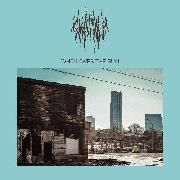
Review Summary: King-size sound, all-caps music.
Einar Solberg’s career trajectory in general mirrors his style of singing. Sometimes he tries to exercise some restraint, but most of the time he just can’t refrain from letting out one dramatic “woooah!” or “aaah!” after another. Similarly, he seems intent to take all the spotlight for himself lately in his main band and beyond, composing the bulk of Leprous latest LP “Melodies of Atonement” and engaging into a busy solo career with a tight release schedule. Which is a bit unfortunate for me, because I’ve always valued Leprous as a band, and I prefer their more collaborative efforts over albums that were written almost entirely by Solberg, like “Pitfalls.” I was never a fan of Einar’s lyrics, and his singing gradually became more and more exaggerated and overdone as time went by, in parallel with him committing what sometimes looks like a full-on hostile takeover of his main band.
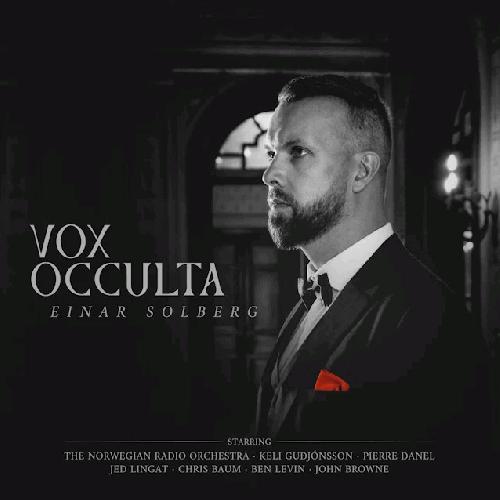
So, maybe I’m not the right guy to review Einar’s solo album? That’s true, but I do enjoy “Vox Occulta” so much that it made me go back to “16” and re-assess that record as well. I did like some songs from Solberg’s debut LP back in the day, but overall, I discarded the album as a bloated and over-sung affair. Now, I’ve come to regard “16” as a valid and complete artistic statement.
What’s also true is that this time the music Einar wrote in a very fitting collaboration with the Norwegian Radio Orchestra is just bombastic enough to be a suitable match for his over-the-top vocals. In fact, everything about “Vox Occulta” is epic and bombastic. Even the song titles are all in Latin! You know how everythingus soundus more epicus in Latinus. Even dickus is more biggus and hardus in Latinus. You can check it out for yourself. Pick a completely random Sputnik staff member and send the following message to his shoutbox: “Hawksus! Givus me a frontus pageus featureus, rightus nowus!” See if he can resist this powerful incantation!
Anyway, where was I? Oh, right, reviewing music. Well, we still get all the usual Einar’s vocal acrobatics, including raising his voice as high as possible, flexing his mid-range, and yes, applying some harsh vocals as well. Except this time, it all fits like a glow, because Einar’s voice is powerful and commanding enough to not be overwhelmed by the orchestra, while the music is big and bold enough to not be pushed into the background by Einar’s over-the-top presence. So, the two elements end up balancing each other just perfectly.
In fact, balance is the key word here. And nothing can illustrate it better than the role the guitars play on this album. That’s right, this is an LP made in collaboration with a symphonic orchestra, but it contains almost as much guitars as any proper rock album. “16” was dominated by the violin and electronics, and even Ihsahn delivered his signature screeching against the backdrop of dramatic violins, while the guitars were barely present in the mix. In contrast, on “Vox Occulta” the guitars rarely fade away completely, and for some shorter tracks like “Medulla” or “Liberatio” they actually form the basis of a song. Which is not to say that the orchestra only maintains nominal presence on these songs. Like I said, the balance is remarkably even, so both rock and symphonic elements are equally important. For some other songs the guitars would take a backseat to emerge at the forefront exactly when needed, like that wonderful extended solo which elevates the ballad “Serenitas” from just being a good song to achieving pure greatness.
Which is not to say that the orchestra is not important. It remains the dominant force on most of the songs, and the music it plays is quite original and inspired, as opposed to watered down third-rate Hans Zimmer imitation that you normally get when a rock/metal band dabbles with symphonics. Film score music does not seem to be the main point of reference or a source of inspiration here. Instead, Einar harkens back to the roots, drawing inspiration from the actual classical composers. I would say that the more tender parts are influenced by Edvard Grieg, while the bold and bombastic sections… hmmm, maybe not Wagner, but certainly some of the bigger sounding German composers come to mind. What matters is that the end result is nearly an hour of living, breathing, diverse and original music. I can’t even say if it’s a rock album with orchestra or a symphonic album with heavy guitars and harsh vocals, that’s how balanced everything is.
I don’t even know what to criticize here. I like all the songs, and every longer song contains some particularly enjoyable section, like that extended heavy part with harsh vocals closer to the end of “Grex.” These songs combine richness and versatility of classical music with catchiness and drive of rock, although at times one of these elements may take prevalence over the other. Maybe putting two slower, tender songs like “Grex” and “Anima Lucis” is the only questionable decision here, but the latter track is still great, especially its triumphant and intense closing section which rounds up the album in the same way that “Stella Mortua” opened it: with ceremonial drums, vibrant symphonics and soaring vocals. So, thank you, Einarus Solbergus, for making this epicus albomus. It kicksus majorus assus!