Review Summary: Fa'alogo mai se'i ou fai atu sina tala nei (translation: Listen, and let me tell you a story)
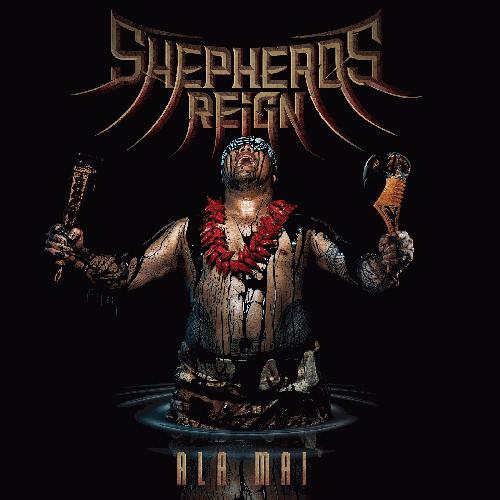
A concept review for the album Ala Mai by the New Zealand-based heavy metal band Shepherds Reign
I stood on the black sand beach as midnight approached. It was a cold summer’s night on my native island. The darkness of night had enveloped my surroundings, and the moon shined dimly behind a dense layer of clouds. As I stood on the beach, I stared forward at the dark, featureless sea before me. I felt a strange sense of serenity wash over me as I pondered the fact that my island is always at peace with nature. According to legend, the chaos of the ocean has been kept at bay for hundreds of years by a group of ancient spirits known as Shepherds Reign.
The legend of Shepherds Reign is the ancient tale of a heavy metal band that rose from the depths of the sea to deliver an unforgettable performance to the unsuspecting residents of the small Polynesian island where I dwell. A legend my ancestors called…
“Ala Mai”.
The story has been passed down for generations. No living soul can claim to have witnessed the
”Ala Mai”, meaning “Awakening” in my native tongue. Legend has it, the
”Ala Mai” took place centuries ago. It happened in the middle of the night: the
”Ala Mai” of the great Chief Tafa Ai’i. To the ancient residents of my island, it was a terrifying sight to behold. The sea turned black, and the moon seemed to vanish from the night sky, plunging the island into total darkness. Then, something in the sea began to glow. Brighter…and brighter. My ancestors gathered on the shore and stared at the sea in disbelief. Suddenly, the spirit of Chief Tafa Ai’i emerged from the blackness of the sea, illuminating the shore with a dark blue hue. The people of my island gathered on the shore and watched with fear as the spirit began to speak.
“Ala mai!” roared the glowing spirit of Chief Tafa Ai’i with thunderous volume, “Ua matou omai nei ma le fa’aaloalo lava!” (translation: “We have come before you with all due respect.”)
Suddenly, the spirit raised two nifo’oti high above his head. Looking up towards the dark sky, he bellowed a proclamation to the people of my island: “Ua sauni le matou ‘au e o i atunu’u 'ese e fa’aali le mana o Polenisia uma!” (translation: “Our team has assembled and are ready to venture out into the world to show the power of all Polynesians!”). Seconds later, Chief Tafa Ai’i pointed the nifo’oti in his hands towards the shore.
“Sau ia!” (translation: “Let’s go!”) shouted the chief as exceedingly bright beams of light began emanating from his nifo’oti. For a moment, the flash of light blinded all the men, women, and children who had gathered on the shore. When everyone’s vision was restored, they were all shocked to see that the spirit of Chief Tafa Ai’i had disappeared from the sea. Even more shocking: there stood five unknown men on the shore. To onlookers, it appeared as if the men had been manifested by the beams of light right before their very eyes.
One of the five members of the group stepped forward. “Aua le fefe! Aua le pala’ai!” (translation: “Do not be scared! Do not be afraid!”) he shouted with a deep, booming voice.
Yet, the mere appearance of these men was enough to strike fear into anyone’s heart. The five men were taller in stature than anyone else on my native island, and each of the men were dressed in black. Adorning the necks of each man were “ula nifos” made of shark teeth. Although none of these five men had ever set foot on my island before, there was no doubt that the men were natives of Samoa. At first glance, they appeared to be ancient Samoan warriors; however, none of them possessed any weapons. As the five men towered over the shore, my ancestors all had a collective realization: these men must be warriors who serve the spirit of Chief Tafa Ai’i! There they stood: the aforementioned “team” that the Chief had declared would “show the power of all Polynesians.”
Upon realizing that they were now in the presence of great warriors who serve the spirits of Samoa, all the men, women, and children who had gathered on the shore that night began to cheer. One of my ancestors brought out a pātē and began to play a familiar drumbeat for all to hear. Soon after, all the men and women on the shore were singing together in unison. “Samoa, O La'u Fesili” is a traditional Samoan song that the people of my island sing in times of celebration. It is a song about how beauty can be found anywhere in the world, but happiness can only be found when you are with your family. The warriors of Chief Tafa Ai’i listened intently as every man, woman, and child on the beach joined together in song.
“Le lalolagi matagofie, O le aiga e maua ai le loto malie!” (translation: “In this beautiful world, it is within the family that contentment is found”), sang the people of my island over the sounds of the pātē. Typically, performances of “Samoa, O La'u Fesili” can last hours upon hours. Yet, on the night of the
”Ala Mai”, the performance was abruptly cut short. Merely one minute into their performance, one of the warriors stepped forward, raised his fist in the air, and shouted “Fa'alogo mai, tagata o Samoa!” (translation: “Listen up, people of Somoa!”). Immediately, every man, woman, and child ceased their singing, dancing, and pātē-drumming. The warrior’s voice undoubtedly commanded attention.
The man introduced himself and his fellow warriors as Shepherds Reign, a group of spirits who protect the shores of my island from the malevolent entities that dwell beneath the sea. According to the man, Shepherds Reign was born when a mighty wave crashed ashore, on a beach somewhere in Samoa, with such ferocity that it caused the spirits of five ancient warriors who were killed at sea to become resurrected as powerful spirits. As Shepherds Reign, the five warriors live beneath the waves, destroying the malicious spirits that attempt to invade our island from the depths of the underworld. Yet, despite their omnipresence, Shepherds Reign had never revealed their existence to humans. Until now.
“You may call me: The Vocalist!” shouted the man in English, conveying a sudden bilingualism. The vocalist explains that he and his fellow warriors have heard the music of Samoa from beneath the waves, and they admire the ability of my people to express their feelings in the form of song. After several years of listening to the music of my ancestors, Shepherds Reign decided to make music of their own. The vocalist explains that the warriors of Shepherds Reign used their spiritual powers to create musical instruments and write songs that express their ancient ideals. That is why the five men had arrived on the shore of my island that night: Shepherds Reign had enjoyed the music of Samoa for years, and now, they intended to return the favor with a musical performance of their own.
For nearly an hour, my ancestors stood on the beach and watched as Shepherds Reign performed the eleven songs they had written for the people of Samoa. Throughout the entire performance, the people of my island were blown away by the crushing riffs and skillfully executed solos of the two guitarists, who often showcased their abilities to shred out dueling guitar solos to great effect. The bassist appeared to be the most stoic member of the group, but his basslines were quite intense, which worked well with the aggressive guitar riffs. The drumming on every song was masterful and very hard-hitting. Legend has it that the drummer was communicating telepathically with the vocalist, as his drumbeats often synced up with the vocalist’s shouts and growls in eerily impressive fashion. Despite the fact that Shepherds Reign rose from the depths of the sea, there could be no denying that these five men possessed a high level of musicianship.
Over time, the musical style of Shepherds Reign would become known as “heavy metal”. Yet, to this day, there is debate over which heavy metal subgenre the music of Shepherds Reign belongs to. Some people prefer to classify their music as “Death Metal”, due to the intense riffs and impressively technical guitar solos. Others refer to Shepherds Reign as “Groove Metal” or even “Thrash”. Yet, speaking as a heavy metal connoisseur, it is obvious to me that Shepherds Reign do not adhere to the conventions of any specific subgenre.
“Tuloloooooo…Nof!” shouted the vocalist as a huge wave appeared behind Shepherds Reign. Moments later, the wave crashed down over the five men. To the amazement of everyone watching, the five men remained standing as the wave crashed down on them, demonstrating their invincibility. When the wave dissipated, Shepherds Reign now possessed musical instruments in their hands. The vocalist walked forward from the group, clutching a microphone. Behind the vocalist stood two men with guitars and one man with a bass guitar. Behind the guitarists, a man sat down at a custom drum kit that featured a combination of heavy metal components and native Samoan percussion, such as the pātē and the talipalau.
After a second cry of “Tuloloooooo…Nof!”, the band begins to play. “Fa'alogo mai se'i ou fai atu sina tala nei!” (translation: “Listen, and let me tell you a story!”) commands the vocalist at the start of their first song, “Aiga.” Yet, the command was unnecessary, as Shepherds Reign had already captivated everyone on the beach from the moment the guitarists began to play the song’s brutal, aggressive riff. To say the least, “Aiga” was an effectively attention-grabbing introduction to the performance. During the song, the vocalist showcased his ability to switch between guttural death metal growls and clean vocals with ease. The song also features two brief spoken word passages, with the vocalist stating, “Se! Toe fo'i lou aiga!” (translation: “Hey! Return to your family!”) with undeniable conviction. The ecstatic cries of “Cheehoo!” throughout the song, shouted by the five members of the group in unison, never failed to cause the audience to pump their fists in the air and cheer.
After a brief pause following their first song, the band of warriors continued to perform. The following four songs continued to build on the momentum created by “Aiga” in relentless fashion. In fact, the first five songs played by Shepherds Reign during their performance were certainly the highest quality songs performed that night. While the final six songs played by the band were far from substandard, there can be no denying that the first 25 minutes of Shepherds Reign’s performance is what made that night a truly unforgettable experience for my ancestors.
At the start of the following song, “Le Manu”, the vocalist stepped forward towards the crowd in front of him. For several seconds, the beach was entirely silent. Then, the vocalist raised his microphone into the air triumphantly. “Samoa! Sauni e tau le taua!” (translation: “Samoa! Prepare for war!”) shouted the vocalist. All my ancestors immediately recognized the words that the vocalist had just spoken: it was the motto of Le Manu (translation: The Animal or The Beast), the ancient Toa who had mercilessly slaughtered countless enemies of Samoa in the name of the war goddess Nafanua.
Never before had any of my ancestors heard a song about Le Manu, and they were all admittedly impressed by Shepherds Reign’s ability to perform a song as epic and captivating as Le Manu himself. “Le Manu” is a more melodic song that features a slower tempo than “Aiga”, but the song is no less exciting. The song even features the most shocking lyric delivered by the vocalist that night: “Le Manu Samoa ia tafetoto ou ala!” (translation: “Manu Samoa may your path be filled with enemy blood!”). The shredding guitar solos toward the end of the song were very impressive on a technical level, and fit well with the violent tone of the song.
Despite the high quality of “Aiga” and “Le Manu”, the following song was perhaps the highlight of the entire performance. “Nafanua” is a song dedicated to the war goddess who was worshipped by all ancient Samoan warriors. The song kicks off with a fast-paced bassline and intensifying drumbeat, followed by a deep, menacing growl. Moments later, the song truly begins. The guitarists deliver an explosive, thrashy riff, the drummer blasts away with an extremely fast-paced drumbeat, and the vocalist joins in with an anguished chant of “Naaafaaanuuuaaa!” Utilizing clean vocals with an impassioned vocal delivery, the lyrics belted out by the vocalist during the song described the “tala anamua” (translation: “ancient story”) of Nafanua, from beginning to end. The breakdown halfway through the song was the heaviest, most intense moment of the entire night. It was clear to everyone in the crowd that Shepherds Reign were true worshippers of the war goddess Nafanua, as each member of the band were performing with an unforeseen level of passion and energy.
Instrumentally, the next song, “Ua Masa’a”, was perhaps the most straightforward song performed by Shepherds Reign that night. Yet, the song was very hard-hitting. The song structure of “Ua Masa’a” evoked the style of an ancient Samoan war march. The vocals on this song stood out as particularly ferocious, with the vocalist sounding completely tormented and distraught as he screams out the song’s tragic lyrics. “E te oti i o’u lima!” (translation: “You will die by my hands!”) shouts the vocalist with palpable fury; his lyrics describing the rage felt by a woman who was murdered at the hands of her spouse. The true story behind the song made it even more devastating: the vocalist’s sister was a victim of domestic violence who was tragically murdered by her husband, and “Ua Masa’a” was written as a tribute to her memory. It is a heartbreaking song that is quite emotionally resonant.
Following “Ua Masa’a”, the drummer suddenly began to perform a masterful solo on his pātē. As the drumbeat increased in speed and intensity, the guitarists joined in with one of the heaviest riffs of the entire performance. Yet, when the vocalist entered the song, titled “Ala Mai”, the riff suddenly morphed into something groovier and more melodic. Over the course of the song, the vocalist utilizes his clean vocal delivery over an infectiously groovy riff, yet his singing remains as menacing as ever. Structurally, “Ala Mai” is the most complex of all the songs performed that night. “Ala Mai” features multiple riffs, and a skillfully executed breakdown towards the end of the song. The lyrical highlight of the song occurs when the vocalist shouts: “O Polenisia lea! Faafifilemu mea!” (translation: “We are Polynesians! Bring peace to the world!”)
Shepherds Reign’s performance had now reached its halfway point. While the entire performance was enjoyable in its own right, the second half of the performance was not remembered by my ancestors as fondly as the first half. The following four songs performed by the band lean away from the Death Metal style that the band had embraced earlier, with mixed results.
Kicking off the second half of the performance, “The World Bleeds” features a catchy riff and some excellent shredding by the guitarists. During the song, the vocalist utilizes English lyrics for the first time. “The world bleeds as people die!” sings the vocalist on the chorus of the song. It seemed that the vocalist and guitarists were embracing their Thrash Metal influences on the song more than ever. Likewise, the song “Finally” features English lyrics, a more subdued vocal performance, and thrashy instrumentation. However, the soaring riff heard during the song sounds akin to something straight out of the Power Metal subgenre.
Although “Finally” is an interesting departure from Shepherds Reign’s other songs, the song also presents one of main issues with the second half of the performance: lackluster lyricism. Perhaps due to the vocalist’s decision to write the song’s lyrics in English, the lyrics on “Finally” receive an unwelcome spotlight during certain parts of the song. As the vocalist shouts, “What makes me smile!” four times in a row during the song, it becomes difficult to take the vocalist as seriously as when he was screaming and bellowing in the Samoan language.
Similar to “Finally”, the song “Cold Summers Night” is another stylistic detour for Shepherds Reign. “Cold Summers Night” sees the band shedding their heavy metal sound entirely, opting instead to write a ballad in the style of hard rock. On one hand, the vocalist showcases his excellent singing voice during the song. However, his lyrics, written again in English, convey a sense of blandness. “I thought I was ok / But I'm so far away,” sang the vocalist as his lyrics caused the audience to begin losing interest. While the acoustic guitar playing on “Cold Summers Night” was a nice change of pace during the performance, the song itself was one of the less memorable moments of the night.
To my ancestors, the most interesting song performed during the second half of the night was “Never Forgotten”. Prior to the start of the song, another giant wave suddenly crashed down upon the dark beach. To the shock of everyone on the beach that night, a piano now appeared in front of the band, as if the wave had caused it to become unearthed from the sand. Slowly, the vocalist approached the piano and began to play a beautiful, forlorn melody. The vocalist then began to sing, returning to the Samoan language to deliver heartwrenching lyrics such as, “Le mafai ona galo de la’u pele / Ua e alu ae tu'u au nei” (translation: “I can never forget you my dear” / “You have gone and left me here”). Written as a tribute to the deceased son of one of the band’s guitarists, “Never Forgotten” has a somber tone, yet the song succeeds in being a genuinely touching tribute to its subject matter. Despite presenting itself as a more interesting ballad than “Cold Summers Night”, the song suffers from being overlong. Easily the longest song of the performance, “Never Forgotten” was clearly an ambitious moment for the band. Perhaps due to its repetitive song structure, however, the song seemed to become stale by the time it reached its conclusion.
The final two songs performed by Shepherds Reign that night were not necessarily highlights, but they were definitely a return-to-form to the beginning of the band’s performance. The shortest song of the entire performance (excluding the intro and outro), “Atali’i” was arguably the most insignificant song performed that night as well. During the song, the vocalist returns once more to a Groove Metal-influenced vocal delivery, and the speedy riff and intense drumline throughout the song are as entertaining as ever. Yet, “Atali’i” fails to make as big of an impact as any of the similar songs that preceded it, such as “Le Manu” and “Nafanua”.
“Samoa Mo Samoa”, the final song performed that night, was a satisfying conclusion to Shepherds Reign’s performance. The song begins with the drummer pounding away with his most intense drumbeat yet. As the guitarists begin playing a dark and menacing riff, the vocalist enters the song sounding more sinister than ever before. “I tala fa’asolopito o Samoa, e iai nai tala faanoanoa. Tala o puapuaga ma faigata” (translation: “In the history of Samoa, there are stories of sadness. Stories of suffering and hardship”), declares the vocalist in spoken word at the start of the song. “Samoa Mo Samoa” is an aggressive song from start to finish, with the band unleashing a glorious display of Samoan pride. Although “Samoa Mo Samoa” was not quite as memorable as similar songs “Aiga” or “Ua Masa’a”, the song served as an appropriately grand conclusion to a truly epic performance.
Upon playing their final notes of the performance, all five members of Shepherds Reign suddenly turned around and looked up toward the night sky. As the band faced the ocean, the ocean began to glow dark blue glow once more, and the spirit of Chief Tafa Ai’i suddenly re-emerged from the blackness of the sea. Slowly, Shepherds Reign began walking toward the glowing spirit in the ocean before them. My ancestors realized that Shepherds Reign were departing back to the spiritual realm beneath the waves. For the second time that night, one of my ancestors began to play a familiar rhythm on his pātē, and everyone on the beach started to sing together in unison.
The farewell song sung by all my ancestors on the beach that night, “Mo'omo'oga Sa Molia”, is an uplifting song with a triumphant-sounding melody. Similar to the song my ancestors sung at the beginning of the night, the pātē served as the only instrument used during the song. One minute after everyone on the beach began performing “Mo'omo'oga Sa Molia”, Shepherds Reign and the spirit of Chief Tafa Ai’i had disappeared into the dark ocean. Moments later, the morning sun began to rise. The night of the
”Ala Mai” had officially come to an end.
Centuries have passed since Shepherds Reign arrived on my island and performed for my ancestors. The night of the
”Ala Mai” is now known as one of the most legendary heavy metal performances in the history of Samoa. Although their performance was imperfect, with flawed songwriting present throughout, Shepherds Reign had created their own, unique style of heavy metal during the
”Ala Mai”. There is no doubt that Shepherds Reign have the potential to re-emerge to the land of the living and deliver an even stronger performance to the people of Samoa one day. Until that day arrives, I will occasionally find myself standing on the black sand beach at night, staring out into the endless sea, hoping that tonight will be the night that Shepherds Reign make their inevitable return.