Review Summary: Rapture remains one of metal’s most powerful works. While the style and composition are rather startling in their restraint—through repeated listens and contemplation, Rapture’s incorporeal essence beautifully shines through its cracks.
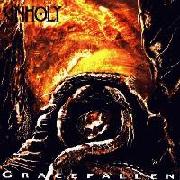
Unholy’s albums have always been conspicuously primordial in their identity. Of course, across their sombrely minute discography, Unholy are thoroughly a death-doom band stylistically, yet the portrayal of these traditional elements are often manifested in something deeper; more transcendent. Despite Unholy’s dark, isolating, and crushing sound—the band’s backbone is its atmosphere, which oozes with unspoken spirituality and esoteric weight; much unlike the more straightforward and bare-bone death-doom bands of its time. And while we mustn’t presume death-doom doesn’t curate itself for atmosphere—Unholy’s more ritualised, unflattering tone is awfully lacking in a genre that prides itself on describing the human condition. The genre is meant to be horrifying, wrathful, dreadful and narrow, not… ambient? Tranquil? Serene? Such descriptions are certainly fitting for many non-metal genres but for death-doom, this was quite unusual. And for Unholy, this holds true too. In the Shadows was a menacing, tribal, almost maddening record. While experimental, its essence is firmly a death-doom record. The Second Ring of Power became fuller, more illustrious and dream-like in sound. Yet it still mostly retained the same structures of traditional death-doom. Unholy still sounded bold, haunting, and sinister, but there was a clear identity being established amongst each record. An identity that reached its zenith in Rapture.
I believe Rapture is Unholy’s most inaccessible record. For a genre that demands absolute heaviness and darkness—this abominable blueprint is surprisingly scarce within Rapture’s confines. While it may lack the brooding menace of In the Shadows or the pounding urgency of Ring of Power, what defines this particular record’s essence is its sheer density, repetition and draining nature. Much of Rapture consists of long-winded, often melodic passages that appear to be lost without a definitive direction. “Wunderwerek” is a strong highlight of this “predicament.” The album’s longest track; it remains highly subdued and sparse for nearly its entire duration. Even those who enjoy funeral doom are likely to be put off from its temperate approach as did I. The foundation was to be admired if only it didn’t drag into tedium. Yet even when Rapture’s minimalist undertones are most apparent—the same passages that were once underwhelming gradually became clearer and more refined with each listen. In a manner akin to ritual, through each repeated session, Rapture’s purposeful details and textures within its broad & elusive canvas only became more striking—details that were often lost amongst first impressions. This is no less thanks to its spectacular production. Even in all of Rapture’s brevity and rawness—its instrumentation is performed with a profound amount of depth and potency. The sound is purposefully intimate and tender while simultaneous in its grandiosity and cosmic proportions. This paradoxical duality contributes immensely to the atmosphere of the record while keeping repeated listens fresh and rewarding. Rapture’s use of modulation is also highly tasteful; what is recycled subtly varies in composition and tone, yet not enough to be of considerable notice, gyrating into deeper eeriness and mild cacophony. Much of this is interwoven through semi-dissonant song structures, yet the stellar mix almost mystifies its sound with a cavernous yet gentle quality. Through their stellar execution of these techniques, Unholy manages to glorify these unorthodox concepts into something tangible in their timelessness.
And not just this, every song has its distinct features and architecture that carves their own identity, yet not to the point of feeling tacked on. The track list is composed with clear deliberation, and it effectively carries the spirit of one song to another—contributing to the album’s ethereal nature. While certain tracks in isolation may be somewhat dull, Unholy does a remarkable job in pacing and bridging the spirit of one song to the other. Given its frame—what is pictured is best captured through the entire album, rather than songs in isolation. A example of this is set before the aforementioned “Wunderwerek” which is cold, serene, and alien. A song quite unlike the subsequent harrowing of “After God”, yet despite their differences; compliment each other in a seamlessly appropriate manner. While it would be a more convenient approach for Unholy to assemble Rapture in an entirely consistent, self-contained and secure course, “After God” and “Petrified Spirits” break much of Rapture’s patterns to be more death-doom oriented and traditional in structure. Given Rapture’s ambient themed style, it’s most unusual to break this pattern, yet surprisingly—it remains fitting despite the conflict in styles and tone. This creates a perplexing tension through the majority of the record that without—the record risks being a tad self-indulgent and overbearing. Interestingly, “Unzeitgeist” resets the pace and tone of the record that in execution, can be somewhat bizarre or unaware—but the track is well written and short enough that it’s hardly an issue.
Rapture succeeds where many albums fail in how it creates an otherworldly atmosphere. This is especially exemplified in its patience. Much of its musical & meditative ideas are expressed through repetition. While in concept, this recurrence should be monotonous or uninspired, Rapture’s production wavers as if alive in its form. The guitars echo in a smooth, delicate way, while the drums pound thunderously yet each instrument synchronises as one rather than demanding absolute attention. The mix trembles with fullness and grandeur without ever suppressing the mystery & wonder inwoven in its fabric. Much of Rapture’s profoundness comes from how paradoxical it is. It’s beautiful and dreamy while simultaneously cold and desolate. It’s heavy yet gentle. It seeks to hurt while providing comfort and peace. Its ability to effortlessly hybridise conflicting textures and ideas is what makes Rapture so compelling and memorable. “For the Unknown One” is one of the best to capture this dilemma. Amid its cavernous and alien performance—the pace remains slow, methodical and calm—and this is no thanks in due with the serene, angelic vocals to grace the piece. It never seeks to rush or overcompensate. Even if the mix may be bold, dreary, and uncompromising—the actual structure of the music is deliberate in its presentation to soothe yet deepen the tonal elements. It remains utterly balanced and intentional.
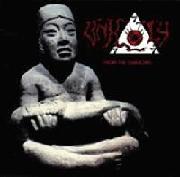
This value no less extends to the album cover, which complements the record excellently. Despite its cryptic presentation—the atmosphere captured remains crystallised and desolate, yet graceful and almost “divine.” The cover remains gradual, yet interesting enough to deepen Rapture’s meditative qualities. The lyrics also fare consistently well with Rapture’s musical themes. They speak of escapism, isolation, longing, delusion, and finally, cleansing. The lyrics are surprisingly post-modern in their diagnosis of humanity, yet rather than exalting mankind’s liberation from God, it appears to warn against this tribulation; “After God we’re lost / lost it all—lost in everything.” I view Deluge (meaning flood) as a cleansing of the wickedness of mankind, perhaps from God, perhaps from ourselves, perhaps from the heat death of the universe. It even quotes Nietzche’s Zarathustra, yet his proposals for godless glorification are refused before being mocked as a submitter to murder and (implicitly) death. While the lyrics are not explicitly Christian—the themes embodied clearly do not flatter the human condition (“I’d rather be wretched and broken / than join into your fraudulent joy”), and are uttered akin to a prophet of desolation through Äijö‘s immense vocal prowess. Combined with the cold, saddened heart of the compositions—that same human condition of mourning found in its lyrics belong to the same essence as its destruction through its music. This communion is certainly elegant yet foreboding in its given truth.
Unholy’s Rapture remains one of metal’s most powerful works. While the style and composition are rather startling in their restraint—particularly for one not well versed in doom—through repeated listens and contemplation, Rapture’s incorporeal essence beautifully shines through its cracks. An awfully overlooked record that is to be treated with reverence as an artistic memorial of the human spirit lost in this fading world.