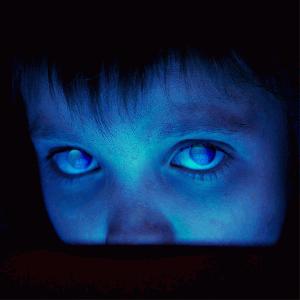
Review Summary: Dated references and timeless feelings united in heavy prog mastery
I’m not gonna lie, the title track of 2007’s Fear Of A Blank Planet sounds like it’d be kind of *** on paper. If you can look past the flat distorted singing through lyrics that read like a millennial Caulfield’s MySpace profile, the song is basically a “Deadwing” retread with a compressed structure. Yet somehow it works. The sardonic vocal lines have a certain quotability that makes them memorable and the driving riffs has just enough metallic tinge to contrast the tripped out finale. It evens out to being another top tier opener for Porcupine Tree.
While subsequent songs don’t hit the same degree of angst, their tones delve into a mix of immaturity and nostalgia that I find compelling. It plays like a concentrated realization of the connecting motifs introduced with 2002’s In Absentia, seeming to jump between different temporal states as the laments of youth are backed by the sort of instrumental prowess that gives the tinges of weary hindsight. “Sentimental” is the most literal instance of this in action as it reprises the strummed riff from “Trains” with a jaded echo, but “My Ashes” interprets this outlook with a wistful melancholy.
This is paired with the band seemingly pushing their prog credentials to their absolute limits, both in association and their own mastery. It’s pretty bitchin’ to see Alex Lifeson in action on the seventeen-minute “Anesthetize,” but it’d still be an excellent suite in its own right with seamless transitions from percussive builds and gradually sharpening guitar chugs to blasting flurries that drop into a slow enveloping cascade. “Way Out Of Here” also scores for its drawn out brooding verses, explosive choruses, and the sort of atmosphere fitting of a Robert Fripp cameo.
The closing “Sleep Together” risks looking out of place stylistically with its stomping drums, beep-boop effects, and nihilist eroticism invoking Nine Inch Nails. Yet it ultimately fits right in as its tense instrumentation and distorted choruses eventually give it a swelling climax that reveals the full scope at play.
Perhaps it’s just me being a millennial nearing forty perusing songs written about kids his age nearly two decades ago, but it’s fascinating how Fear Of A Blank Planet has aged. The surface references may be dated and the heavy-handed deliveries can make it feel cheesy to some. Yet the alienation it describes seems to have only intensified nowadays give or take some force-fed AI. Of course, the emotional resonance nurtured by careful songwriting and talented playing always transcended the debates it inspires. It’s well within the streak of classic Porcupine Tree, even if it goes about it more aggressively than before.