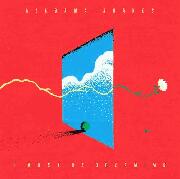
Review Summary: Coming down to Earth.
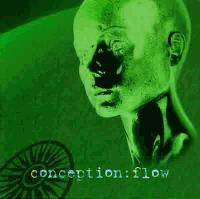
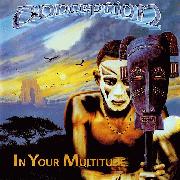
Following their flowery and virtuosic debut, Conception released two more albums that sounded entirely different. Both “Parallel Minds” and “In Your Multitude” achieved complexity and progressiveness not through lengthy runtime of songs and long-winded instrumental passages, but through subtle details and unorthodox songwriting decisions. “Flow” follows in a similar fashion, but this time it looks like the band decided to streamline things a bit and produce a more straightforward rock album. The band has never been garish and flamboyant enough to be able go into glam rock mode, but this is as close as they’re going to get to that sound. This album is a rare instance of Roy Khan dropping his operatic flourish almost completely, instead adapting swagger and cockiness that bring to mind David Lee Roth and other larger-than-life frontmen from olden times. Khan’s lyrics are also significantly less abstract and metaphorical, focusing more on societal issues and featuring quite a lot of invective “I cool – you not” passages. At the same time, the band certainly wants to sound modern still, releasing a retro throwback album was clearly not the plan. Hence, you will not find here any old-fashioned organ-like keyboards from the eighties or cheesy synths from the eighties. Instead, the album features a lot of spoken-word samples and cold electronic passages that don’t sound all that dated even today. I don’t know if Conception wanted to try their hand for a commercial appeal or just wanted to do something different without abandoning their core sound, but their overall approach is much more direct this time around.
There’s one more major and very important difference that must be highlighted. This time, the band’s bassist Ingar Amlien is credited as the primary songwriter for three songs on the album. For reference, the first two albums were written by Tore Ostby alone, while “In Your Multitude” saw Amlien credited as a co-writer for two tracks. Bass guitar was always important for Conception, helping their music to stay grounded and heavy while providing its own dose of intricacy and style. But this time, the bass is especially prominent, all over the album, not just on the songs written by Amlien. Just check out that
thick bass intro on “Tell Me When I’m gone.” Bass enthusiasts should certainly take note of this album.
One puzzling thing in terms of the album’s content is the band’s seemingly workmanlike and literal approach to songwriting. Like, okay, let’s make a straight-forward hard-rock album. We need a couple of ballads, some mid-tempo tracks, and some faster songs. There you go!
Well, let’s get to it then. First of all, both ballads are good. “Silent Crying” from “Parallel Minds” remains my favorite, but these two are a worthy addition to the band’s oeuvre. “Cry” is a tender and intimate song with excellent, truly poetic lyrics.
The stars seem so bright tonight / Enough for a rose / A rose to be born…”. In turn, “Hold On” is based entirely on keyboard melodies courtesy of Trond Nagell-dahl, and its melodic patterns as well as Roy Khan’s vocal lines and lyrics bear uncanny resemblance to Kamelot’s “Don’t You Cry” (which was released more than three years later).
The main issue for me lies with the mid-tempo tracks, which basically adhere to the same formula. “Gethsemane” starts with some cool electronic passages accompanied by urgent drums and proceeds through some guitar riffs to the verses which are based entirely on bass lines providing a fitting background for Khan to flex his vocal cords. Then, some more guitars are added on top of the bass and electronics when the time comes for the chorus/refrain to kick in. Sounds nice, right? Well, then, the second song “Angel (Come Walk with me)” starts and… it seems like “Gethsemane” just paused for a couple of seconds and resumed playing, only with some more guitars added. Moreover, “A Virtual Lovestory” follows in a very similar fashion, and it feels like the band keeps stubbornly hitting the same spot. There are some interesting twists and turns in every song that I mentioned, but the rhythmical backbone is very similar in all three of them, while the riffs and the hooks are competent but not exciting. Only the ratio between the bass, the guitar, and the electronic parts changes somewhat, but the essence and the core structure of the songs remain the same. If you really enjoy “Gethsemane,” that shouldn’t be a problem for you, but if you don’t like the album’s opener or just appreciate it like I do, I’m afraid exactly one half of the album loses its impact for you.
Luckily, the faster songs are here to save the day. The title track comes in to break the relative monotony of the first three songs and breaks that vicious circle quite easily. Not only the chorus, but the whole song is memorable and captivating, from the first soaring guitar leads through bass-laden verses and right down to the last lines sung by Khan. The title track and the first ballad are followed by two more solid but repetitive mid-tempo songs, but Conception saved the best for last. The album’s closing stretch is exceptionally strong with the already mentioned ballad “Hold On” followed by two more excellent fast-paced songs. “Cardinal Sin” is done in the vein of the title track, but with even catchier chorus and particularly exciting solo section towards the end. At the same time, “Would It Be the Same” successfully combines the grit and rhythm of the album’s mid-paced songs with the energy and vigor of its faster cuts. It’s still
not really prog/power metal the way it’s understood today, but, personally for me, that’s a good thing. Some of these songs work better than others but the band is still hard to pigeonhole to one specific genre and all their pre-hiatus albums defy comparison and classification.
Overall, Conception’s last release before a long hiatus is a fun but surprisingly formulaic rock album. It should be a special treat for bass connoisseurs, and both Roy Khan’s singing and Tore Ostby’s playing and songwriting remain strong and recognizable throughout, but some variety and (occasionally) stronger hooks would have provided for an even better record. I am happy though, that the band’s story did not end here.