Review Summary: It will rain for a million years.
Now, here is one puzzling album. I think I figured it out eventually, but I’m still not sure. Maybe my conclusions are all wrong. Which is still better than my initial assessment, because at first I was ready to write the album off as a typical sophomore slump unworthy of a review. After quite a few listens, I finally know what to say other than “the first one was better.” Let’s get to it then.
For starters, let’s get the obvious out of the way. For this album Diatom switched to English entirely and Michał Kulniew now sounds even more like Mariusz Duda. Which is fine. What is not fine is that the growls are gone almost completely. Indeed, the band has gone soft, which is not an issue per se. Diatom didn’t want to make the same album twice, so they’ve decided to branch out by adding some keyboards among other things. The issue is that most of the time all these (still limited) electronic and ambient parts are just… there. They are fine, but I can’t say that they improve or enrich a song in a meaningful way. At the same time, the guitars lost a lot of impact they had on Diatom’s debut full-length. I am not an audiophile and normally don’t pay a lot of attention to mixing and production, but in this case the regression is too obvious. On “Sol” the guitar sound was significantly fuller, so the riffs had more impact and presence. This time, in a lot of songs the guitars just buzz along.
But the most puzzling issue is the songwriting. The album opens with a keyboards-based “Silver,” which already feels a bit monotonous, but does a nice job establishing the record’s atmosphere. Then, “For Mercy” follows, the only (comparatively) punchy and rocking song on the album, which, again, would have been more effective if the guitars had more bite to them. From then on and until the end of the album, the remaining seven songs all follow the exact same formula. It gets tweaked around sometimes, but its core parameters remain unchanged.
Every song after the second one is built around either plodding mid-tempo riffs or softer melodic patterns which might be a bit faster and livelier but still feel too simple and monotonous. These riffs or licks plod along through the song’s verses and choruses which are normally barely distinguishable from each other and tend to blend together until a climax point is reached towards the end of every song. This climactic sequence is obligatory, and is normally the best (sometimes the only worthwhile) section of a song. It is either the heaviest or the most emotional part of a song that always feels like a relief after the preceding monotony. In the worst cases, a song just plods along until it’s over without leaving any impression. Then again, there are instances when this formula actually works.
The best songs on the album can be found in its latter half. “Riverbeds” is one such example, mostly because its climax features the only instance when growls are utilized on the album and they work quite nice, set against the backdrop of dramatic symphonic melodies. I would also like to highlight the two closing tracks, which are genuinely great songs. “The Northern Veil” features perhaps the only efficient chorus on the album. When Michał sings “You are mine, you are everything…” he goes straight through your heart. As for the closer “From Here,” its guitar parts are fairly typical for the album, but they are supported and underscored by some very sweet piano melodies which help the song to project some real emotions. Still, outside of a couple of highlights, the material presented on “Low Light” feels dull and unexciting and tends to blend together. At the same time, there are at least some good sections even on the weaker songs, and the album certainly has some potential. Perhaps with better production and more varied songwriting it would have been a stronger affair.
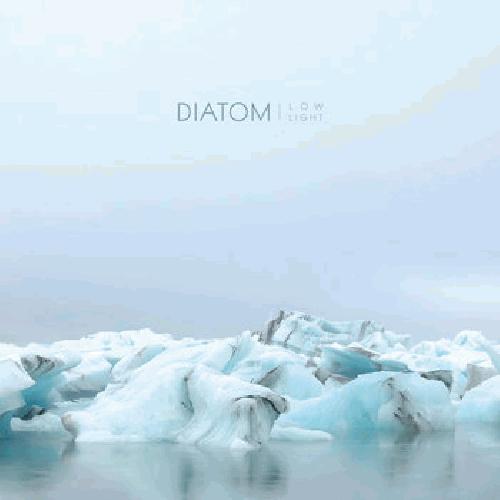
Then again, maybe variety is not the point here. As it stands, the album possesses a very distinct, suffocating and claustrophobic atmosphere. The rainy vibe from the debut LP is still here, and maybe this time it was Diatom’s main focus. The whole album projects a feeling of cold and persistent rain, which sometimes briefly gains more intensity, and sometimes quiets down almost to a drizzle, but goes on and on steadily with no end in sight. You have to be in a very specific mood to get in sync with an album like that, but maybe it’s worth a try. Otherwise… well, the last two songs are highly recommended in any case. That’s the only thing I can be sure of with this album.