Review Summary: Autobiography Madonna
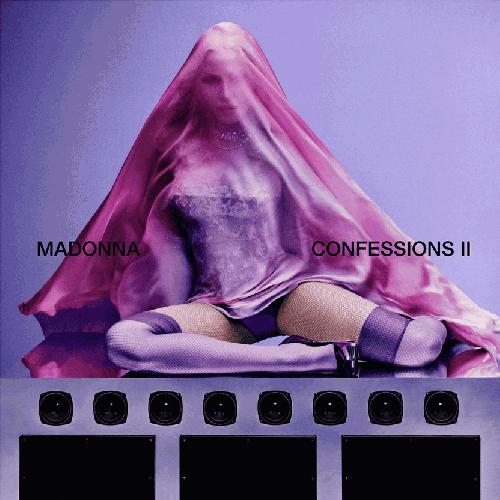
To get a couple of things out of the way: Yes, Confessions II is the best album the Queen of Pop has released in over 20 years. By a country mile. And no, it’s not strictly a sequel to 2005’s ‘Confessions on a Dance Floor’. For that, it’s too extensive in its sonic scope and thematic interests, too enveloped in the mesh of what it means to be M-A-D-O-N-N-A. And frankly, the album is better executed than its predecessor. A kind of Godfather Part II, if you’ll allow the comparison.
Over the course of her career, Madonna’s been known to have a headstrong disinterest in revisiting past sounds. Then again, a lot has happened in the 7 years since her last album came and went. After experiencing the deaths of two family members, nearly dying of bacterial infection herself, and doing the much lauded ‘Celebration tour’, M has decided to link back up with Stuart Price on what they advertise as her first throwback effort. Once Confessions II was announced last year, fans were excited, but trepidatiously so, to what easily could’ve been nostalgia bait from the 68 year old; something that wouldn’t capture the magnetism and aura which once made her the most famous woman on the planet. Who could blame them, having long clung to scraps of brilliance off of misguided efforts on the stale ‘Hard Candy’, unfocused ‘Rebel Heart’ or the befuddling ‘Madame X’? But the results here are not just solid, they’re exhilarating. And poignant, in a way we’ve rarely seen from the pop diva.
Opener ‘I Feel So Free’ is the perfect appetizer for what is about to unfold. An epic and dizzying traversal through flavors of house, techno and trance. Madonna establishes her manifesto of escaping through the dancefloor, entering a space to withhold her neurotic self and inhabit the pleasures of movement. The next tracks follow this thread,with the sophisticated ‘One Step Away’ being a highlight. Then comes ‘Danceteria’! A pop-funk gem that kicks off into the stratosphere as one of the very best songs Madonna’s ever penned; it’s a fresh-sounding earworm that seamlessly interpolates at least 5 songs by herself and others associated with the historic club from her pre-fame days.
‘Danceteria’ denotes a turning point for the album too. After all, she’s no Donna Summer, she’s always been to warm blooded to do just a dance album. At this point, Confessions II shifts properly into becoming the most cohesive autobiography we have got from her. We get remnants of the intensity behind her marriage to Sean Penn (‘Bizarre’), a spiritual rejection of post-pandemic introversion (‘Everything’) and a heartbreaking ballad about her late brother Christopher (Fragile). All songs on the album are packed with the rich production to be expected of veteran DJ Stuart Price and – crucially – it carries the type of pristinely laid vocal melodies that only Madonna nails.
With so much to dig into, it’s somewhat curious that Warner would opt to release one of its least adventurous tracks, the bouncy and lounging ‘Bring Your Love’, as a lead single. It thankfully doesn’t break the flow of an otherwise stellar record that carries progressive cuts like ‘Love Without Words’ and ‘School’, but the Sabrina Carpenter collab still has a lingering air of ‘punching in for the radio’.
The last third of the album veers close to even ditching the whole genre concept, as both ‘My Sins are My Savior’ and mother-daughter duet ‘The Test’ skew a lot closer to the pondering, quieter moments of ‘Erotica’ and ‘Ray of Light’ than anything pumping through the dancefloor. Closing track ‘L.E.S. Girl’ doesn’t even have a point of reference within her discography. Surprisingly, it’s a lo-fi Suicide-esque ditty about the young and broke woman she once was, living day-to-day in New York and mooning over a boy whom she’d inevitably leave. It’s a tearjerker for anyone familiar with the many lives M would have after this naïve snapshot.
The Queen of Pop takes us on a wildly ambitious ride on Confessions II. After many middling releases, she exceeds expectations and proves why she’s deserving of her gilded status in popular culture, despite of the many scandals and controversies plaguing her name. Listeners will finish the album with a sense of completion, as it genuinely is one of her most well-done efforts. But some will argue that there’s so much more to uncover than what she does throughout the hour or so, that to truly understand the importance of Madonna is to dig deeper. No album could really encapsulate the woman, though. She herself chooses to strip it back, simply stating: ‘everything fades away’.