Review Summary: Stand up you fool, look in the mirror
Unheimlich. What a peculiar word, right? Its phonetics feel strange in your mouth and you are almost expected to pause mid-word and wonder if you are pronouncing it well. And yet, despite its obvious German origins, it’s an oddly familiar word too—I have definitely come across it but cannot put my finger on its bizarre feel. This word is, in a sense, uncanny. Now, this brings an interesting paradox; the etymology of the uncanny comes from that German word -
unheimlich- which translates to “unhomely”. Sigmund Freud wasn’t the first to theorize this, but his 1919 essay is most associated with this phenomenon: in simple terms, “das unheimliche” (the uncanny) is the psychological experience when something feels both familiar and alien, leaving one with a sense of unease. It’s how we feel when we come across wax figures or ventriloquist puppets–those things are not human yet so closely resemble us that we can’t help but feel
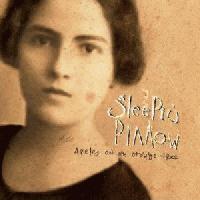
strangely threatened. One quick look at this album's name is enough to evoke that same feeling, long before a single note is even heard:
Apples on an Orange Tree. What a peculiar title, right?
Layers upon layers of unheimlich reveal themselves as you look further into this.
Apples on an Orange Tree is the debut album from Sleepin Pillow, a Greek progressive-rock band whose music draws elements from electronica, psychedelic and post-rock as well as Greek and Eastern traditional music. It’s okay to blink, since there’s no way you can miss it. Opener ‘Instrument Of Time’ lays down an unsettling bassline beneath a pounding kick-drum pattern until a wave of synths, clarinets and Eastern melodies comes crashing down on it; its lyrics aren’t outright unnerving but the drowsy vocal performance lends a disturbing quality to a line like
“Let's make love in Transylvania / let me be your Dracula”. Less than twenty seconds into the next track and it’s a clusterf
uck of lyre, Greek folk melodies and punchy drums and those familiarly narcotized vocals assume the role of the snake that deceives Eve. It’s strange, even off-putting—and then it hooks you.
After the opening one-two punch,
Apples on an Orange Tree finds a perfect sweet spot: the songs become accessible and straightforward enough yet still carry a knack for experimentation and strange influences; enough production tricks are thrown around so that you don’t get
too comfortable. ‘Amplifier In My Heart’ comes off as a Portishead leftover with its opening glitchy trip-hop drum beats but swipes the record scratches and samples for psychedelic-rock guitars and ethnic instruments. After a minute of percussive melodies, ‘Drop The Mask’ gives way to fuzzy guitar riffs that slowly build to a swell of Middle Eastern-inspired sounds, bouzouki, strings and saxophone. Both these tracks are undoubtedly weird and genre-fluid, but they still have the capacity for hit-potential—the uncanny be damned. The rest of the tracklist settles for a more alternative-rock path, employing both cross-cultural instrumentation (lyre alongside ‘The Light Is Real’’s wailing guitars; zurna in the title-track) and familiar soundscapes, such as the sprawling yet dreamy and downright gorgeous balladry of ‘Winter Dreams’. ‘Hail Messiah’ closes the album in a more overtly disquieting fashion: all breathy vocals, processed as if they’re being broadcasted through a radio station, the finale sounds like a paean recorded in the middle of a doomsday event. Percussion sputters all over and builds to a final cathartic minute: a cacophony of drums and wind instruments. You can practically imagine the dust dissipating, the cloudy skies opening up and the entire human population clinging to a higher power for salvation. That visible asteroid is no longer a speck through a telescope but rather the end of our collective existence. The final words on the album?
God I am fake
I've seen I've been the chosen one
Behold the clown, the son of man
Hail messiah.
Therein lies the other half of this album. While there’s a lot of aesthetic engagement to be had in its abundance of musical influences, its narrative and lyricism is equally rich. The unheimlich of how it sounds on first listen overshadows the unheimlich of what it says, but its message is
there and, in a genius way, enhanced by the uncanny soundscapes: be yourself.
Sleepin Pillow: It's hard to be an apple in an orange tree. It’s even more difficult to admit it. To go out on the street and say it, without fearing the consequences of diversity, the marginalization, being described as graphic. We’ve heard many things like "this guy scares me" or "this is not the place to be playing the bouzouki with so much reverb on the vocals". On the other hand, there are people that have embraced us for the diversity in 'Apples on an Orange Tree', and the most amazing thing is that they accept it spontaneously and naturally. This is very important. It's not only about music. It's about social dimensions and the way man is organized in society, with institutions and stereotypes, the unwritten rules and the “punishing” of offenders.
You could argue that “refusing to conform to societal stereotypes and remaining true to who you are” is practically a cliche in rock music yet Sleepin Pillow bring it full-circle on
Apples on an Orange Tree and gives it a fresh sheen. Its sound is the embodiment of apples on orange trees: traditional Greek and Eastern sounds grafted onto familiar western psychedelic rock. Its vocal performances are hypnotic and its lyrics are rather limited in many tracks, but they perfectly articulate their message, especially when taking into account their combined effect: a line as mundane as
“you’re the best drug” hits that much harder when it sounds as trippy as it does. Throughout the album, the narrator is urging themselves as well as the listener to not conform to a society that punishes the outsiders when there’s so little time to be alive:
“Time is your only friend / Time is your real enemy” are the first lines of the album. There’s an overt wake-up call from societal conditioning and the need to embrace your own identity in ‘Drop The Mask’ (
"Wake up and drop the mask / I'm going down the narrow path"); there’s an ode to emotional disconnect between two people that are otherwise bound by biology in ‘Motherhood’ (
"Yes, we've got the same blood, but do we have the same fears?"); there’s the eventual feeling of clarity when the self is what you prioritize in ‘The Light Is Real’ (
"I'm a bird / I sing for free [...] Peace is all I feel"). And when that aforementioned apocalypse comes in ‘Hail Messiah’, there’s the realization that blindly following the herd was not worth it; our need to idealize ourselves is hollow and the search for a messianic figure is futile when tested against time. Our narrator has taken the road frequently travelled and ends up as a sheep among sheep. Reinvention still won’t save you, but it’s a better fate. It might even sound liberating. In the face of how small and inconsequential our lives are, the mantra of “be yourself” rings both hilariously hollow and all-important. When being spelled through the language of rock music with such a clear sonic identity, the message “be yourself” transcends cliche and ends up as a brand new statement.
Unheimlich, indeed.
All's well and good when it comes to its substance, but its challenging style brings up a final question: is this sound fully realized? Few artists come fully formed on their debut and despite presenting a unique identity,
Apples on an Orange Tree hits an unfortunate speedbump towards the finish line. In an ironic way, Sleepin Pillow falter when they play it safe: both ‘Once’ and ‘A Thousand Times To Spell’ drag with their drone-inspired post-rock instrumentations that are more self-indulgent than artistically challenging and feel longer than they already are. And closer ‘Hail Messiah’, despite its grandiose climax, ends too abruptly for my taste, as if the band didn't know how to properly close off their dystopian sound collage. But who knows? Maybe this abrupt ending effortlessly leads into their following release. Maybe that next album refines their established mix of sounds into something even more potent. After all, few debuts sound
this deliberately strange and unsettling, yet
this assured and engaging at once, even when taking their stumbles into consideration; refinement is exactly what they need. Or maybe they're chasing something completely different on that second release. After all, Sleepin Pillow doesn't seem like a band that conforms to expectations.