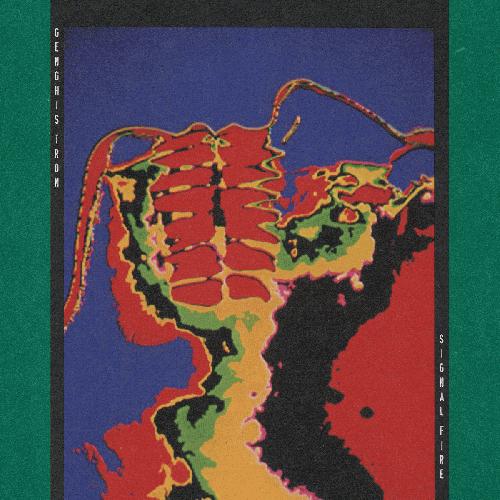
Review Summary: prettyvoidmachine...
I’ve always found the time
after a band’s return LP to be more interesting than the return itself. This was especially true for Genghis Tron as
Dream Weapon was a far cry from the band’s experimental cybergrindy genre snowballs they flung at listeners in the early aughts. And honestly, good on them. 2004 Genghis Tron in 2021 was definitely not the answer for a comeback despite the growing popularity of analogous sounds like hyperpop and ironically similarly analogous bands like The Armed (now loaning out two members with newcomer Kenny Szymanski on bass).
Dream Weapon served as a pummeling hypnosis after Genghis Tron’s post-apocalyptic fever dreams that were introduced on
Board up the House but with
Signal Fire, we’re jolted awake in the present, and are seeing those fever dreams from 20 years ago may have been prophetic. Vocalist Tony Wolski describes
Signal Fire as a vision of “Kojima-esque dystopia of endless proxy warfare where the deluge of available information has outmoded the human ability to parse it,” and despite that Kojima-esque description, it serves as a fitting setting for the anxiety underpinning the album. But the larger question looms, proving why this period of time after the big return LP is so interesting. What does
Signal Fire sound like? Is it
Dream Weapon 2.0? Are they bringing cybergrind back? Fans will not be shocked to find out it’s a little of both. And while the album does have some beats that blast, and some more grit in the vocals, Genghis Tron have not turned into The Armed. If anything, the band might be thinking the world is a beautiful place and they are no longer afraid to die.
Let me explain.
Genghis Tron’s evolution into a live band has enabled an explosion of textures and ambience that were simply not in the group’s recipe when they were conceived 20+ years ago and
Signal Fire is absolutely swimming in these vibes. Dark, trancy electronics bounce and swirl around Wolski’s brooding melodies that start the album off wonderfully with “I Am All”, a song that serves as the perfect appetizer for everything
Signal Fire ends up being. Like
Dream Weapon,
Signal Fire is heavily driven by its lofty, almost industrially serene musical aesthetic rather than the intricacy of its songwriting. A big piece of this approach is rooted in guitarist Hamilton Jordan’s heavy use of ostinatos, the tone and pacing of which sound remarkably like TWIABP’s technique they really started leaning into with
Illusory Walls. While this resemblance pops up a more than a few moments throughout the album, the most glaring example is easily “Nothing Blooms in the Hollow” which if you closed your eyes, could easily be mistaken as a TWIABP track. And while this similarity is (personally) quite distracting, this fact doesn’t take away from
Signal Fire’s successes in the least. Genghis Tron’s flashes of aggression, especially in tracks like “Born Prey” are incorporated into the electronics masterfully, and although sparingly used, never feel jarring or out of place within the greater context of the album. “Without Form” is other standout instrumental track, with a strange robotic warmth that serves as a wonderful guidepost to the end of the album. With
Signal Fire, Genghis Tron have found a way to make existential dread and a feeling of anxious foreboding quite compelling. There’s a clear thematic line between this album and
Dream Weapon that listeners can latch onto but with addition of tastefully NIN-inspired synths enveloping brief instances of violent outbursts,
Signal Fire cements Genghis Tron’s direction as now fully returned band, whether or not we think the world is really a beautiful place anymore.