Review Summary: No leftovers here; 2 for 2.
Converge is a band with nothing left to prove at this point. They’ve been on the scene since the early ‘90s and they’ve done it all. They’ve occupied the highest echelon of their genre for decades, pulling from atmospheric sludge, noise rock, and hardcore punk while continuing to evolve their sound. Where a lot of legacy bands develop this tendency towards reinvention late in their career, Converge have remained reliably consistent. And while
Bloodmoon: I was perhaps a bit of a detour for them, they harked back to their classic sound with February’s
Love Is Not Enough - an album that, with hindsight, is easily the best thing they’ve done since
All We Love We Leave Behind. It’s also an album that came 8 years after their last non-collaborative studio LP,
The Dusk in Us (for those who don’t count
Bloodmoon: I as part of the main Converge canon). And while they’ve had a pretty consistent release schedule over the decades, you wouldn’t exactly call them prolific. So when they announced that a second LP was slated for June 5, it was a moment met with equal parts excitement and trepidation. Were these just the leftovers from
Love Is Not Enough? Had they actually managed to create something equally engaging?
After spending the last couple of days listening to it, I can confidently say
Hum of Hurt is more than just some afterthought companion piece to
Love Is Not Enough, and in some respects, exceeds it.
Bannon describes it as
“not a sequel” to
Love Is Not Enough.
"The unifying musical idea early on was, ‘Let’s make a noise rock album.’ But we never really did. The first one wasn’t. This one touches on that spirit, but it’s much more dynamic than that descriptor. To me, it leans more into being an emotional hardcore album, while Love Is Not Enough feels more metal leaning album.” I’d say his assessment is pretty accurate. I wouldn’t necessarily flag it as some major departure from
Love Is Not Enough, but it does lean more into hardcore and noisier elements.
It’s something that becomes apparent when
I Won’t Let You arrives. It's a track reminiscent of their
You Fail Me days, bringing back the dissonant feedback shrieks and noisy abrasiveness that made that record feel perpetually on the verge of collapse. Those piercing squeals hang over the chorus like machinery screaming in the background.
It Only Gets Worse is similarly evocative of that era of Converge, its pained outro screams colliding with a riff that's among the most immediately memorable on the album.
Hum of Hurt is a
hard album. It’s intense and aggressive, but also surprisingly palatable. Songs like
Doom in Bloom and the titular track feature some of the catchiest choruses Converge have written in years, arriving at an unlikely intersection between approachability and sheer intensity. There’s a deft handling of more ambient moments sprinkled throughout too, like the atmospheric bridge in
Nothing is Over, or the slower, moodier build in
Dream Debris. Even at its most abrasive, the album never sounds one-dimensional, constantly shifting between ideas.
Thematically,
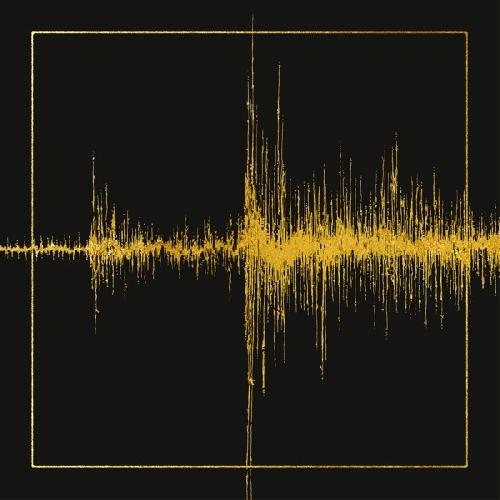
Hum of Hurt takes its name from "The Hum”: a real-world phenomenon where people report hearing a persistent low-frequency noise without an obvious source. Converge reinterpret it as something more abstract: a manifestation of pain and emotional suffering.
"Something noticeable to others operating on a similar emotional plane,” as Bannon puts it. As someone who grew up in Windsor, Ontario, one of the places most famously associated with the phenomenon, I got a kick out of seeing it referenced here. More importantly, it's a concept that fits Converge like a glove. Few bands have spent the last three decades examining grief and emotional collapse as consistently as they have.
Hum of Hurt doesn't reinvent those themes so much as distill them into something rawer and more exposed.
It's genuinely impressive that Converge have managed to remain this consistent for this long, still finding ways to breathe new life into old habits. More impressive still is that they've managed to match the excellence of
Love Is Not Enough, if not surpass it. Regardless of whether or not you buy into the album’s central premise, it’s impossible to deny how effective Converge are at bringing it to life here. It often feels like that invisible signal made tangible: grief, self-doubt, frustration, depression - all compressed into 33 minutes of catharsis. Few bands are capable of channeling that level of emotional intensity without sacrificing good songwriting in the process. Converge remain one of them.