Review Summary: Worth the wait.
One of the things I’ve always appreciated about Boards of Canada is that they never make the same album twice. And while all of their albums cater to very different moods and themes, they’re unmistakably BoC in all the ways that matter.
Music Has the Right to Children featured this world of faded educational broadcasts, nostalgic synths, and warped childhood memories.
Geogaddi sounded like something ripped straight from hell: occult, claustrophobic, paranoid - deeply unsettling in ways music rarely is.
The Campfire Headphase traded that dread for something warmer and more naturalistic, like some idealized summer vacation. And
Tomorrow’s Harvest plunged headfirst into cold post-apocalyptic isolationism. Every one of them was defined from the outset.
Inferno initially hit me differently, though. A bit harder to pin down. Even after a few listens, I found myself asking the same question: what kind of BoC album is this?
The opening moments almost feel like a bit of a red herring.
Introit functions similarly to
Wildlife Analysis or
Into The Rainbow Vein, instantly transporting the listener into a familiar BoC headspace with its nostalgic broadcast aesthetic and hazy analogue warmth. For about thirty seconds, it feels reassuringly classic, and then
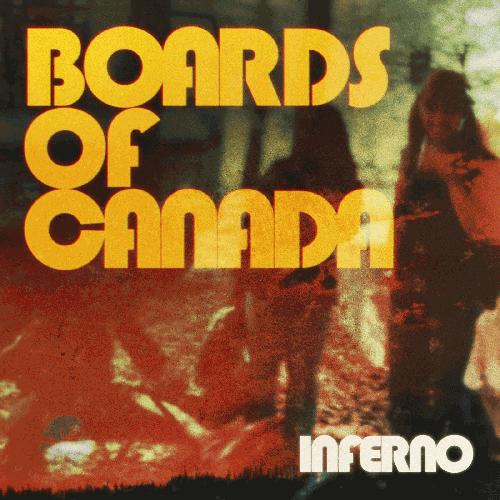
Prophecy at 1420 MHz arrives and completely shifts the mood to something much colder, stranger, and spiritually uneasy. Between that track, the album title Inferno, the promotional imagery of children with whited-out eyes, and the rollout surrounding
Deep Time, everything pointed toward the possibility of a suffocatingly bleak record. And to an extent, it is... But not really in the way that I expected.
A lot of people have immediately compared
Inferno to
Geogaddi, and I do understand that kneejerk reaction. There are obvious parallels in the religious imagery, prophetic language, and those occasional moments of unease. But I don’t really buy into the “Geogaddi 2” comparisons.
Geogaddi felt abstract and nightmarish, like a descent into some hidden occult underworld where every sound concealed something malevolent beneath the surface. Whereas
Inferno feels more theological than occult. Less satanic panic and more spiritual and religious anxiety. The darkness that exists here rarely manifests through outright terror so much as this lingering fixation on indoctrination and humanity’s wont to construct meaning out of suffering.
And that thematic throughline shows up constantly throughout the album, sometimes even in ways that are easy to miss initially.
Father and Son comes across as almost goofy at first, built around vocal samples taken from The Jesus Trip of a father and son debating the father’s religious devotion. The track is paradoxically catchy as hell in a way only BoC are capable of, but the more context settles in, the sadder and more disturbing it becomes. The son sounds completely brainwashed, speaking with this unsettling certainty that makes the entire conversation seem hollowed out by dogma. Trust BoC to hear a conversation like that and think, “There’s a track in here.”
The Word Becomes Flesh is another standout in this regard, transforming educational narration about embryonic development into something that sounds uncanny and vaguely unsettling without ever being outright disturbing. It’s something that’s easily glanced over in those initial spins, but it becomes more pervasive the more you hear it.
As much as
Inferno revisits ideas and textures from previous albums, it never feels embalmed by its own mythology. That honestly might be the most impressive thing about it (outside of its incredible production). Plenty of legacy acts either awkwardly reinvent themselves or spend decades making watered-down versions of their classic work.
Inferno somehow expertly avoids both of those classic traps, instead feeling like a culmination point for BoC.
Music Has the Right to Children’s comforting nostalgia,
Geogaddi’s spiritual unease,
Campfire’s summery warmth, and [/i]Tomorrow’s Harvest[/i]’s looming sense of collapse all bleed together on this record, but they’re reorganized and yield a new aesthetic meaning here.
So to answer the aforementioned question: what kind of BoC album is this? It's a little bit of everything they've honed over the years. It sounds fresh yet reliably nostalgic. If there's one criticism worth levelling at
Inferno (and to be fair, this is rather nitpicky), it's that this synthesis occasionally comes at the expense of a more immediate identity. Earlier releases felt like complete adventures in their own worlds, very much locked within their own ecosystems.
Inferno instead spends much of its runtime pulling from across the duo's catalogue, and while that ultimately reveals itself as part of the album's strength, it can occasionally leave individual moments feeling less sharply defined than they should.
Naraka is probably the clearest example of that. The first half builds this genuinely compelling dark atmosphere, only for the latter section to pivot toward a much more uplifting chant-driven finale that doesn’t fully capitalize on the tension preceding it. Likewise,
I Saw Through Platonia feels like a strangely weightless closer, especially coming after the emotional release of
You Retreat in Time and Space, a track that ranks among the most outright gorgeous and hopeful-sounding in their entire catalogue.
After a painfully long thirteen years away, BoC could have easily returned sounding trapped by the enormous mythology surrounding them. Most acts would collapse under such heavy expectations. Instead, they’ve delivered something stranger and more difficult to define than I expected: an album that, for me, initially felt elusive precisely because it’s pulling from every corner of their career at once.
Inferno may not possess the immediate aesthetic singularity of their other records, but with repeat plays it reveals itself as one of the richest and most spiritually fascinating ones they’ve ever made.