Review Summary: A world worth inhabiting.
For thirteen years, the prospect of a new Boards of Canada album felt increasingly uncertain. During that time, their influence spread across electronic music, countless artists borrowed from their aesthetic, and their existing catalog acquired an almost mythic status among listeners. Unsurprisingly,
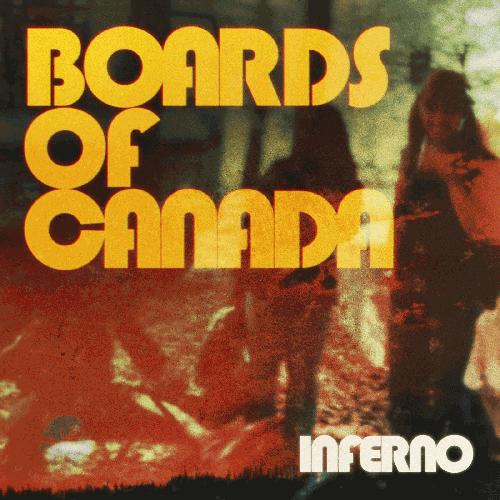
Inferno arrives burdened with enormous expectations. Yet what strikes me most after repeated listens is how little those expectations matter once the music begins.
The most common criticism leveled against
Inferno is that it remains firmly within Boards of Canada's established musical language. I find that criticism largely irrelevant. The brothers Sandison have spent decades refining one of the most distinctive voices in electronic music; the question is not whether
Inferno sounds like Boards of Canada, but whether it justifies its existence within that language. For me, it does so emphatically.
Much has already been written about cryptic samples, hidden references, esoteric symbolism, and the countless mysteries that seem to surround every Boards of Canada release. While I understand the appeal of treating their music as a puzzle to be solved, that has never been what draws me to the duo. What matters to me is the experience itself: the atmosphere, the flow, the feeling of inhabiting a world that seems at once familiar and unknowable.
Inferno succeeds not because it can be decoded, but because it can be lived inside.
The album feels less like a collection of individual tracks than a carefully constructed cycle. Ambient interludes connect larger, more expansive pieces, creating a continuous sense of movement and return. Its seventy-minute runtime never feels excessive; if anything, the album encourages repetition. By the time it ends, I find myself starting it again from the beginning. The existence of an uninterrupted version of the record makes perfect sense. This is music designed as a complete environment rather than a sequence of isolated songs.
What distinguishes
Inferno most clearly from its predecessor is its emotional center of gravity. Where
Tomorrow's Harvest often felt exhausted, post-apocalyptic, and haunted by collapse,
Inferno feels larger, stranger, and ultimately more spiritual. The album's religious imagery, Krishna chants, prophetic language, and mythological references are not decorative flourishes but central elements of its atmosphere. Tracks such as “Naraka”, “The Word Becomes Flesh”, “Prophecy at 1420 MHz”, “Blood in the Labyrinth”, “Arena Ameicanada”, and “You Retreat in Time and Space” contribute to a work that feels deeply concerned with ritual, transformation, and transcendence.
In that sense,
Inferno often reminds me of
Geogaddi, though not because the two albums sound identical. Both share an interest in mysticism and the unseen, yet
Inferno feels less paranoid and more contemplative, less concerned with hidden truths than with spiritual experience itself. Even moments of playfulness, such as “Father and Son”, carry an undercurrent of unease, preserving the ambiguity that has always made Boards of Canada's music so compelling.
The production deserves special mention. This is one of the clearest, most immersive records the duo has ever created. Every sound occupies its own space. The depth, detail, and dimensionality of the mix make
Inferno an exceptional headphone album, rewarding close listening without sacrificing its larger atmospheric impact.
Perhaps what resonates most strongly is how relevant the album feels. Its title suggests catastrophe, but the music rarely evokes destruction directly. Instead, it captures the feeling of standing at a threshold, sensing that something profound is approaching without fully understanding its shape. In an era defined by uncertainty, fragmentation, and accelerating change, that sensation feels remarkably contemporary.
After thirteen years of waiting, the greatest compliment I can give
Inferno is that it feels neither disappointing nor merely reassuring. It feels necessary. Boards of Canada have not reinvented themselves. They have simply created another world worth inhabiting—and this may be one of their finest.