Review Summary: Pack a blanket and some sandwiches. This Piknik isn't one to miss.
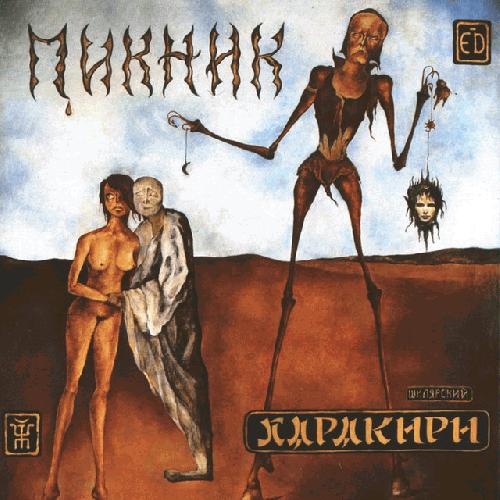
Though the deeply unsettling prog metal album art may initially lead you to believe otherwise, Piknik is, apparently, one of Russia's most prolific and beloved rock bands. It’s an institution, popular enough to sell out massive venues decades after its heyday and old enough to remember when their country was known by a different name. The charmingly titled
Harakiri, a nod to an ancient Japanese practice of self-disembowelment, was released in 1991, the same year the Soviet Union performed a national seppuku of its own.
I’d love to toss out a clean and concise musical analogy to capture Piknik’s sound, but Piknik eludes comparison. The second track's driving synth immediately calls to mind “Moving in Stereo” (and that can only be a good thing), but I wouldn’t say Piknik sounds a whole lot like The Cars. The album is firmly rooted in the new wave/post punk extended universe, yet the average Piknik song has little in common with whatever you might find on a Spotify-curated “new wave classics” playlist. And though the generous serving of organs calls to mind Emerson, Lake & Palmer, Piknik’s approach lacks the technical wizardry or bombast endemic to that flavor of prog. Theirs is more reserved, content to let the compositions breathe and the unnerving, vaguely gothic atmosphere take center stage.
As far as comparisons go, “Jethro Tull meets Depeche Mode, but a little weirder and a lot more Russian” is about the best I can muster.
After a tasteful twenty seconds of strings, the opening track roars to life with an organ-driven groove and some satisfyingly meaty guitar. Featuring a casual, almost rambling vocal style and an adventurous bridge packed with sound effects and synthesizers, the song is an eccentric introduction — but an effective one. It’s got no shortage of hooks, boasting a great chorus and some delightfully dated new wave keys. This marriage between zany, progressive elements and commercial appeal is a common thread throughout
Harakiri, and it’s a balancing act that Piknik pulls off quite admirably.
Even the record’s more audacious offerings are full of charm and memorable moments. Track 3, with its walking bass line and loungy piano, conjures a dimly lit speakeasy, the air thick with liquor and cigar smoke. It teeters on the edge of silliness, but it rocks hard enough to keep the eye-rolling to a minimum.
The bright, energetic fifth track leans further into the band's pop sensibilities, yielding superb results. Featuring an up-tempo groove, kickass guitar work, and infectious backing vocals, this thing is packed to the gills with hooks. It’s a song as enjoyable as it is stereotypically Russian, which is to say it’s very much both of those things.
As much as I’ve enjoyed my time with
Harakiri, I wouldn't call it the most consistent listen. The handful of slower, moodier tracks don’t pack enough surprises to justify their length, and their presence tempers the record’s momentum. The fourth track, for example, never truly feels like it finds its footing, a sin that would be more forgivable if not for its five-minute runtime.
The album closer, an instrumental, suffers a similar fate. Whereas truly great instrumentals like Rush’s YYZ or Camel’s Rhayader guide the listener on a journey, I’d liken this one more to a scenic yet meandering stroll. It’s a perfectly pleasant piece of prog, but as a closing statement, I’d consider it lacking.
Pacing quibbles aside,
Harakiri is an unquestionably great slice of esoteric rock, and its obscurity outside the band’s home country is a damn shame. Packed with character and defined by an unnerving yet strangely inviting atmosphere, it’s an album I’d enthusiastically recommend to fans of progressive rock, new wave, and post punk. If you’re craving a record that’s equal parts adventurous and accessible, this Piknik is one you’d be wise to attend.