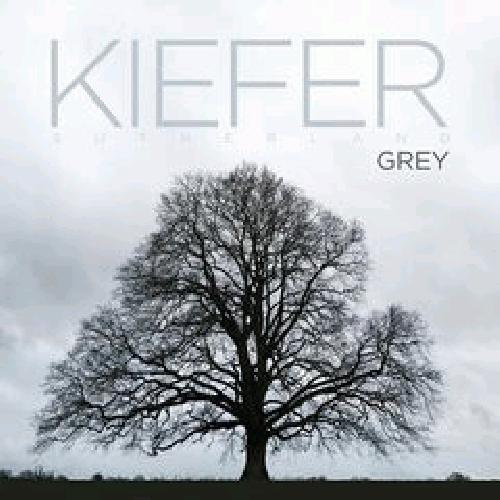
Review Summary: A step in the right direction
I’m going to be completely forthright with you, as I always am. The vast majority of celebrity music is atrocious. There are exceptions to the rule, of course: Keanu Reeves’ Dogstar is a great alt-rock band that still makes solid music even today; before the joke got stale, Jack Black’s Tenacious D had a couple bangers under their belt; Danny Glover’s Childish Gambino is a venerable name in the hip-hop world; and, whether you think Jared Leto is a creep or not, there’s no denying the incredible success he’s had with Thirty Seconds to Mars. There are others like Jennifer Lopez, Juliette Lewis’ Juliette & the Licks (as well as her solo work), and Johnny Depp’s supergroup Hollywood Vampires who are notable artists creating solid work at one time or another. However, the bulk of my experience with the actor-turned-musician, especially in the last decade or so, follows a particular trend. Many years ago, before I caught onto said trend, my interest would pique when I found out X or Y celebrity was a musician, and I’d go “woah, I wonder what that’ll sound like?” As it turns out, pretty boring. After a few of these moments that wonder quickly became apathy, because I came to the realisation all these projects sounded the same. What is this genre of celebrity-written music you might be asking yourself? Well, it’s either surface-level rock ‘n’ roll, americana, or a blend of the two, all of which is tailored to be inoffensive and fit for mainstream radio consumption. If you’re really lucky you might get a bit of indie spice put in there to give their flaccid compositions some kind of pulse.
Don’t get me wrong, Jensen Ackles (Radio Company) has a set of pipes on him which can’t be denied, but the backdrop is always the same: dull, nondescript and soulless acoustic numbers with a sh*tload of vocal processing seems to be the order of the day for most of these acts. Michael Rosenbaum’s Sun Spin, Kevin Bacon’s The Bacon Brothers, Russell Crowe’s 30 Odd Foot of Grunts, and David Duchovny’s solo works are all vapid projects with either cornball rock elements, or they have this beige acoustic or americana/country element centred at the heart of them. For Kiefer Sutherland, where does our vampiric counter terrorism agent fall in all this? Well, I’ve been following Sutherland’s musical journey since 2019’s
Reckless & Me and woefully his aspirations fall into that celebrity template of country/americana; completely paint-by-numbers instrumentals held up with a flavourless voice. The saving grace is that there is an element of catchiness present in songs like “I’ll Do Anything” or “Run to Him”, but on the whole it’s far from a ringing endorsement. That said, I’m a huge fan of his movies and shows, which is, sadistically, the only reason I’ve continued to punish myself checking out anything before or after
Reckless & Me, just to see if there’s any artistic progression. Fortunately, there have been some improvements made here.
The production on
Grey is easily the best one yet, delivering an organic and crisp sound with plenty of nice layering that juxtaposes the acoustic guitars, piano and organ with these poignant, scintillating electric guitars that swell and billow across the soundscape. The first half of the album is more of the same boilerplate americana we’ve come to expect from Sutherland, but even here it’s sharper than previous attempts, with “Come Back Down”, “American Farmer” and “Starlight” being decent tracks with competent storytelling and interesting compositional work. However, it’s the second half of the record where we genuinely see Sutherland coming out of his comfort zone to deliver something different. Once we get over “Starlight” there’s a tectonic shift in creativity, a point that sees less of Bruce Springsteen and Tom Petty and more of Tom Waits, Nick Cave, and David Bowie. After the first half’s optimistic bluegrass and country sensibilities, from “Down Below” onwards we see an eclectic selection of songs that have this tenebrous energy taking over, and a vastly more experimental gambit coming to the forefront of
Grey. “Down Below” and “Third Times the Charm” in particular are notably darker hues of Sutherland’s country brand, with an intentionally isolated and claustrophobic vibe being put into the presentation of
Grey’s sound – coupled with Kiefer serving up an ever-changing approach to his vocal work. The raspy off-kilter-d “Rage in Me” feels like Waits worship at its finest, while “Cruel World” captures that signature dour Cave sadness. Couple that with the expressive and emotive “The Bottle Let Me Down” and the latter half of the album presents a surprisingly welcome change of pace for Kiefer Sutherland.
Ultimately, it’s the risks Sutherland takes on
Grey that make it such an enjoyable record. He’s not a great singer, but in taking those limitations and experimenting with cadence and his tone of voice, he’s added character to the stories being told here. When you marry this approach with songs shifting into a heavier and darker sphere, the results become pretty solid and memorable. Overall,
Grey is the best album Kiefer has done yet – galaxies ahead of anything he’s done before today – and the A-B side dichotomy between his bread-and-butter sound and this more experimental devil at the crossroads vibe he’s run with makes it a very solid and memorable release. It’s far from a perfect album, but at the very least the rewards from his wilder ideas have brought out the best in him as a musician. Here’s hoping he goes against the grain in the future and serves up even more experimentation, because it works for
Grey.