Review Summary: Do you know what a lion says when it roars? "O Allah! Let me not attack someone who acts with kindness." © Les Miserables (2019)
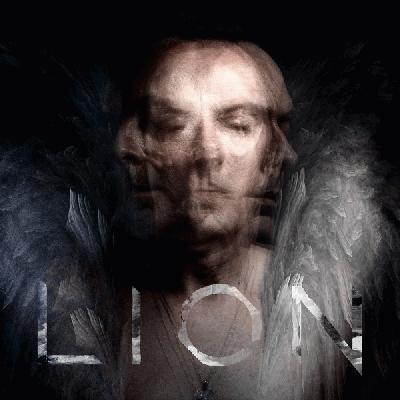
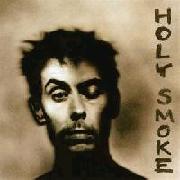
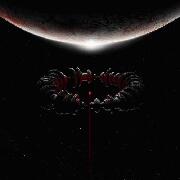
Peter Murphy kept changing producers like gloves throughout his solo career and, until recently, only Simon Rogers managed to stay at the helm for two albums in a row back in the eighties. However, with Lion it appears like Peter has found a permanent match for himself. Youth from Killing Joke seems like a logical and obvious choice, but in fact their cooperation emerged quite accidentally and spontaneously and initially both parties were not sure if it will amount to anything. However, in the end Youth stuck around, and his influence can be felt most clearly all over the album, which hasn’t happened in a while. The last instance of such a defining involvement of a producer dates back to one-off cooperation with Mercan Dede on “Dust” (2002).
You can tell that things have changed immediately, when the album opens with a juicy synth passage that moves to the background eventually but continues to serve as the backbone for the whole runtime of the opening song “Hang Up.” Surely, Peter used synthesizers and various other electronic instruments before, but never in this particular fashion. Electronics here serve not as a source of melody first and foremost, they are throbbing and pulsating heartbeat that constantly supports and carries the songs. The guitars are also used in a very particular way. There are some more extensive passages here and there and even a couple of solos, but mostly it sounds like someone took a bunch of riffs, chopped them finely into pieces and arbitrarily added a few handfuls to every song. Thus, the guitars here are very snappy and bouncy and, just like the synths and almost everything else, are focused on providing the rhythm. It’s not that the melody is completely forgotten, but the rhythm and the push rule here.
However, the main catch is Peter Murphy’s vocals. I guarantee that you’ve never heard him sound like this before! He abandons his usual reserved approach and sets out to test the upper limits of his vocal cords. There’s way more rasp in his voice than usual, he bawls, and howls, and wails like a tortured animal. Even in the relatively reserved moments his voice is dripping with emotion and tension like a buzzing power transformer, only to explode during another bombastic chorus. The lyrics are mostly improvised and barely coherent at times, which only contributes to visceral, primal sound of “Lion.” “I Am My Own Name” is the poster child for the first part of the album with its military-style drumming, brash guitars, and self-assured lyrics, but other songs are up to the task as well, especially “Low Tar Stars.” I can’t of course do it for readability reasons, but the only way to really reflect this album’s mood and sound in writing would be to write a review about it in ALL CAPS.
The album’s singular sound is retained throughout its runtime, but it undergoes a sly transformation after the first four songs. Sometime around “Compression” chorus hits it becomes clear that the songs are no longer defined by the perennial electronic heartbeat, but by Emilio DiZefalo’s violin. “Holy Clown” may be dominated by loud guitars and equipped with an especially hard-hitting chorus, but it is the soft violin passages in the background that truly make the song complete. The violin defines a few more songs that follow as well, lending a majestic and cinematic feel to soaring semi-ballads “The Rose” and “The Ghost of Shokan Lake” and providing a degree of subtlety to the fast-paced and guitarful “Eliza.” I would say that the run from “Compression” to “Eliza” is my favorite part of the album precisely because the violin is used so aptly and fittingly here. Interestingly enough, as things start to calm down a bit for the last two songs, the violin disappears almost completely. Both “Loctaine” and the title track sound like your coach giving you some calm advice after pushing you to do better and better during an intense gym session, but their main driving force is electronic ambience and Peter’s deep voice steadily bringing this roaring beast of an album to a closure.
For an album that was largely an improvised, spontaneous affair, “Lion” sounds remarkably consistent and sure of itself. It is an electrified, passionate record and, most importantly, it sees Peter Murphy deliberately pushing himself to the limit, magnifying and exaggerating his established sound as much as he can at a time when he could have easily rested on his laurels. Instead, he made his most focused and tight record. “Lion” is as unsubtle and impactful as a clenched fist, but if you are in the right frame of mind (it helps to be mildly pissed) it can do wonders for you. This is a rare instance of a respectful and stately Goth eschewing his usual restraint and allowing himself to have his Nicholas Cage moment.