Review Summary: Beauty immeasurable, kindness infinite...
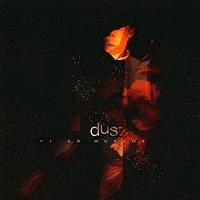
“Dust” is a difficult album to analyze and write about on several levels. It’s different from everything else that Peter Murphy released before or since, although several precursors to its sound can be found on his previous albums. It touches upon various genres and different musical traditions and as such can be quite difficult to grasp. Its beauty transcends the most eloquent description, its grandeur scorns at words. It is majestic but not despotic. It is heavily rooted in modern music, but richly adorned with Turkish tradition.
Even the genre tags attached to this album are misleading and, frankly, irritating. For instance, Wikipedia uses the term “Middle Eastern music.” Now, I’ve never been a fan of geographical descriptors used as genres, to me this practice seems superficial and limiting. Among other things, it seems to imply that there’s one single genre of music played over the whole Middle East, which is clearly not the case. So, let me put it like this: “Dust” is a Trance album written by an English rock musician Peter Murphy and produced by a Turkish DJ Mercan Dede. A slew of traditional Turkish instruments was used for its composition and recording alongside with some more familiar electronic instruments, such as synths and various types of guitars. It is also important to know that Peter Murphy is not a complete outsider in terms of Turkish culture. He’s been married to a Turkish woman since 1982, lived in Istanbul since 1992, and embraced Sufism some time in between. So, on this album he is not just a Western tourist admiring the mosques while consuming sorbet. He’s still in command, and all the songs are penned by Murphy alone. On the other hand, Mercan Dede does not play any of the traditional Turkish instruments utilized here. Aside of the production, he handles electronics and turntables. So, he is not some withered hermit unaware of the world around him, but an established modern musician. If anything, it is Mercan who is in charge of sounding modern here, while Peter’s singing and lyrics are firmly rooted in his old-school Gothic sensibilities.
One other difficulty is that the album is, of course, quite unorthodox in terms of composition. It consists of nine extensive soundscapes six to nine minutes long, each intricate and multilayered, puzzling yet enticing. The remainder of this review is meant to be not so much a description of music, as a sort of a guide designed to help a listener to navigate those soundscapes without being overwhelmed by them.
It is important to find some sort of an anchor, and to my European ear that is also quite unaccustomed to Trance as a whole such an anchor is provided not by any of those unusual Turkish instruments, but by Hugh Marsh’s electric violin. It doesn’t dominate the album, none of the instruments here does, but its presence is pretty constant and it served as a reliable guide during my first listening sessions when I was not sure what to make of the album. It is utilized in several fashions throughout the record. Sometimes it picks up the speed and soars up high, unrestrained and unhinged, making the album sound like soundtrack to Mad Max: Fury Road with violin instead of electric guitar. In these instances, the violin is typically accompanied by
kanun, an instrument that looks like a lute, but sounds more like a mandolin. The two instruments complement and support each other perfectly, enhancing that maniacally triumphant feeling. Other times, the violin is soft and mesmerizing, meant to entrance the listener and project peace and serenity. Then, sometimes, it just lays down a catchy melody that will make you sway back and forth like a snake.
Rhythm section is equally important, with the drums defining the mood of the songs, sometimes creating an urgent, anxious feeling, sometimes sounding like steady heartbeat. Oh, and before I forget, drums as we know them are used only on three songs out of nine. Otherwise, the rhythm section is covered by several traditional Turkish varieties of drums meant to be played not with drumsticks but either with hands or with special little hammers. There are also some instruments that do not sound like anything that we are used to hear. Sometimes you are listening to something that resembles whispering in the dark or rattling of a venomous snake, sometimes it’s like an outcry of a flock of birds returning from overseas. And then, quite often, you can hear some bluesy guitar or ambient passages that provide a sense of familiarity in this ocean of sounds that can’t be made.
In my view this album is meant to be listened to in one piece, it requires concentration and readiness to be fully immersed by music. This is why I am avoiding mentioning the names of individual songs, instead focusing more on the nature and peculiarities of the album as a whole. Then again, I can see some other approaches that could be employed to ensure a fulfilling and satisfying listening experience. In fact, every individual song here is so rich that you could concentrate on any one of them, discovering its quirks and undertones in an isolated listen, like a rich skinflint admiring his jewels one by one with a greedy glint in his eyes. You can divide the album in another fashion, like I did, when it clicked with me for the first time. After listening to the first three songs, I’ve found that along with gleeful pleasure I also feel being overwhelmed by everything that’s going on which could prevent me from fully enjoying the rest of the songs. So, I took a break, and finished the album later with two subsequent listening sessions covering three songs each. What’s important is for every listener to find their own way to ensure that all nine songs are given equal attention and, hopefully, admiration.
For the final part of my review I shall break my self-imposed taboo on naming individual songs to clarify one issue. Not all of the album’s songs were originally recorded for “Dust,” with the last two tracks being re-recorded and re-arranged versions of the songs from previous Peter Murphy solo albums, “Love Hysteria” and “Cascade” respectively. Maybe because of this lack of novelty both “My Last Few Days” and “Subway (Epilogue)” don’t hit quite as strong as the rest of the album. Then again, they serve as a sort of a bridge between this album and the rest of Peter Murphy’s solo discography, preventing “Dust’ from being a complete black sheep in the family But like I said, this album overall defies description and refuses to be put into words. So, the only reliable way to make a clear impression of it is to give “Dust” a couple of careful and attentive listens, especially if you like Trance music or are in the mood for something truly unusual and incomparable.