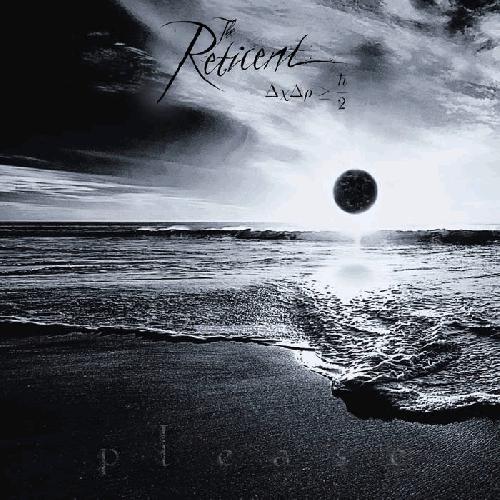
Review Summary: The Reticent once again transmutes darkness into a work of great cathartic force
Chris Hathcock is a musical alchemist. He proved that on his legendary album The Oubliette, where he plunged into the underworld of Alzheimers disease and emerged with a bitter but beautiful opus. On Please, Hathcock sets his sights on the subjects of suicide and the various other forms of psychological torment surrounding it, and with characteristic care and craftsmanship, once again transmutes this darkness into a work of great cathartic force. For that, it seems natural that Hathcock would choose progressive metal as his medium, itself an alchemical project to extract the higher soul of music (if you'll forgive me the pretension). On Please, he does just that, skillfully cutting to the heart of things with a musical scalpel. His ability to hone in on a specific feeling, a specific shade of despair or relief, and make it felt viscerally, as if he was transplanting it directly into the listener’s body, has always been one of Hathcock’s unique talents.
On this album, the pervading feeling is a morose and overcast one, even as the landscape beneath the clouds changes and varies. Moments of lightness and beauty do certainly peer through the mist, as on the redemptive “The Chance”, as well as outright descents into abysses of brutality like “The Bed of Wasps”. That said, the album does sometimes linger in certain tonal spaces, especially through the creation of tension that never gets resolved. This is certainly appropriate for the subject matter, but can frustrate when the song begs to transform into something else. Indeed, there are times when Hathcock falls short of creating as rich a buildup, or as satisfying a payoff as we have seen him do before. The Concealment, for example, while competently written, lacks some of the rich peaks and valleys of his best songs, and ends by repeating the same melancholy mantra without resolving the tension. On the other hand, there are many more moments where Hathcock’s dynamic songwriting really shines, like the exquisite slow burn “The Night River,” whose Tool-like tribal drumming gathers thunder halfway through, then threatens with ominous symphonic black metal-esque atmospherics before blooming into a beautiful and satisfying release like a golden sunrise.
On the topic of dynamics, Hathcock also makes sparser use of space on this release, making for a slightly busier, yet still introspective listen. With the exception of the last few songs, Please is energetic and technical, full of agile, syncopated riffs that unfold in a cascade of flowing musicality. The grooves are as good as they’ve ever been, and are more prominent than previous releases. This is heard especially in “The Bed of Wasps”: a disorienting, 6-minute swirl of aggression that alternates between razor sharp blackened sections and twisted tech death grooves in the vein of Blotted Science. Melodically, Hathcock’s riffs and vocal lines tend towards nuance and challenge over accessibility. As a result, it may take a few listens to fully savor them, but well worth it in the end.
Overall, this album may not quite reach the abject depths or the soaring heights of the Oubliette, but the Reticent has once again succeeded in crafting an excellent album with real emotion and its unique personality imbued into every moment. Listeners have often been quick to make comparisons to bands like Opeth or Tool, but the Reticent has always marched to the beat of its own drum, and appears more confident in its own magic than ever before. After the huge achievement of the Oubliette, it would be understandable if Hathcock decided to hang up his hat, but he shows no signs of slowing down. Hathcock remains a wellspring of talent, and I look forward to seeing his next opus.